Managing Chronic Injuries
Today we're going to talk about a fairly common occurrence. What do you do about your training when things are not optimal? What concessions do you make when things are not going like they're supposed to? Some examples of this would include:
- Injuries like you've got an elbow that's hot.
- A little tendonitis in the elbow extensor stuff.
- You've got a knee, a hip or low backs bothering you.
What do you do? Well, you can't pretend that nothing is wrong because if you do that, the thing that caused the injury is probably going to aggravate it more. If you've got a chronic injury anywhere, something you're doing is probably aggravating that:
- Maybe an equipment situation.
- Maybe you're wearing the wrong shoes.
- Maybe you're not wearing a belt when you ought to be.
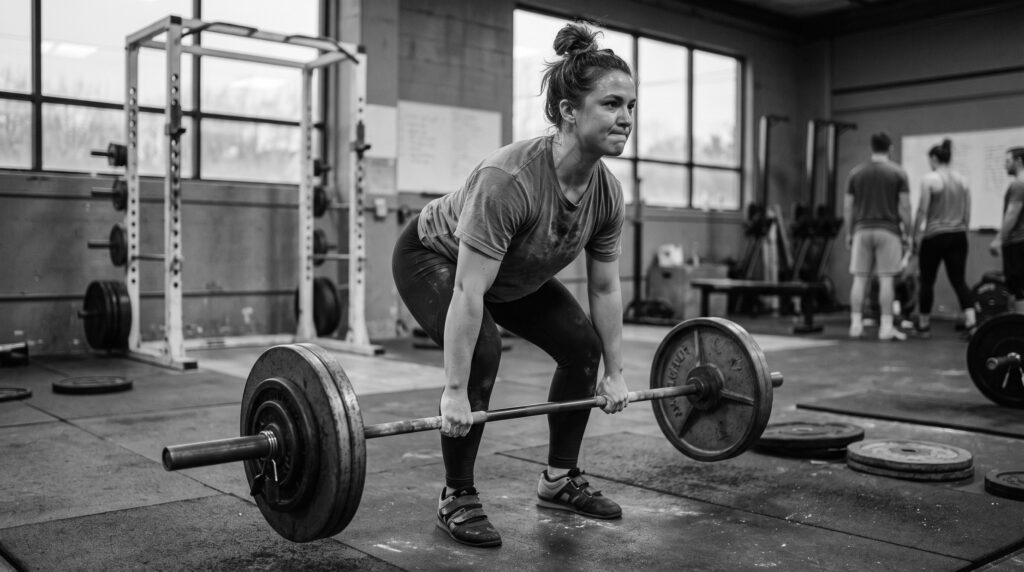
These kinds of things have to be investigated because if they're not investigated, then you're just going to continue to aggravate the injury until you can't train anymore, and you don't want that. That's not what you want to happen. So you got to figure out why a chronic injury is there, and it usually involves a movement pattern problem within a squat, a press or something.
Diagnosing Through Video
The best way to diagnose that is to video the thing. Video it and then look at the video very critically. Compare it to the methods that Mark Rippetoe teaches the movement with in the blue book and see where the problem is. Could be a stance issue or a knee positioning problem. The blue book describes the correct movement patterns fairly completely and that's always the best place to start. You can also post that video on the Starting Strength website in the forums. There's a technique forum and get several opinions on what the problem might be. Your cell phone camera is a very useful tool that we didn't have 40 years ago. People don't realize how fortunate they are that this modern technologies available to help you with your training.
If you've got a chronic injury, video the lift, post it on the forum and Mark Rippetoe will look at it and tell you what he thinks. A lot of other people who are as good at this as he is will have a chance to look at it and you'll have some immediate feedback on the thing.
Training While Sick
Other problems crop up from time to time that have a direct bearing on today's workout. What if you're sick? What if you got the flu? Well, you can't train through the flu. Don't try to train through the flu because you'll make it worse. If you've got a cold, you can train through a cold. Just a head cold. You got a snotty nose, you're coughing, you can train through that. Just please be careful about touching stuff and giving this disease to everybody else in the gym. That's not going to be appreciated. But in terms of physically, you can train through a cold or you can't train through the flu. Or if you've got some other contagious disease like chickenpox, measles or something like that, stay home. You don't want to infect everybody in the gym with a contagious disease like that.
Training Through Fatigue
Let's say you slept terribly last night. Do you go ahead and train? Yes, you do. You're going to have to learn how to train when you're tired. There probably would not even be an adjustment to the load you're planning on using today if you just arrive at the gym and you're kind of tired. That's not a factor. Everybody's tired. You can train when you're tired. Mar Rippetoe has done it for 50 years. It's just something you have to learn how to do. You suck it up and train.
But if you're honest to God sick with the flu, don't train. If you're a little sneezy and you got a head cold, go ahead and train. Keep a snot rag with you so that you don't blow your nose on everybody else in the gym. If you pay attention to all the stuff I'm discussing today, you should end up with fewer missed workouts, which is the biggest problem with this: it's missed workouts. If you miss workouts, you're going to miss progress. Progress is why we do this. More weight on the bar is why we do this. So, keep this in mind. Know when to suck it up and know when to stay home.
Bibliographic references:
- Starting Strength. (2026). Training When It's Not Optimal [Video file]. YouTube. https://youtu.be/LXhnXAh3Mts
Discover more from Atleta Explosivo
Did you enjoy this content? Subscribe and receive the lastest posts about physical preparation and training in your email.