Physical preparation

Track and field, Biomechanics, Physical preparation

HOW TO USE WICKET DRILLS TO TEACH TOP SPEED TECHNIQUE AND MAXIMUM VELOCITY

Teaching speed and sprint technique should not be limited just to sprint drills. According to Jacksonville University Head Coach Ron Grigg, sprint drills do not directly translate to good sprint mechanics because the essential ingredient of force application to the ground is eliminated in most sprint drills. Sprint drills are good for teaching the mechical concepts. They are good for specific dynamic mobility. They train coordination in a general sense. And in some populations of young athletes or distance athletes, traditional sprint drills can serve as light plyometrics. Boo Schexnayder perhaps said the best quote: “While these exercises provide an opportunity to address many aspects of running mechanics, the intensities found in the exercises are not sufficient to elicit the reflexes found in competition. Thus, sprint drills do not improve running mechanics directly, creating carryover to the event itself becomes the task of the coach.” So the best and most specific sprint drill is good sprinting itself. How can we create the carryover? The single best tool is the wicked drill created by Vince Anderson, now at Texas A&M.

Physical preparation, Exercise physiology, Situational sports

SPRINT BASED FOOTBALL

Tony Holler is a track and field coach and a football and basketball physical trainer. He works at Plainfield North High School. He is also a member of the Illinois Track & Field Hall of Fame and co-director of the Track Football Consortium with Chris Korfist. But above all, Tony Holler is known for being the author of the “Feed the Cats” training methodology. In this post you´ll learn the importance of training max velocity or top speed in football practice to achieve better performance during the game.

Track and field, Exercise physiology, Kinesiology, Physical preparation

HOW TO RECOVER AFTER SPRINTING WORKOUTS AND STAY INJURY FREE

Learn cool down drills that will improve sprinting technique, speed up recovery and help prevent injuries. A good post workout routine that includes specific cool down drills is a critical component of sprint training. Unfortunately, it’s also one of the most overlooked areas when it comes to speed training and most track and field events in general.

Track and field, Biomechanics, Kinesiology, Physical preparation

HOW TO DO FASTER STARTS AND IMPROVE YOUR REACTION TIME

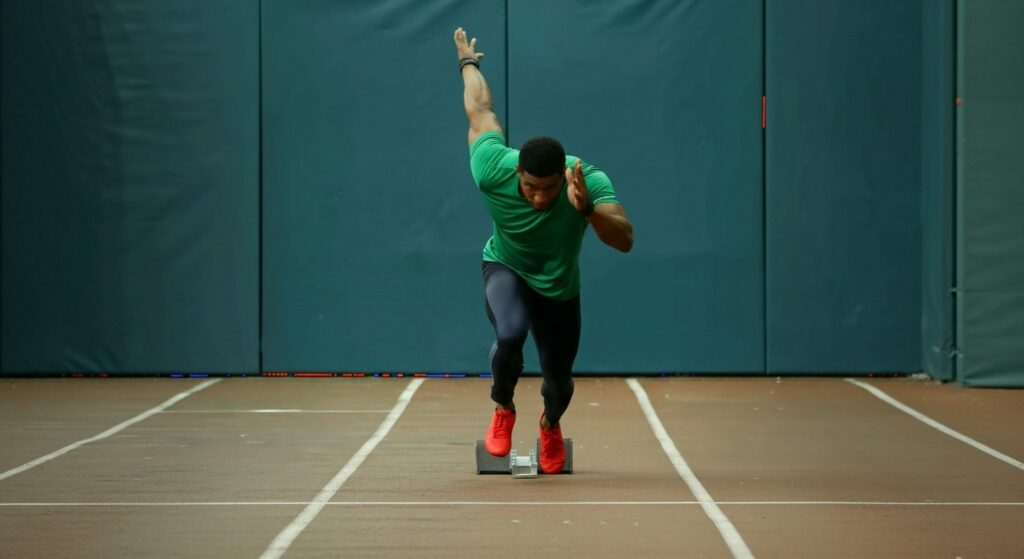
Learn how to sprint faster by improving your start. This post contains some of the key technical aspects of acceleration out of the blocks including posture, force application, and arm movement during the first phase of sprint. I´ll share with you several drills that improve reaction time that coach Karim Abdel Wahab uses prior to having athletes get into the blocks. Finally, you´ll find out Olympian Jeremy Dodson´s opinion about how video games help to improve reaction time, his mindset at the line and first 3 steps out of the blocks. He also shares some tips that have helped him perform at a peak level.

Track and field, Physical preparation, Sports training

HOW TO DEVELOP TOP SPEED OR MAX VELOCITY

Contrary to popular belief, all out sprinting will not increase speed. Recent studies have shown that sprinting all out will actually cause the nervous system to “record” and reinforce an athletes current max velocity – not help to increase it. If you want to develop and improve your top speed other techniques must be utilized. I´m going to share with you one of the best ways, which is supported by Olympic coach Karim Abdel Wahab, to increase sprinting speed and maximize top speed development.

Track and field, Kinesiology, Physical preparation

5 CORE EXERCISES TO TAKE YOUR JUMPING AND SPRINTING TO THE NEXT LEVEL

If you want to improve your jumps and become a faster, more injury-proof athlete, this core workout is a must-do. In this post we´re going to break down coach Ryan Baily´s top five core strength exercises that his track and field athletes do every day. If you are neglecting to train your core, your athletic performance is suffering. Core strength and stability are often overlooked in training for the long jump, high jump, triple jump, and sprinting events in track and field. To sprint fast, you have to master the hard post. This is impossible without a strong core. To jump high or far, you have to engage your hips. You can’t do this without solid core stability.

Track and field, Physical preparation, Situational sports

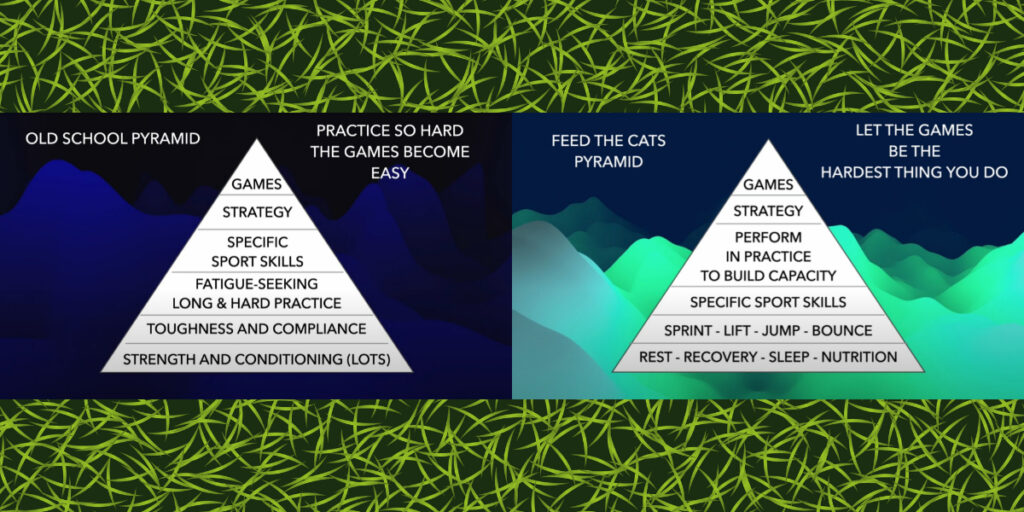
OLD SCHOOL PYRAMID vs “FEED THE CATS” PYRAMID

Just as there is Maslow’s pyramid and the food pyramid, coach Tony Holler has developed his own pyramid aimed at performance in situational sports. Tony Holler is a track and field coach and a football and basketball physical trainer. He works at Plainfield North High School. He is also a member of the Illinois Track & Field Hall of Fame and co-director of the Track Football Consortium with Chris Korfist. But above all, Tony Holler is known for being the author of the “Feed the Cats” training methodology.

Track and field, Physical preparation, Situational sports, Sports training

MAKE SPEED A PRIORITY IN YOUR SPORT

Tony Holler is a track and field coach and a football and basketball physical trainer. He works at Plainfield North High School. He is also a member of the Illinois Track & Field Hall of Fame and co-director of the Track Football Consortium with Chris Korfist. Tony Holler is the author of the “Feed the Cats” training method. In this post, you’ll learn how to make speed the priority number one in your program.

Physical preparation, Situational sports, Sports training

STOP DOING MINDLESS CONDITIONING

Tony Holler is a track and field coach and a football and basketball physical trainer. He works at Plainfield North High School. He is also a member of the Illinois Track & Field Hall of Fame and co-director of the Track Football Consortium with Chris Korfist. Tony Holler is the author of the “Feed the Cats” training method. In this post you’ll read Tony Holler’s thoughts on conditioning in team sports like football.

Physical preparation, Situational sports, Sports training

THE DIFFERENCE BETWEEN “SPEED RESERVE” AND “SPRINT CAPACITY”

Tony Holler is a track and field coach and a football and basketball physical trainer. He works at Plainfield North High School. He is also a member of the Illinois Track & Field Hall of Fame and co-director of the Track Football Consortium with Chris Korfist. Tony Holler is the author of the “Feed the Cats” training method. In this post we´re going to talk a little bit about speed reserve and sprint capacity, two things that you need to be equipped.

Scroll to Top