Track and field, Biomechanics, Physical preparation

HOW TO USE WICKET DRILLS TO TEACH TOP SPEED TECHNIQUE AND MAXIMUM VELOCITY

Teaching speed and sprint technique should not be limited just to sprint drills. According to Jacksonville University Head Coach Ron Grigg, sprint drills do not directly translate to good sprint mechanics because the essential ingredient of force application to the ground is eliminated in most sprint drills. Sprint drills are good for teaching the mechical concepts. They are good for specific dynamic mobility. They train coordination in a general sense. And in some populations of young athletes or distance athletes, traditional sprint drills can serve as light plyometrics. Boo Schexnayder perhaps said the best quote: “While these exercises provide an opportunity to address many aspects of running mechanics, the intensities found in the exercises are not sufficient to elicit the reflexes found in competition. Thus, sprint drills do not improve running mechanics directly, creating carryover to the event itself becomes the task of the coach.” So the best and most specific sprint drill is good sprinting itself. How can we create the carryover? The single best tool is the wicked drill created by Vince Anderson, now at Texas A&M.

Weight training, Biomechanics, Kinesiology

HOW TO PROPERLY BREATH WITH A LIFTING BELT

Today I’m going to explain about something a little more basic, but very important. I´m going to take you through basic anatomy and mechanics of a proper breath with a belt. When we aren’t thinking about it, we normally take breaths properly. If you’re like going to dive underwater or something, you’re going to get a big belly breath. You’re going to expand your diaphragm and get as much air in you as possible. But anytime you tell someone to take a big breath, they normally do it incorrectly. They take a big chest breath. They kind of suck their belly in and take a big shallow breath and they get their chest real big. That’s not what we want to do when we are doing a Valsalva maneuver to lift heavy weights.

Weight training, Biomechanics

THE PROPER PLACEMENT OF THE BAR IN THE SQUAT

I´m going to take you through the proper placement for the bar in the squat, discussing the effects of the position for training, and how the back musculature and forearms support this position during the movement.
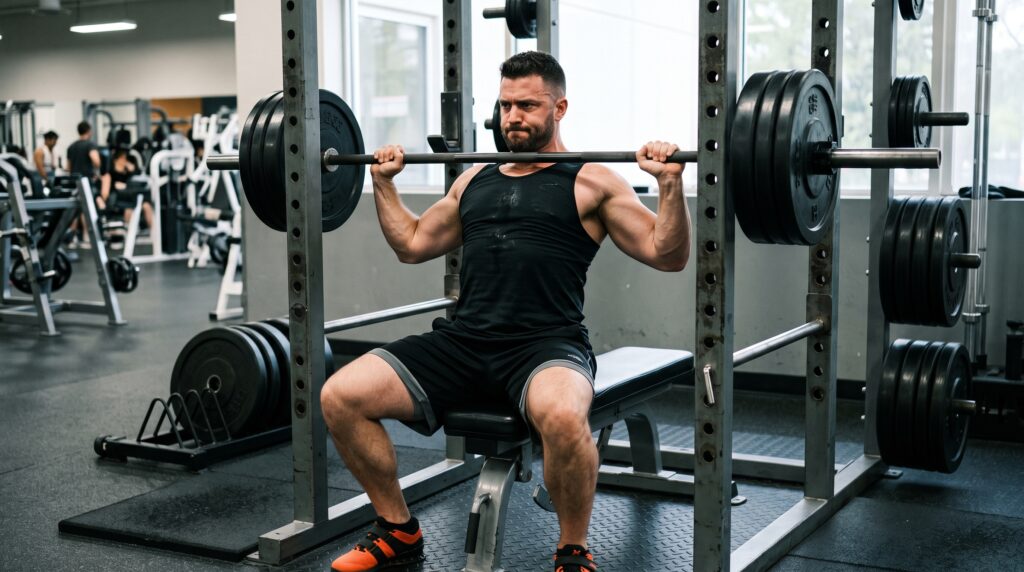
In Starting Strength training they do what Mark Rippetoe calls the low-bar squat position. The low-bar squat position is different than where the bar is up high on top of your traps. A high-bar squat has got a much more vertical back angle. A much more vertical back angle tends to unload the back itself. The back is more in compression with a vertical position than it is in moment. And we want to load the back in moment, we want to load the hips in moment, and we want to load everything we can load to put more stress on all these major structures. So, we’re going to put the bar lower on the back in order to specifically create a more horizontal back angle.

Weight training

DON´T DROP THE BAR

Let’s talk about the most effective way to use the power rack for squatting. The power rack is an essential tool for training. Mark Rippetoe, the author of Starting Strength, doesn’t regard it as optional. They don’t squat off of squat stands at the Wichita Falls Athletic Club. They always squat either outside of or inside of the rack. Outside or inside depends on a couple of things.

Weight training, Weightlifting

HOW TO WRAP YOUR THUMBS

In this post you´re going to know how, why, and when to use a thumb wrap for pulls. There’s a million different ways to tape your thumb. I’m going to show you the way that Rusty, coach at the Wichita Falls Athletic Club, likes to do it and when he likes to do it. This is pretty simple stuff. It’s not rocket science, but there’s a few things that you might want to consider whenever you decide to tape your thumbs.

Weight training, Health, Injuries and rehabilitation

SHOULD OLDER PEOPLE DEADLIFT?

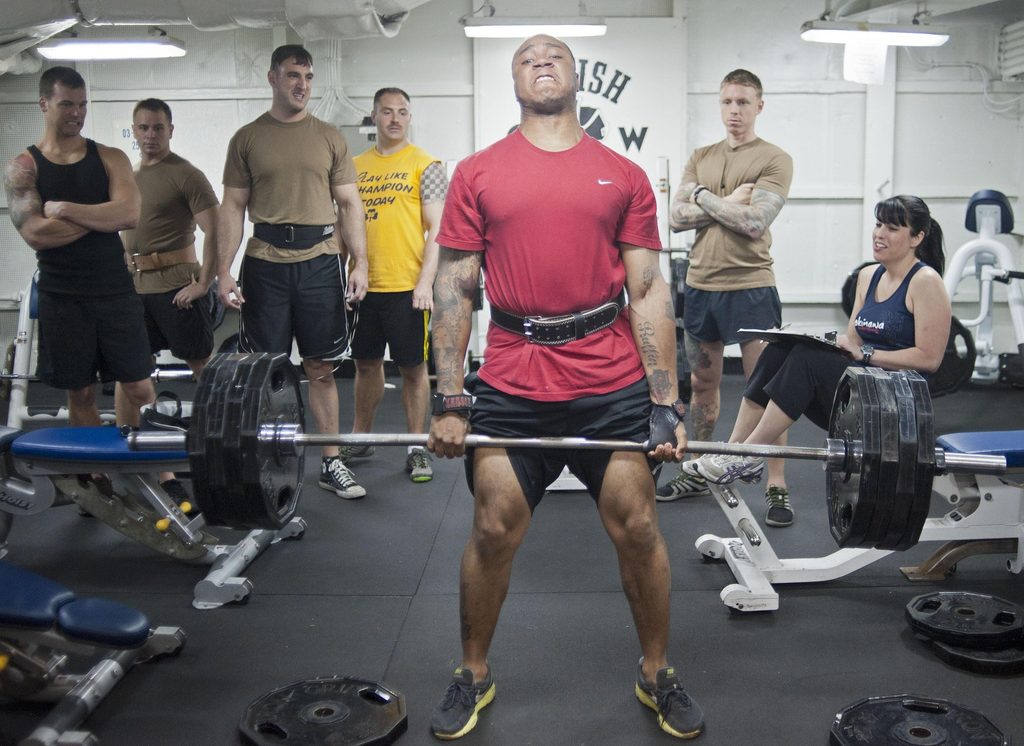
There’s a lot of bad information out that saying deadlifts are bad for you. They’re not. Starting Strength coach Rusty from the Wichita Falls Athletic Club has an 82 year old client who does deadlifts. If his 82 year old can get in there and deadlift, you can. Deadlifts aren’t bad for you. Not deadlifting is bad for you. Deadlifting with bad technique is bad for you. Everybody that says the juice isn’t worth the squeeze with deadlifts, they just don’t know how to coach a deadlift. That’s bad information.

Track and field, Biomechanics

AVOID THIS COMMON SPEED KILLER AND MAXIMIZE YOUR SPEED

It’s amazing how many sprinters loose speed through external rotation. Learn some quick fixes for one of the most common speed killers out there. When sprinting, you want to line up your forces and hit it as hard as you can. Any external rotation will cause your speed to drop. Something as simple as a slight head movement can carry over into the hands and the feet, causing wasted movement and slower times. On top of all of that, if you’re in a competition and step out of your lane, you can get disqualified.

Track and field, Biomechanics

THE IMPORTANCE OF PROPER ARM ACTION TO MAXIMIZE YOUR SPRINTING SPEED

Are you looking to boost your sprinting speed and efficiency? In this post, you´ll discover the importance of proper arm action during sprinting and how it can impact your performance. You’ll learn about the optimal position for your arms based on your individual strength level, as well as why extending your arms past your body during the swing phase can actually slow you down. Proper arm strike and movement can help reduce ground contact time and improve your overall speed. By mastering these techniques, you can take your sprinting to the next level and leave your competition in the dust. All this information comes from the teachings of coach Ken Harnden. Lastly, there´s a section in which Olympian Warren Fraser explains how developing patience leads to developing better technique.

Scroll to Top