Physical preparation

Physical preparation, Exercise physiology

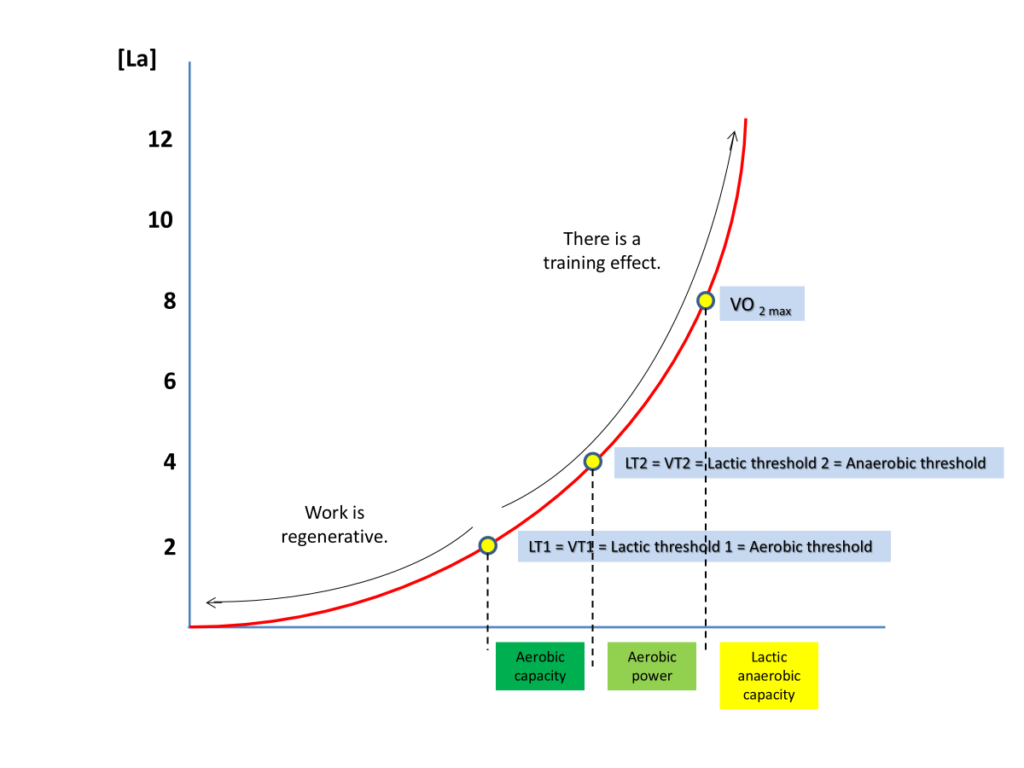
THE RELATIONSHIP BETWEEN LACTATE CONCENTRATION AND EXERCISE INTENSITY

As we perform physical activity continuously over time (running, swimming, cycling, rowing, etc.), the blood lactate concentration will increase proportionally to the intensity of the effort made. But why is all this important?
Blood lactate levels correlate with blood hydrogen ion (H+) levels. Both are the result of the dissociation of lactic acid into lactate and hydrogen ion, therefore the same proportion of both elements exists. Lactic acid is a compound that is formed as a result of anaerobic glycolysis, that is, obtaining energy without the presence of oxygen.

Physical preparation, Biomechanics, Kinesiology

REMEMBERING DOCTOR YESSIS

As of the date I am writing this post, it has been more than a year since Michael Yessis, a great authority in sports science, passed away. It was on September 15, 2023 when he left this world and left us orphans who learned from the methodology and work he has been developing throughout his life dedicated to both research and training with athletes of different levels and sports. It was not until the spring of the following year when I found out about his death. It was sad news for me, although not unexpected because I knew it could happen at any time due to his advanced age. 91 years of life is not bad at all.

Weight training, Physical preparation

OVERHEAD PRESS vs BENCH, ¿WHICH ONE IS THE BEST?

Both the overhead press and the bench press are excellent lifts that should be part of our session to increase our basic strength levels, especially in the upper body. Ideally, they should be introduced in different sessions, as is done in the Starting Strength training methodology, so that overload does not occur and we can give our best in each of these exercises without accumulating fatigue. Because a large part of the muscles that intervene dynamically are the same in both movements with the Olympic bar. Therefore, when working with high weights, the performance of the overhead press would affect the bench press if we do it afterwards, or vice versa, due to the muscular fatigue that is generated, which means that doing both at a high intensity in the same session is too much work volume.

Track and field, Physical preparation

THE SPEED BARRIER AND FLOATING SPRINTS

What if your speed training was actually preventing you from running faster and reaching your true max speed? While it might seem surprising, turns out that all out sprinting over and over again might not make you any faster. If you have your athlete run 30 meters, or 40 meters or 50 meters, sprinting all out all the time, it’s been proven that will not help him develop their speed. That will help him remember their speed. You’re basically making them record their speed and repeat the same speed every single time.

Physical preparation, Exercise physiology

THE POWER OF POST-ACTIVATION POTENTIATION

Post-activation potentiation (PAP) is a phenomenon whereby an increase in muscle performance occurs after having performed a conditioning activity that elicits a maximum voluntary contraction, a tetanic contraction, or a series of nerve impulses. The physiological mechanisms that originate this phenomenon remain unknown at present. However, two possible hypotheses are considered:

Track and field, Physical preparation, Situational sports

THE PYRAMID OF SPEED AND STRENGTH TRAINING

Just as there is Maslow’s pyramid and the food pyramid, coach Tony Holler has developed his own pyramid aimed at performance in situational sports. Tony Holler is a track and field coach and a football and basketball physical trainer. He works at Plainfield North High School. He is also a member of the Illinois Track & Field Hall of Fame and co-director of the Track Football Consortium with Chris Korfist. But above all, Tony Holler is known for being the author of the “Feed the Cats” training methodology.

Weight training, Physical preparation

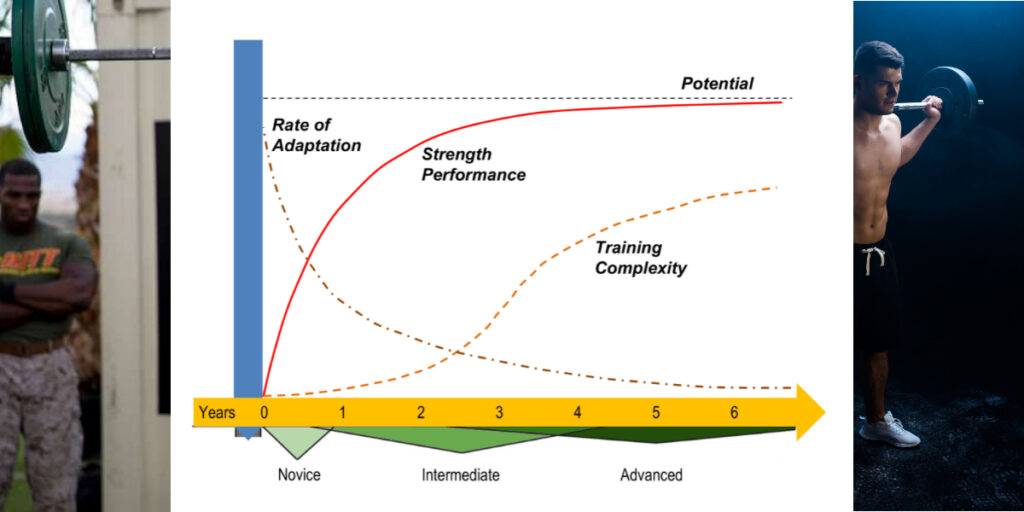
THE RELATIONSHIP BETWEEN IMPROVEMENT IN STRENGTH PERFORMANCE AND THE COMPLEXITY OF TRAINING OVER TIME

Strength training consists of following a program that increases an individual’s ability to produce muscular effort against resistance for the purpose of displacing it. This resistance is almost always external, like when we lift an Olympic bar, but it can also be internal resistance, like when we lift our body when performing a pull-up.

Physical preparation, Martial arts

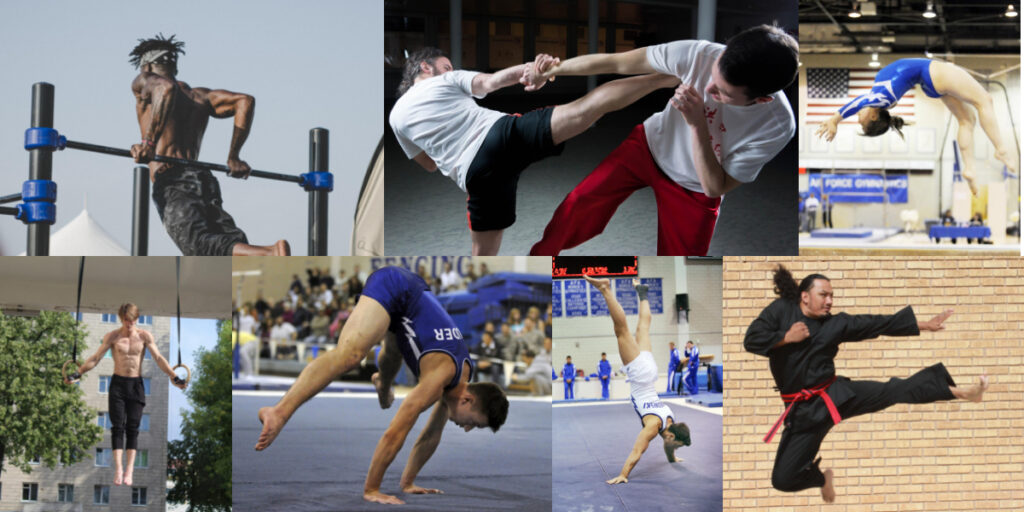
STRONG AND FLEXIBLE AT THE SAME TIME: IS IT REALLY POSSIBLE?

Surely you have heard phrases like this from the mouths of many sports coaches: “If you start lifting weights you will get stronger, but you will sacrifice your flexibility and joint mobility.” And vice versa: “If your goal is to gain a lot of flexibility you have to avoid lifting weights so that it doesn’t limit you.” These approaches that have always existed are not entirely wrong, but they are not 100% correct either. And it depends on how we do things.

Weight training, Physical preparation

WHEN TO DO MULTI-JOINT EXERCISES AND SINGLE-JOINT EXERCISES?

One way we can classify strengthening exercises is into multi-joint and single-joint.

An exercise is considered multi-joint when several joints move during its execution, so that all muscle groups belonging to a kinetic chain are strengthened. In this way we can say that the entire body is strengthening at the same time since it intervenes as a single unit performing a natural movement. These exercises are characterized by their efficiency, since they save a lot of time by working the entire body at the same time. But they are also efficient because they can work on three qualities in a unique movement, and also in a functional way:

Scroll to Top