Track and field, Biomechanics

SPRINT FASTER WITH THIS PROVEN TECHNIQUE

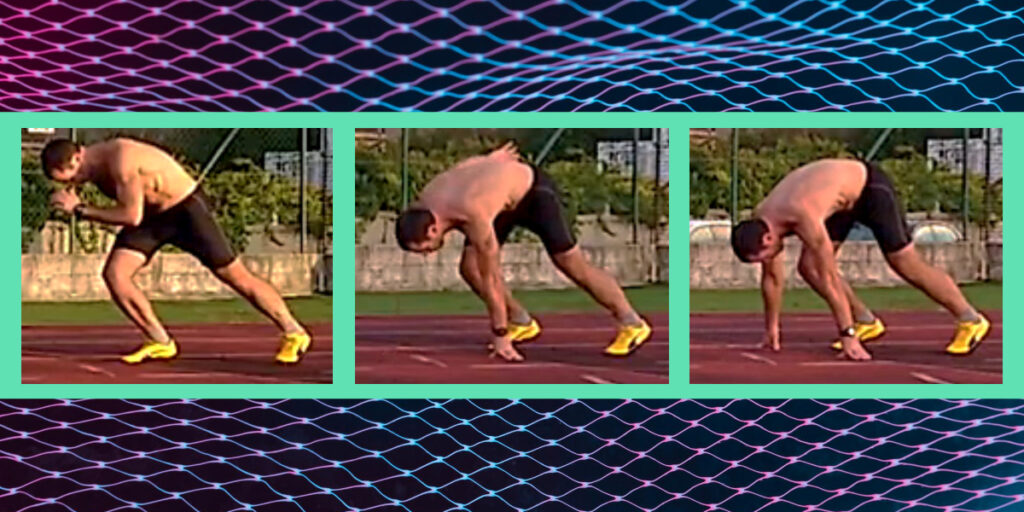
If you want to run faster, mastering the start is non-negotiable. In this post, we uncover the crucial techniques of pushing with the front leg and pulling with the back leg to achieve triple extension, a quick first step and optimal separation right from the get-go. This foundational strategy is key to unleashing explosive power and efficiency during your sprint’s initial phase. It also applies to everything from 2 point starts all the way down to block starts.

Track and field, Physical preparation, Situational sports, Sports training

MAKE SPEED A PRIORITY IN YOUR SPORT

Tony Holler is a track and field coach and a football and basketball physical trainer. He works at Plainfield North High School. He is also a member of the Illinois Track & Field Hall of Fame and co-director of the Track Football Consortium with Chris Korfist. Tony Holler is the author of the “Feed the Cats” training method. In this post, you’ll learn how to make speed the priority number one in your program.

Track and field, Basketball, Exercise physiology, Kinesiology

CAN SPRINTING HELP YOU DUNK?

Dunking a basketball is one of the most captivating things you can do as an athlete, especially if you’re under 6 feet tall. Anyone who’s ever played basketball has likely fantasized at least once about what it would be like to dunk during a game. The only problem is less than 1% of people in the world can probably dunk. In this post we’re gonna dive into the science to understand if sprinting can help you dunk.

Track and field, Exercise physiology, Kinesiology

HOW MUCH FAST TWITCH FIBERS DO ELITE SPRINTERS HAVE?

We can look at muscle fibers as being on a spectrum with slow twitch on one side and fast twitch on the other side.
Type 1, which are slow twitch, uses oxygen to create energy. The upside is they can work for a longer period of time before fatiguing. The downside is they contract the slowest. When a muscle contracts, these are the first fibers to be recruited. Then, as intensity increases, the fast twitch fibers are then recruited as well.
Type 2A, which are fast twitch, uses both stored energy and new energy created with oxygen just like type 1. The difference is, since they use stored energy, they can contract faster than type 1. They can work for a short period of time before fatiguing.
Type 2X, which are the fastest muscle fibers in humans, uses stored energy only. This allows it to contract the fastest, but it also means it fatigues the fastest. The thing is these fibers are rarely present in the average human. In a study with sprinters they found only 1 out of 1.000 muscle fibers they examined were pure type 2X.

Track and field, Exercise physiology, Kinesiology

WHY DO OLYMPIC SPRINTERS HAVE INSANE SHOULDERS?

Have you noticed that Olympic sprinters have insane shoulders? I mean not only are they large in size, but they are also even developed, have impressive flexibility and almost never get injured. According to a study, 36 of all resistance training related injuries occur at the shoulder. They identified the biggest risk factors as a muscle strength imbalances, front shoulder instability and loss of mobility, which is the complete opposite of what nearly every Olympic sprinter has. In this video we’re going to try to figure out why do Olympic sprinters have insane shoulders.

Physical preparation, Situational sports, Sports training

STOP DOING MINDLESS CONDITIONING

Tony Holler is a track and field coach and a football and basketball physical trainer. He works at Plainfield North High School. He is also a member of the Illinois Track & Field Hall of Fame and co-director of the Track Football Consortium with Chris Korfist. Tony Holler is the author of the “Feed the Cats” training method. In this post you’ll read Tony Holler’s thoughts on conditioning in team sports like football.

Physical preparation, Situational sports, Sports training

THE DIFFERENCE BETWEEN “SPEED RESERVE” AND “SPRINT CAPACITY”

Tony Holler is a track and field coach and a football and basketball physical trainer. He works at Plainfield North High School. He is also a member of the Illinois Track & Field Hall of Fame and co-director of the Track Football Consortium with Chris Korfist. Tony Holler is the author of the “Feed the Cats” training method. In this post we´re going to talk a little bit about speed reserve and sprint capacity, two things that you need to be equipped.

Weight training

THE GREAT LIFTER DILEMMA

One of the biggest problems lifters face, especially those pushing heavy weight, is managing their rest periods. You need to recover enough to be able to give a strong effort, but you don’t want to cool down so much that you lose that readiness. But what happens when the most primal of urges interrupts that balance? Today, we’re talking about something every serious lifter will face at somepoint: the urgent need to take a dump midworkout. You don’t want to let your rest period drag on too long, but you also don’twant to soil yourself under a heavy load. So, how do you handle it?

Track and field, Physical preparation, Situational sports, Sports training

HOW TO TRAIN FOR SPEED DURING THE OFF SEASON

Tony Holler is a track and field coach and a football and basketball physical trainer. He works at Plainfield North High School. He is also a member of the Illinois Track & Field Hall of Fame and co-director of the Track Football Consortium with Chris Korfist. Tony Holler is the author of the “Feed the Cats” training method. In this post, you’ll learn how their athletes train for speed during the off-season.

Scroll to Top