Author name: Hugo Noya Enríquez

Weight training

WHAT IS THE PROPER SQUAT DEPTH AND WHY?

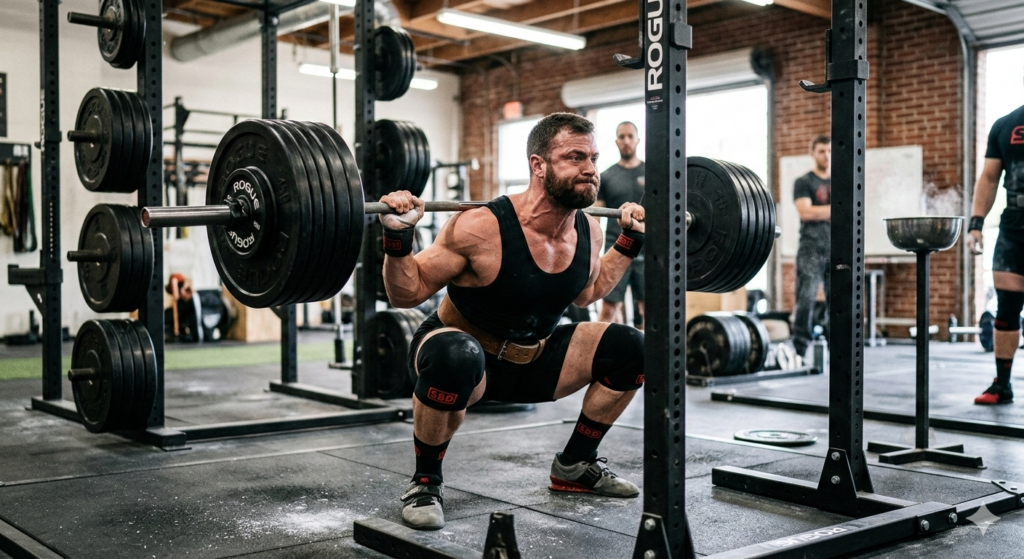
Today we´re going to discuss the standard for squat depth, comparing and contrasting the positions in high squats with proper squats.
In Starting Strength, coaches like Rusty from the Wichita Falls Athletic Club have the reasons why they want to be squatting to the proper depth. It involves the hamstring, back angle, knee angle, most muscle mass… In this post, I’m just going to be talking about what that depth looks like.

Physical preparation, Exercise physiology, Situational sports

SPRINT BASED FOOTBALL

Tony Holler is a track and field coach and a football and basketball physical trainer. He works at Plainfield North High School. He is also a member of the Illinois Track & Field Hall of Fame and co-director of the Track Football Consortium with Chris Korfist. But above all, Tony Holler is known for being the author of the “Feed the Cats” training methodology. In this post you´ll learn the importance of training max velocity or top speed in football practice to achieve better performance during the game.

Weight training

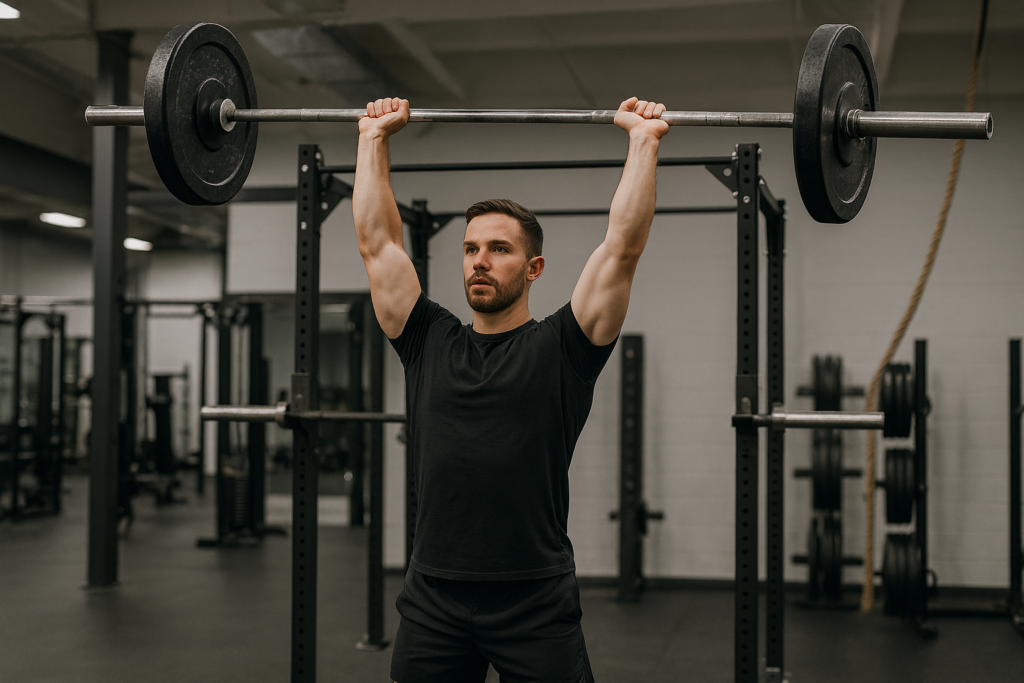
STOP THROWING THE BAR FORWARD IN YOUR PRESS

Today we´re going to talk about a common movement error starting the bar in the press that throws the bar forward and how to stop this from happening.
Starting Strength coaches teach a hip movement when doing the press. The trainee dip the bar and drive through the bar. The bar stays midfoot at the beginning of the press because it’s got to be in front of the neck. And then, we want to get it back to the shoulders as quick as possible.

Track and field, Exercise physiology, Kinesiology, Physical preparation

HOW TO RECOVER AFTER SPRINTING WORKOUTS AND STAY INJURY FREE

Learn cool down drills that will improve sprinting technique, speed up recovery and help prevent injuries. A good post workout routine that includes specific cool down drills is a critical component of sprint training. Unfortunately, it’s also one of the most overlooked areas when it comes to speed training and most track and field events in general.

Track and field, Biomechanics, Exercise physiology

IS YOUR SPRINTING TECHNIQUE DIFFERENT WHEN RUNNING 100M AND 400M?

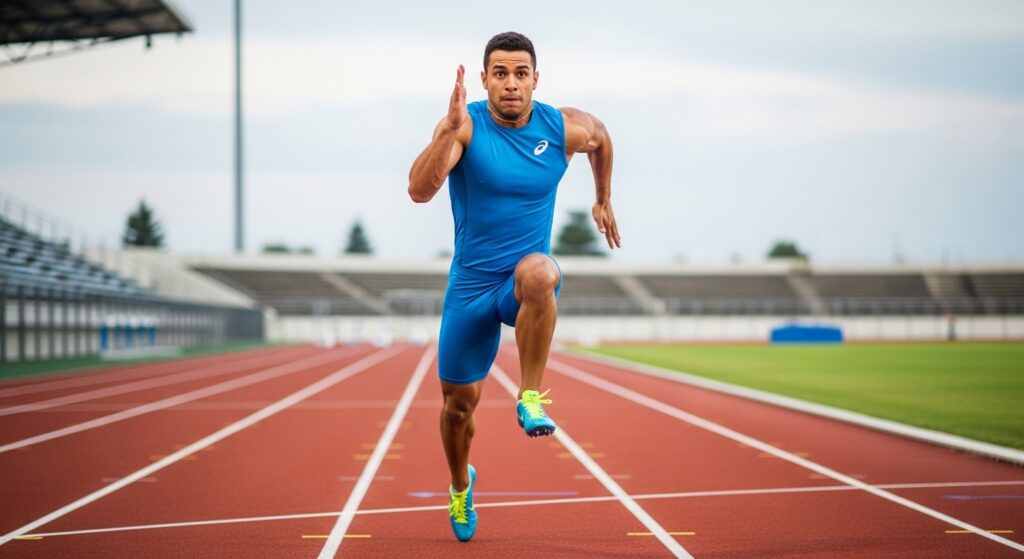
In this post I highlight based on the opinion of Olympic coach Karim Abdel Wahab, some of the key differences and similarities between the 100m and 400m when it comes to sprinting technique. Studies have shown that the 400m runners whose technique is closest to 100m runners are the fastest. Topics covered include knee drive, turnover, ground contact time as well as where the foot lands in relationship to the bodies center of mass during sprinting.

Track and field, Biomechanics, Kinesiology

COMMON ERRORS SPRINTERS MAKE AND HOW TO AVOID THEM

Learn some of the most common errors athletes make with sprinting technique and how to avoid them. In this post I ´ll share with you coach the errors coach Karim Abdel Wahab has seen athletes make throughout his time working with elite sprinters as well as football players preparing for the NFL draft combine.
Starting with the the most common mistake, which is staying too low out of the blocks or at the beginning of the sprint, you’ll learn why staying low dramatically reduces the ability to produce force down to the ground and results in slower speed. Coach Karim provides an effective cue to help solve this issue.
Another common error is breaking at the waist. This breakdown in technique also inhibits speed and will result in slower times and can potentially lead to injuries. Learn how to spot a “fake lean” and some tips on optimal sprinting biomechanics.
Finally, there area two Athlete Insight sections in which Olympians Jeremy Dodson and Janay DeLoach discuss about the biggest myths and worst advice they heard in high school and why you should avoid them if you want to reach your potential.

Track and field, Biomechanics, Kinesiology

HOW TO SPRINT FASTER WITH PROPER GROUND CONTACT AND FORCE APPLICATION

Learn how to sprint faster with proper ground contact and force application. One of the biggest misconceptions out there is how the foot strikes the ground (it’s not on the toe and not on the heel). This post covers where the foot strikes the ground and why that is important for force application and speed development. In order to take advantage of the “stretch reflex” and really utilize the muscles of the lower leg, it’s important to ingrain into the nervous system how to properly land with each stride. This post teaches the fundamentals of correct ground contact throughout the entire sprint. Athlete Insight sections cover force production and how striking down and back is different than “stomping” your way down the track.

Weight training

PULLING WITH A DEADLIFT BAR

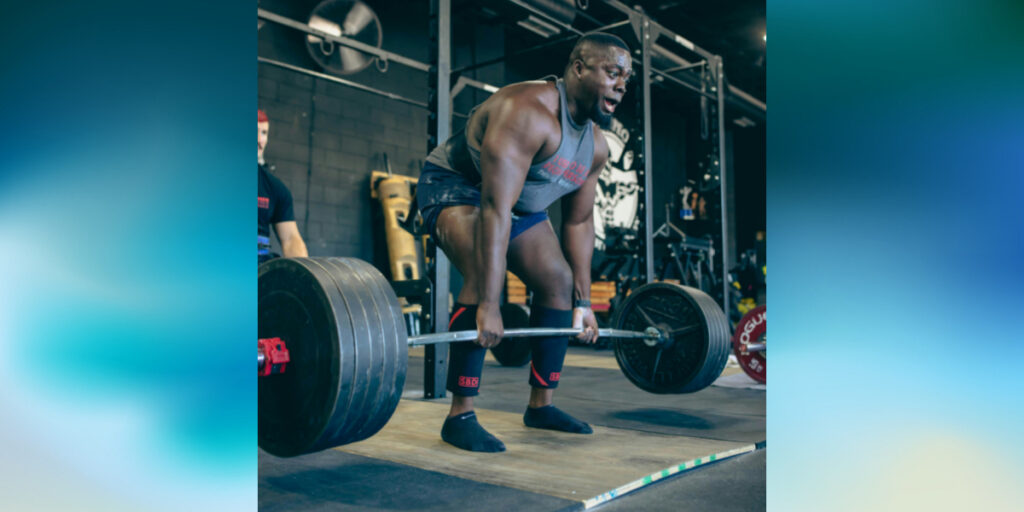
Today we´re going to explain what a deadlift bar is and how it can be used. Let’s first talk about the difference between a deadlift bar and a regular standard bar. Some examples of stardand bar are:
The Texas Strength System bar. It has really good knurling. The only thing that it doesn’t have is the center knurling.
The Starting Strength Bar that Buddy Capps Welding makes. It’s very similar to the previous one but it has a center knurling.

Track and field, Biomechanics, Kinesiology, Physical preparation

HOW TO DO FASTER STARTS AND IMPROVE YOUR REACTION TIME

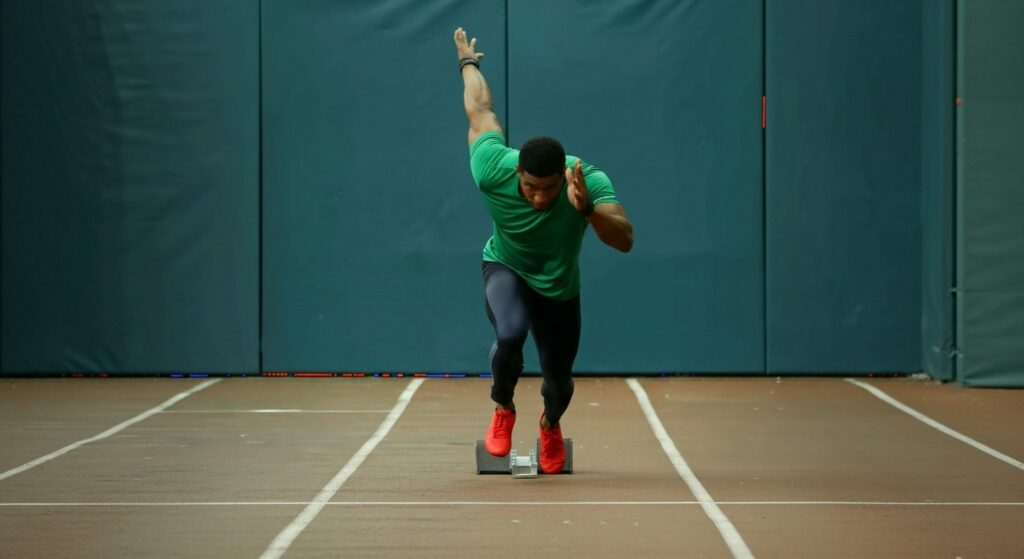
Learn how to sprint faster by improving your start. This post contains some of the key technical aspects of acceleration out of the blocks including posture, force application, and arm movement during the first phase of sprint. I´ll share with you several drills that improve reaction time that coach Karim Abdel Wahab uses prior to having athletes get into the blocks. Finally, you´ll find out Olympian Jeremy Dodson´s opinion about how video games help to improve reaction time, his mindset at the line and first 3 steps out of the blocks. He also shares some tips that have helped him perform at a peak level.

Weight training, Weightlifting

IMPROVE YOUR SNATCH DOING SNATCH BALANCE DRILLS

Today we’re going to be talking about the Olympic lifts. We’re going to be talking about the snatch and one of the best accessory lifts to do for the snatch.
The snatch and the clean have a similarity: it is a rapid extension, then a drop to get under the bar and then a hard lock out with the elbow. A press out doesn’t count. A press out is when you get it about halfway or 3/4 of the way, and then you actually push on the bar. The rapid extension throwing the bar and then dropping under the bar is what makes the lift a lift. That’s what the snatch and the clean and jerk have in common.

Scroll to Top