Biomechanics, Swimming

ANALYSIS OF THE CRAWL OR FREESTYLE TECHNIQUE IN SWIMMING

The crawl or freestyle is an alternative swimming style in which the swimmer moves using alternative movements of the feet and arms. He is propelled underwater and recovered on the surface. He turns at two or three meters from the wall. The existing competition events of this style in swimming are the following: 50 m, 100 m, 200 m, 400 m, 800 m, 1500 m, 4 x 100 m, 4 x 200 m. All of them are Olympic and the 4 x 200 m relay is only contested in the men’s category.
Track and field, Exercise physiology

THE INSANE WAYS TRACK AND FIELD TRANSFORMS YOUR BODY

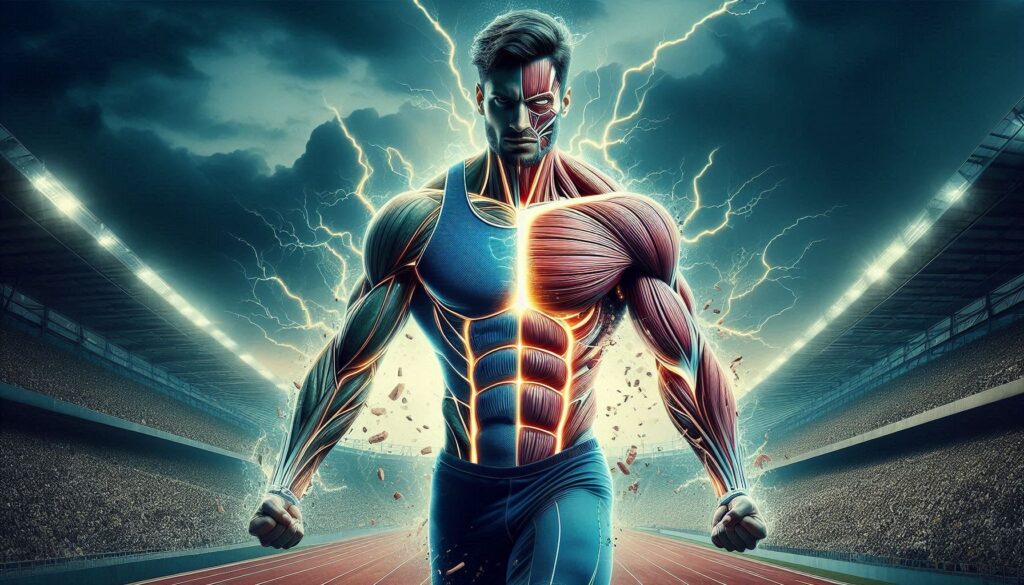
No other sport tests the extremes of human performance like track and field. The physical demands of each event are so confused and singular that athletes must push their body and training to the very limits of what is possible.

In the same arena you´ll see the pinnacle of human strength and power by a 320 lb behemoth while a wiry runner half his size test the limits of aerobic capacity. Just by looking at track and field athletes you can see how their event shapes their bodies. Obviously lifting heavy weights builds muscle and running hundreds of miles sheds body fat. But the really fascinating adaptations are less apparent. In the pursuit of faster-higher-farther the body transforms in some incredible ways.

Swimming

GENERALITIES ABOUT OF SWIMMING SPORT

The six aquatic sports disciplines run by World Aquatics (until 2022 called the International Swimming Federation) are swimming, water polo, open water swimming, artistic swimming (until recently called synchronized swimming), diving and high diving. Of all of them we will analyze swimming in more detail.

Track and field, Physical preparation, Situational sports

THE PYRAMID OF SPEED AND STRENGTH TRAINING

Just as there is Maslow’s pyramid and the food pyramid, coach Tony Holler has developed his own pyramid aimed at performance in situational sports. Tony Holler is a track and field coach and a football and basketball physical trainer. He works at Plainfield North High School. He is also a member of the Illinois Track & Field Hall of Fame and co-director of the Track Football Consortium with Chris Korfist. But above all, Tony Holler is known for being the author of the “Feed the Cats” training methodology.

Exercise physiology

PHYSIOLOGY OF SKELETAL MUSCLE (PART 4): TYPES OF MUSCLE CONTRACTION

Depending on the relationship that an individual establishes with external resistances, muscle activation can lead to three different contractions:

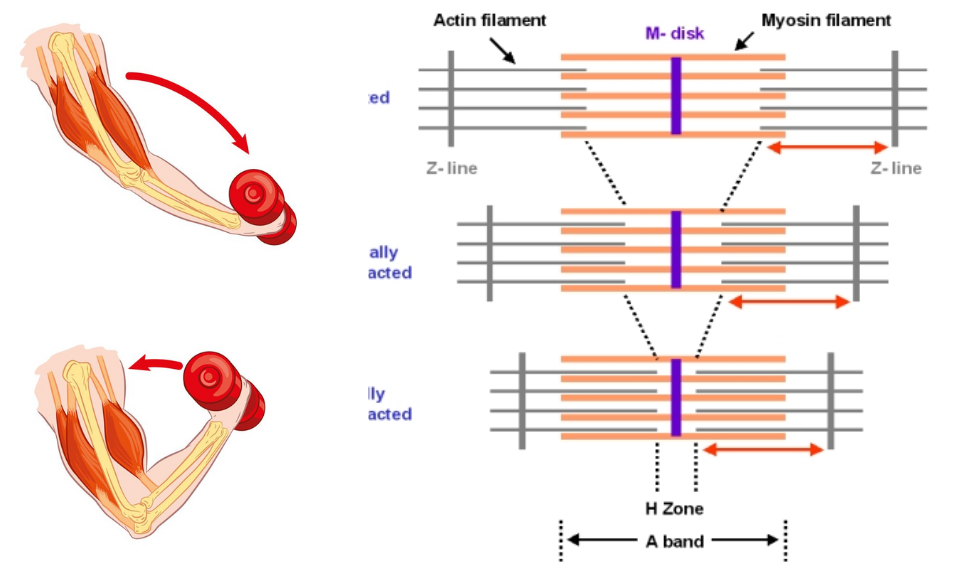
CONCENTRIC: With shortening of muscle fibers. Overcoming external resistance. The external force acts in the opposite direction to the movement.

ECCENTRIC: With lengthening of muscle fibers. Assignment to external resistance. The external force acts in the same direction as movement.

ISOMETRIC: The magnitude of muscle tension is equal to the force caused by external resistance, so the length of the muscle does not vary and there is no mechanical work. However, there are internal variations with respect to the state of rest: the only thing that remains the same is the angle at which the muscle tension is occurring, but the action of the muscle is to shorten fibers and stretch the connective tissue (tendon).

Exercise physiology

PHYSIOLOGY OF SKELETAL MUSCLE (PART 3): TYPES OF MUSCLE FIBERS

Skeletal muscle is a tissue capable of making a wide range of functional demands, from performing highly precise movements for which little force is required, to maximum contractions, to maintaining the body’s posture. This versatility is due, in part, to the existence of several types of muscle cells or fibers, which have different functional, metabolic and molecular characteristics.

Exercise physiology

PHYSIOLOGY OF SKELETAL MUSCLE (PART 2): MUSCLE CONTRACTION

At rest, the thin and thick filaments of a sarcomere slightly overlap. During contraction, the thin and thick filaments slide past each other bringing the Z lines closer to the center of the sarcomere.

Contraction is stimulated when the muscle fiber innervating α motor neuron releases the neurotransmitter acetylcholine as a consequence of an action potential (electrical signal originating in the neuron). Thus, the action potential is transmitted along the muscle fiber, causing the following effects:

Exercise physiology

PHYSIOLOGY OF SKELETAL MUSCLE (PART 1): THE STRUCTURE OF SKELETAL MUSCLE

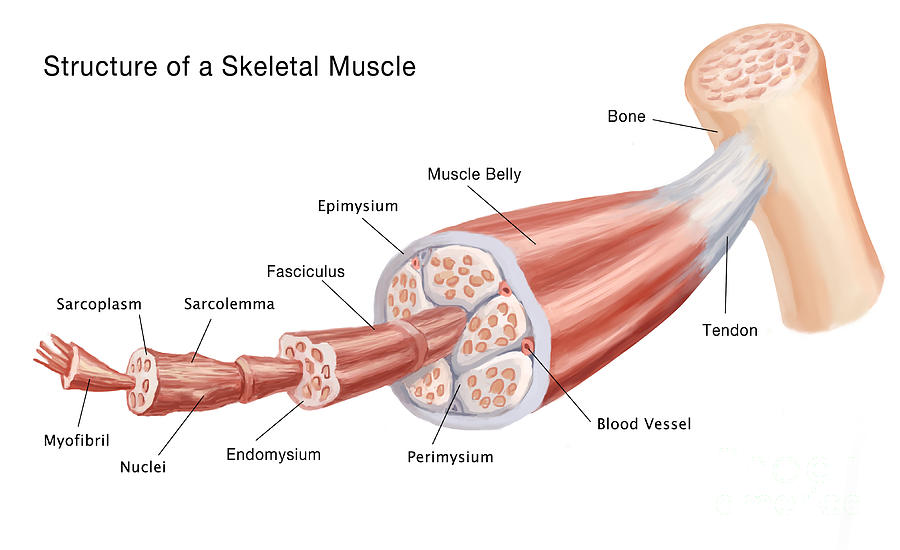
The human body contains approximately 650 muscles and the different sets of muscles are enveloped by a membrane of connective tissue called the fascia (e.g., thoracolumbar fascia).

The functional and structural unit of muscle tissue is the muscle fiber, differentiated muscle cell or myocyte. Each muscle fiber is surrounded by a fine network of reticular fibers (endomysium). In turn, the muscle fibers are grouped in bundles, among which we find connective tissue structures (perimysium) with collagen and elastic fibers, vessels and nerves. The entire muscle is in turn covered by a connective tissue sheath (epimysium), which continues with the connective tissue that surrounds the fiber bundles and tendons.

Weight training, Physical preparation

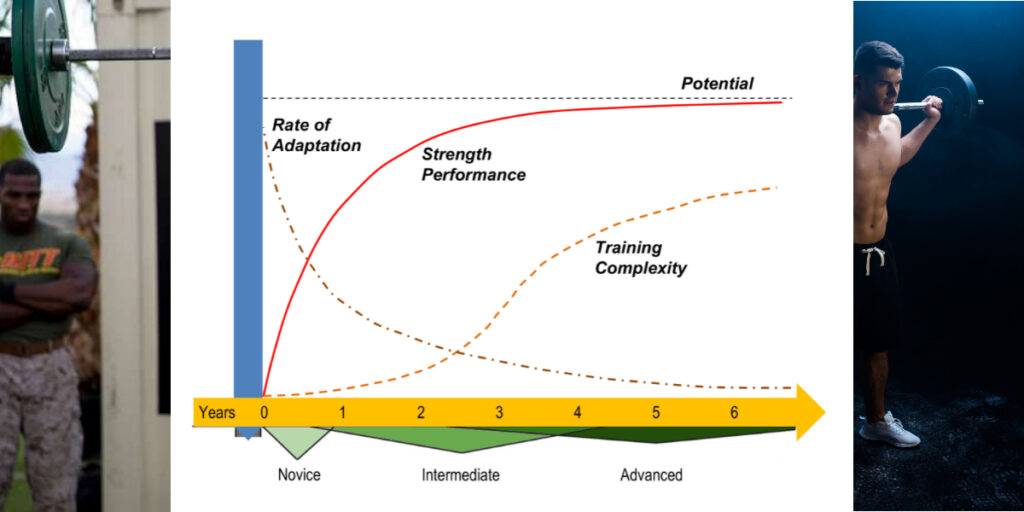
THE RELATIONSHIP BETWEEN IMPROVEMENT IN STRENGTH PERFORMANCE AND THE COMPLEXITY OF TRAINING OVER TIME

Strength training consists of following a program that increases an individual’s ability to produce muscular effort against resistance for the purpose of displacing it. This resistance is almost always external, like when we lift an Olympic bar, but it can also be internal resistance, like when we lift our body when performing a pull-up.

Track and field, Biomechanics, Kinesiology

TWO WAYS TO RUN SPEED DETERMINED BY YOUR MORPHOLOGY

In sprinting form makes function. What does this mean? It means that the sprint technique is highly dependent on the differences in muscular balance between agonist and antagonist muscles.

Kelly Baggett distinguishes in his book “No-Bull Speed ​​Development Manual” two types of runners based on the predominance of one muscle group or another, with its consequent implications in the biomechanics of sprinting.

Scroll to Top