Author name: Hugo Noya Enríquez

Weight training, Physical preparation

HOW TO STRENGTHEN THE START OF THE PULL WITH HALTING DEADLIFTS

In the last post we talked about the rack pull. The rack pull and the halting deadlift are two very important assistance exercises for the full deadlift for more advanced lifters who are pulling heavy weights already. The advantage of using these two instead of just the deadlift is that at very very heavy weights the full deadlift becomes extremely difficult to recover from if you use enough volume to really ramp up the stress. So what we do is we break it into two parts. We do the the first half of it, really about the first 2/3 of it off the floor. We call that the halting deadlift. And then there´s the rack pull, which is the top 2/3 of it from below the knee. We’re going to talk about the halting deadlift today.


Weight training, Physical preparation

EVERYTHING YOU NEED TO KNOW ABOUT THE RACK PULL: WHY, WHEN, AND HOW

There are two primary assistance exercises for the deadlift. When we say assistance exercises in in this context, we’re talking about pieces of the full deadlift that have been pulled out of the deadlift and exercised separately. The first is the rack pull which is the top 2/3 of the pull, and the second is the halting deadlift which is the bottom 2/3 of the pull. We’ll deal with the halting deadlift in another post. Today we’re going to talk about the rack pull.

Track and field, Physical preparation, Situational sports, Sports training

“FEED THE CATS”: TONY HOLLER´S TRAINING PHILOSOPHY THAT WILL HELP IMPROVE YOUR SPEED

Tony Holler is a track and field coach and a football and basketball physical trainer. He works at Plainfield North High School. He is also a member of the Illinois Track & Field Hall of Fame and co-director of the Track Football Consortium with Chris Korfist. Tony Holler is the author of the “Feed the Cats” training method, the fundamentals of which we will explain below.

Weight training, Physical preparation

WHEN CAN YOU START DOING HALTING DEADLIFTS AND RACK PULLS IN YOUR STRENGTH TRAINING?

The Starting Strength method is famous for its utilization of just the basic barbell exercises: the squat, the press, the bench press, the deadlift and the power clean. But circumstances usually later in a person’s training history sometimes dictate that the deadlift becomes replaced with two other exercises that essentially cover that range of motion, but allow the use of heavier weights. Those two exercises are the rack pull, from below the knee, and the halting deadlift, which is pulled from the floor to just above the knee. So that combining these two movements results in an overlap of about 6 inches in the middle of the pull.

Weight training, Health, Injuries and rehabilitation, Physical preparation

HOW SHOULD YOU WARM UP FOR PULL UPS OR CHIN UPS?

Pull ups and chin ups are a strength exercise performed with one’s own body weight that should be included in any athlete’s strength training, regardless of whether they train for competitive purposes or to improve and maintain physical fitness. This fabulous self-loading exercise helps us strengthen our back, improve our body posture and develop general strength levels, especially in the upper body.

Track and field

WHY RUNNING A SUB 10 SECOND 100M IS STILL MIND-BLOWING

In the world of sports the line between good and great often blurs, but in the 100 meters it´s definitive. They´re fast and then they´re sub 10. Running 100 metres in under 10 seconds marks an athelte´s entry into an elite circle. But in the modern era of sprinting athletes are breaking the sub 10 barrier more than ever before. This poses an intriguing question: Does running sub 10 still carry the same weight, the same awe that it once did?

Physical preparation, Exercise physiology

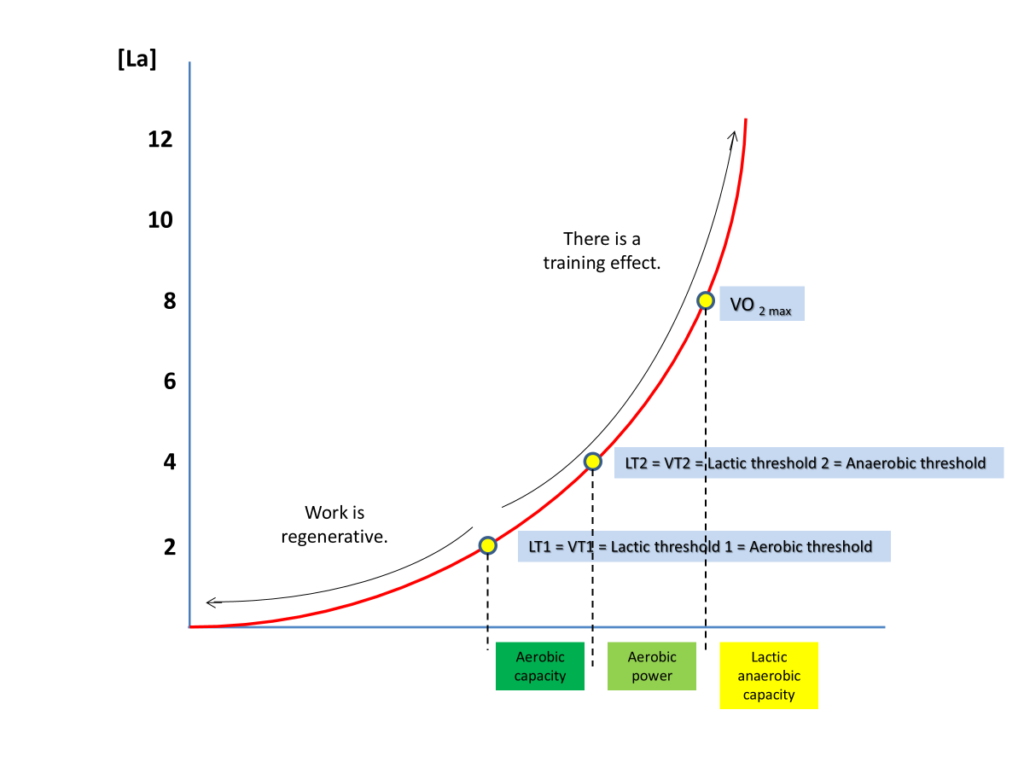
THE RELATIONSHIP BETWEEN LACTATE CONCENTRATION AND EXERCISE INTENSITY

As we perform physical activity continuously over time (running, swimming, cycling, rowing, etc.), the blood lactate concentration will increase proportionally to the intensity of the effort made. But why is all this important?
Blood lactate levels correlate with blood hydrogen ion (H+) levels. Both are the result of the dissociation of lactic acid into lactate and hydrogen ion, therefore the same proportion of both elements exists. Lactic acid is a compound that is formed as a result of anaerobic glycolysis, that is, obtaining energy without the presence of oxygen.

Scroll to Top