
Exercise physiology
-
Tony Holler is a track and field coach and a football and basketball physical trainer. He works at Plainfield North High School. He is also a member of the Illinois Track & Field Hall of Fame and co-director of the Track Football Consortium with Chris Korfist. But above all, Tony Holler is known for being…
-
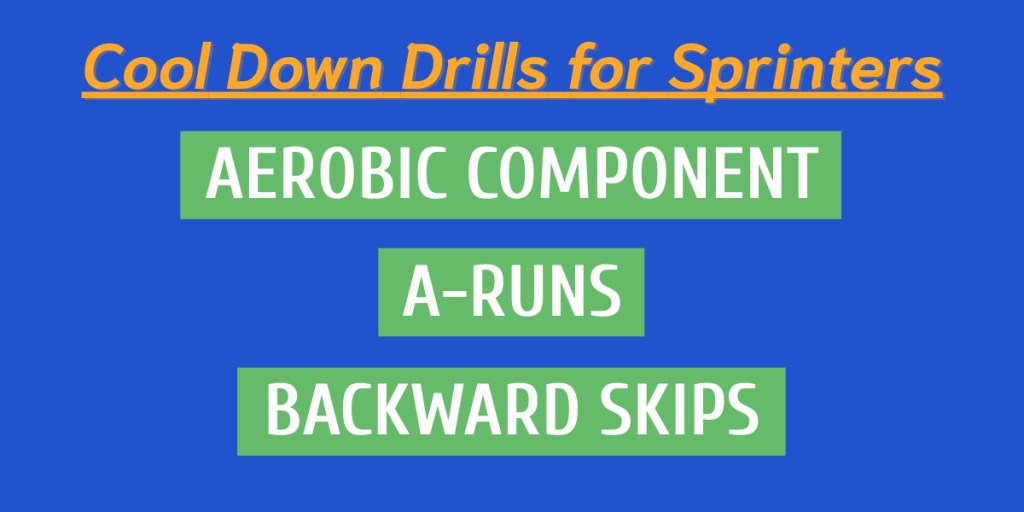
Learn cool down drills that will improve sprinting technique, speed up recovery and help prevent injuries. A good post workout routine that includes specific cool down drills is a critical component of sprint training. Unfortunately, it’s also one of the most overlooked areas when it comes to speed training and most track and field events…
-

In this post I highlight based on the opinion of Olympic coach Karim Abdel Wahab, some of the key differences and similarities between the 100m and 400m when it comes to sprinting technique. Studies have shown that the 400m runners whose technique is closest to 100m runners are the fastest. Topics covered include knee drive,…
-

Do you have the right body to be fast? The hard truth is your parents set your speed potential. We know that’s not some hot take. Everyone points it out all the time. But what are the specific physical traits that are supposed to make you fast? Scientists have measured it all: leg length, muscle fibers, bone structure, and even…
-

Dunking a basketball is one of the most captivating things you can do as an athlete, especially if you’re under 6 feet tall. Anyone who’s ever played basketball has likely fantasized at least once about what it would be like to dunk during a game. The only problem is less than 1% of people in…
-

We can look at muscle fibers as being on a spectrum with slow twitch on one side and fast twitch on the other side. Type 1, which are slow twitch, uses oxygen to create energy. The upside is they can work for a longer period of time before fatiguing. The downside is they contract the…
-

Six pack abs is one of those things in life that nearly everyone wants at least for one point in their life. But very few obtained. Yet Olympic sprinters don’t seem to have that problem. Nearly every single one of them has insane abs. There’s a few obvious reasons why. However, there’s also some less…
-

Have you noticed that Olympic sprinters have insane shoulders? I mean not only are they large in size, but they are also even developed, have impressive flexibility and almost never get injured. According to a study, 36 of all resistance training related injuries occur at the shoulder. They identified the biggest risk factors as a…
-

Today we’re going to be covering the top 7 benefits of sprinting based on science. BENEFIT #1 – MUSCLE GROWTH Sprinting is a type of anaerobic exercise. Anaerobic means it does not require oxygen. This is true for sprinting, jumping and heavy weightlifting. All of which build strength and muscle mass.
-

According to coach Tony Holler, your body adapts to the specific stresses applied. For example: If you properly train speed, your body will adapt to run faster. If you properly train speed endurance, your body will adapt to run faster longer. If you train long and slow, your body will adapt to run longer and…
 ATLETA EXPLOSIVO