
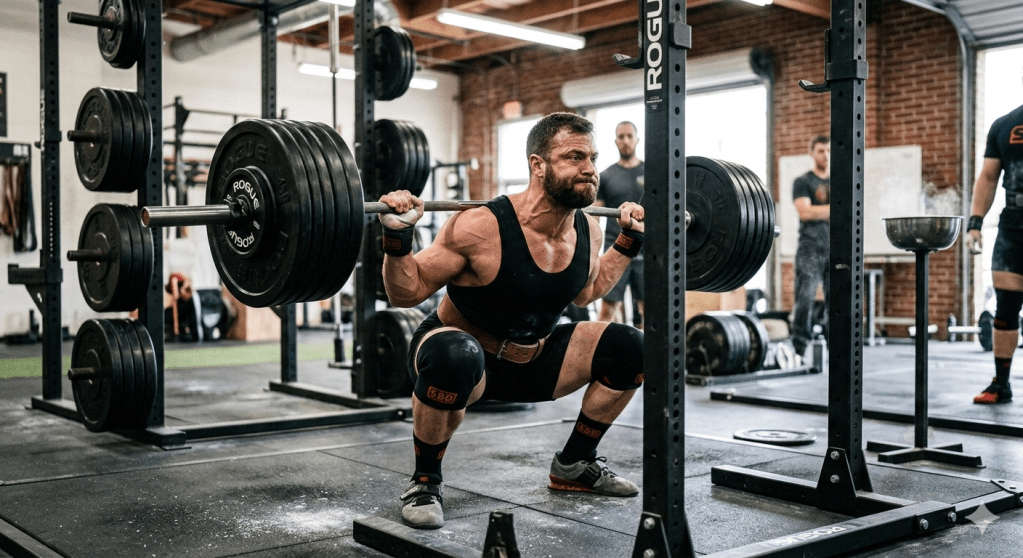
Today we´re going to discuss the standard for squat depth, comparing and contrasting the positions in high squats with proper squats.
In Starting Strength, coaches like Rusty from the Wichita Falls Athletic Club have the reasons why they want to be squatting to the proper depth. It involves the hamstring, back angle, knee angle, most muscle mass… In this post, I’m just going to be talking about what that depth looks like.
When we squat down, what we look for is:
- The crease of the hip, which is at the top of the leg, where the top of the leg meets the hip bone.
- And then, the top of the knee.
We want the crease of the hip to be below the top of the knee.
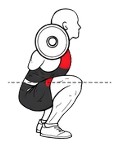
IPF rules state that the crease of the hip has to be below the top of the knee for it to be a legal squat. Starting Strength coaches also use that criteria, but they use that criteria for a different reason: because of most muscle mass, knee angle, back angle… But the purview of this post is just to show you what the squat looks like.
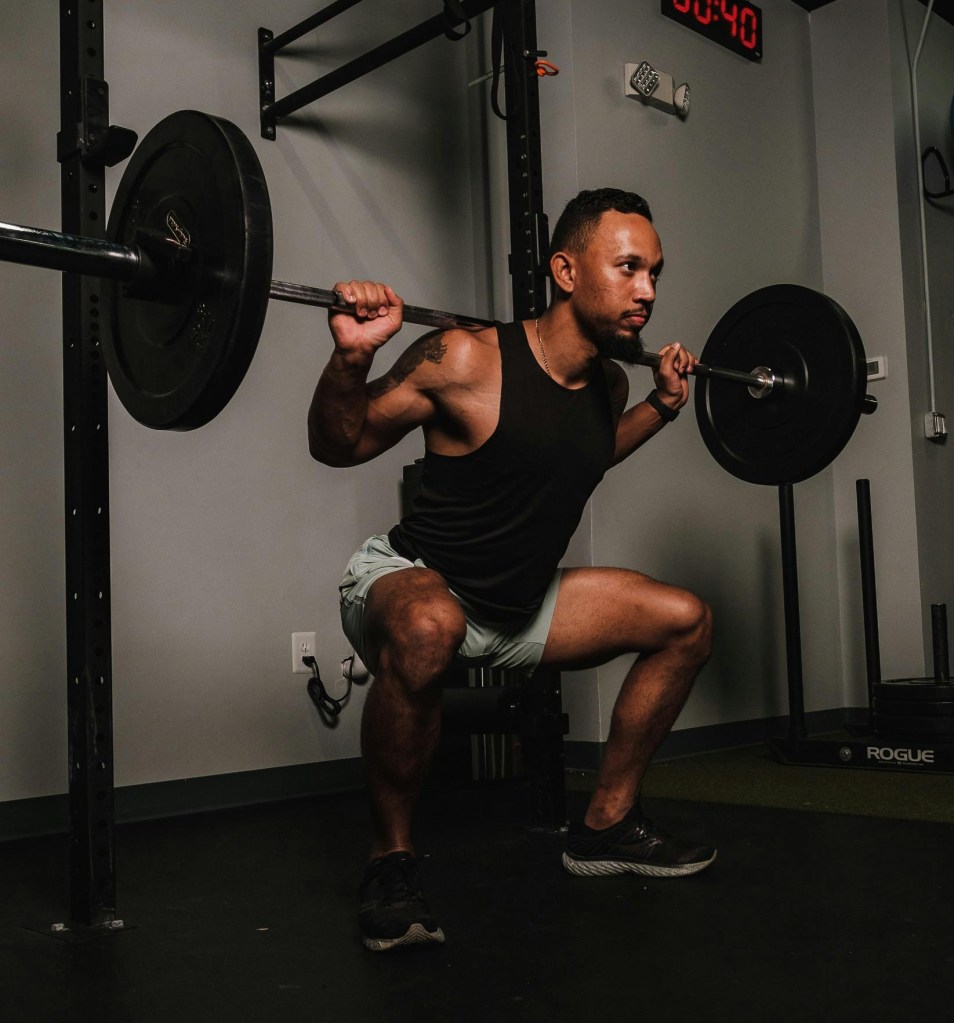
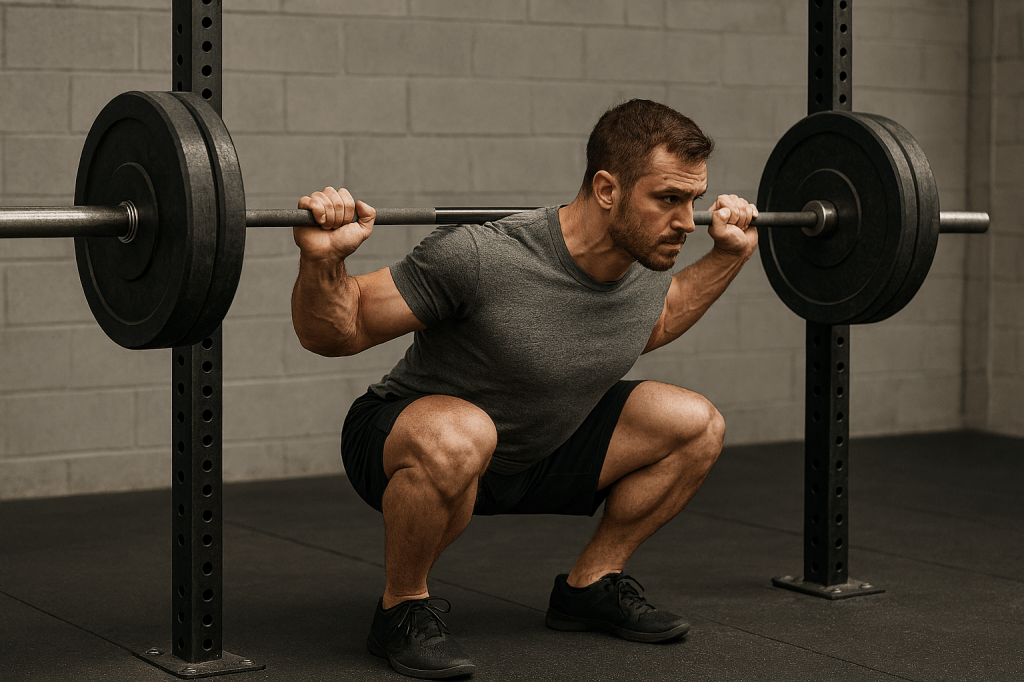
I hope this clarifies what depth should look like. Whether you’re in training, you’re at a raw meet, you’re at an equip meet, you’re at a multi-ply equip meet, depth is depth for a reason. Starting Strength coaches have a standard in squats so you can meet that standard every single time. If you don’t have a standard, then you can’t get stronger because your squats will get higher as the weight goes up. So, meet the standard of the squat: the crease of the hip goes below the top of the knee every single squat. If you do this in training, you won’t have a problem if you do decide to do a meet. I hope this helps.
* If you don´t know how to do the squat by the Starting Strength methodology, click here. You’ll find the information in the section for this lift in that article.
Bibliographic references:
- Rippetoe M. (2011). Starting Strength: Basic Barbell Training, 3rd Edition. The Aasgaard Company.
- Starting Strength. (2026). Depth – s#^@!s vs Squats [Video file]. YouTube. https://youtu.be/j0JcpVk2hiY?si=zxNB_mQTO4ksD9FZ
- International Powerlifting Federation. (2026). IPF technical rulebook 2026 [PDF]. https://www.powerlifting.sport/fileadmin/ipf/data/rules/technical-rules/english/2026_IPF_Technical_Rulebook__effective_01_March_2026__v3.pdf
 ATLETA EXPLOSIVO
Leave a comment