

In this post I’m going to discuss all those actions and habits that are detrimental to developing and improving your sprinting speed. Obviously if you want to run slower and slower, doing all of these things is the best way to go. Here’s a list:
- Perform speed training every day. This will prevent the nervous system from fully recovering from fatigue. Two speed sessions a week are more than enough to make progress, one for longer distances (over 40 metres) and the other for shorter distances (10-20 metres, and depending on the athlete’s level, even up to 30 metres). The two sessions should be separated by at least 72 hours. It has been shown that one sprint running session every 7-10 days is sufficient to maintain speed levels.
- Not doing plyometric training. Sprinting is still a plyometric activity in nature, so skipping this type of training will prevent you from making progress in improving your top speed.
- Performing a very high volume of plyometric training. Apart from the fact that after a certain threshold you will no longer produce any improvement in the neuromuscular system, a very high volume will fatigue the nervous system.
- Do not perform full recovery between sprint reps. By doing this you will not be able to feel fresh enough to do the next sprint responding to the max.
- Performing a very high volume of sprints. As with plyometric training, speed training cannot be performed at a high volume. The reason is that once a certain limit is reached, the nervous system no longer works as effectively due to fatigue. Kelly Baggett suggests never exceeding 500 metres of total sprint volume in a workout. While Travis Hansen suggests that the total sprint volume in a workout should be between 200 and 300 metres, always closer to 200 metres. This is only a guideline for tolerance level, but in reality the training should be finished when the next rep no longer reaches a lower mark than the previous one, so that signs of fatigue are already evident.
- Strength training by following typical bodybuilding routines. By doing so you will not be training the body in a general or global way by involving the kinetic chains, which will affect your intermuscular coordination. You will also be accumulating fatigue in your muscles if you do not fully recover between sets. And finally, with excessive muscle hypertrophy you will make your body too heavy and you will need more energy to move through space.
- Perform a considerably high volume of endurance training. In track and field, you cannot train to excel in speed and long distance races at the same time, so you will have to specialize if you do not want to see your performance in both types of events compromised. If you do endurance and speed training at the same time, you should know that it will affect your sprint performance because it creates interference. Between both qualities, speed performance will always be compromised compared to endurance training.
- Perform speed workouts the day after strength workouts. Obviously, strength training with weights is necessary in planning to improve speed, but if you start sprinting the next day you will not be completely fresh because your muscles still accumulate residual fatigue, as well as your nervous system. And even more so if you have done maximum strength work with lifts such as squats and deadlifts. The result is that you will feel that your body does not respond with the fluidity that you would like to have during sprints.
- Perform speed workouts the day after playing a basketball, soccer, or other team sport. Because all of these sports require a certain level of endurance to perform optimally, and also cause fatigue because there are not complete rest between actions, it is expected that all of this will affect your performance in speed races. Therefore, it is preferable to do sprint workouts before games and to rest sufficiently after playing before working on speed again.
- Not getting enough sleep. The main time when the nervous system recovers from fatigue is during rest and sleep, so you need to get a minimum of 8-9 hours of sleep to be well rested and recovered for the next high-intensity workout. Kelly Baggett has commented that the quickest way to regress in your explosiveness levels is to get too little sleep. Perhaps if you have a bad night sporadically it may not compromise your performance at all, but when it is already somethinig usual, the problem becomes apparent.
- Being overly stressed. If you feel overly stressed for whatever reason (having to do too many tasks in a short time, dealing with toxic people…), it will affect your ability to run very fast. Both sprinting very fast and jumping very high are skills that require a mental relaxation. Even many athletes who are fast and jump a lot suggest that in this state of consciousness performing these skills seems easier to do. The reason for this phenomenon is that the transmission of the nerve impulse is more efficient and intermuscular coordination is greatly improved because the muscles contract when they are supposed to contract, and relax when they are supposed to relax.
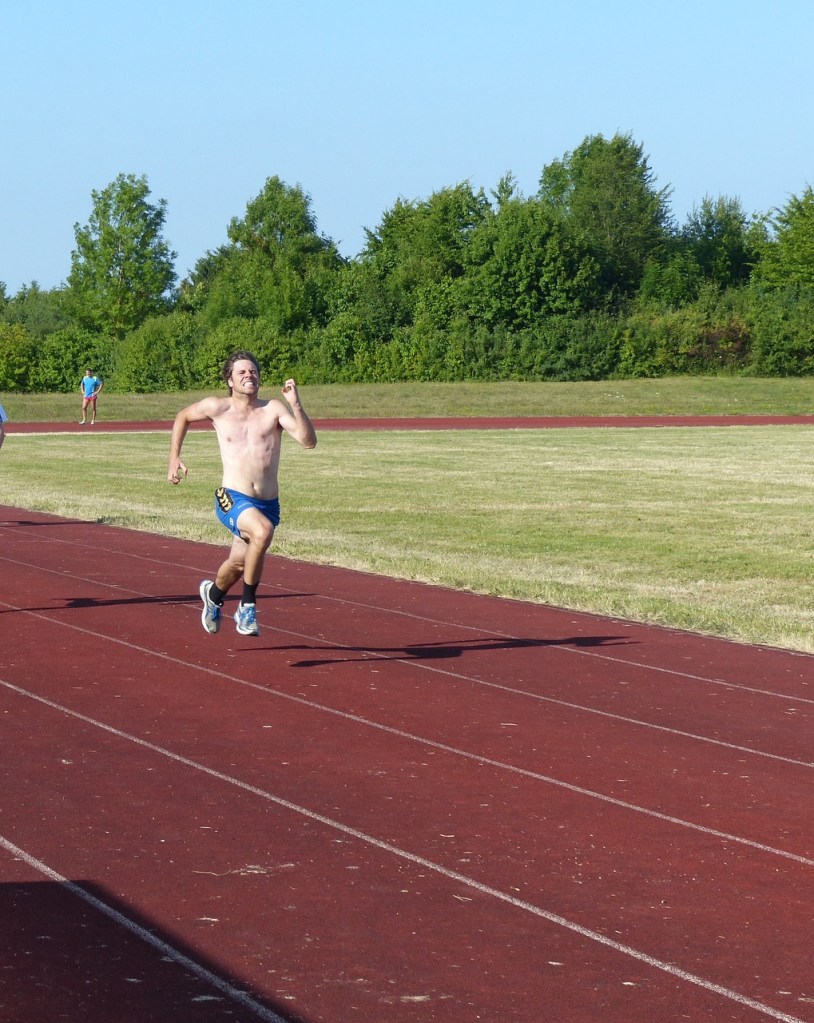
Based on all of the above, it can be concluded that speed training, jumping training, or any other explosive athletic skill training is characterized by quality training, not quantity training. Therefore, we are not interested in accumulating fatigue. Since it is quality training, we seek to apply max intensity in each rep. In order not to generate fatigue that interferes with the quality of performance, the volume of work must be low, as well as the frequency of workouts per week (1 or 2 sprint workouts and 1 or 2 plyometric workouts per week). In addition, recovery must be complete, both within the workout (minimum 1 minute for every 10 meters or yards sprinted after each rep) and between workouts (minimum 72 hours between sprint workouts, and 1 week between sprint workouts of distances greater than 40 meters or yards).
“In speed development, the nervous system only understands quality.”
Boo Schexnayder
“Always choose quality over quantity.
His Holiness the Dalai Lama
This rule applies to every life situation.”
“The quickest way to destroy fast twitch muscle fibers
Kelly Baggett
is to bathe them in lactic acid for prolonged periods of time.”
Bibliographic references:
- Baggett, K. (2005). Vertical Jump Development Bible.
- Baggett, K. (2006). The Ultimate No-Bull Speed Development Manual.
- Baggett, K. (2012). Vertical Jump Bible 2.0 DELUXE.
- Hansen, T. (2012). The Speed Encyclopedia. Reno Speed School.
- Palacios C. [The Sprint Project]. (2023). Want To Run Sub 11?to run slower [Video]. Recovered from https://youtube.com/shorts/yOcF7HeYQCs?si=-kE-BbLLIrz8uFAn
- Palacios C. [The Sprint Project]. (2022). Want To Run Sub 11? [Video]. Recovered from https://youtube.com/shorts/QB6wt8q5YvI?si=ds2zkxm-TwM5ws8M
- Holler T. [Coach Tony Holler]. (2024). Never Speed Train When Tired & Sore [Video]. Recovered from https://youtube.com/shorts/gJdwgb6McKY
 ATLETA EXPLOSIVO
Leave a comment