
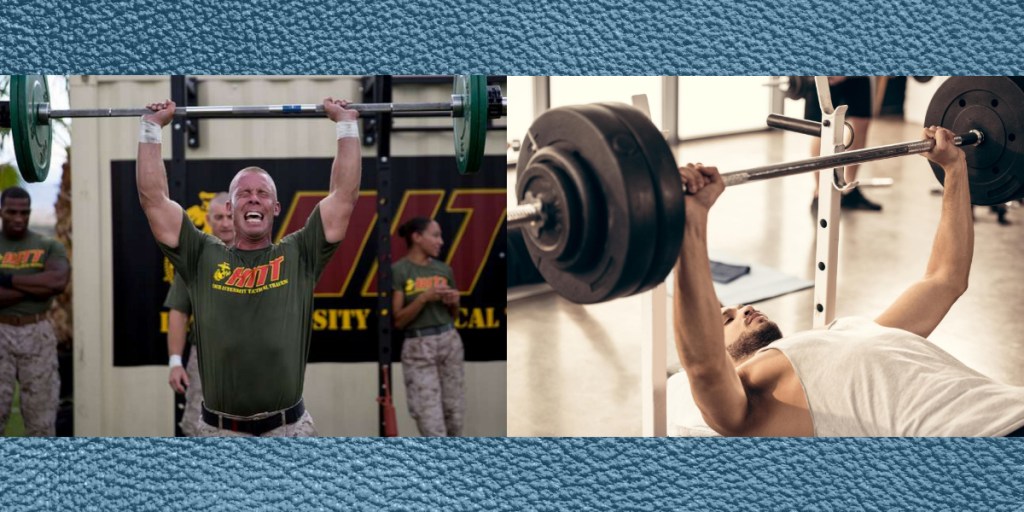
Both the overhead press and the bench press are excellent lifts that should be part of our session to increase our basic strength levels, especially in the upper body. Ideally, they should be introduced in different sessions, as is done in the Starting Strength training methodology, so that overload does not occur and we can give our best in each of these exercises without accumulating fatigue. Because a large part of the muscles that intervene dynamically are the same in both movements with the Olympic bar. Therefore, when working with high weights, the performance of the overhead press would affect the bench press if we do it afterwards, or vice versa, due to the muscular fatigue that is generated, which means that doing both at a high intensity in the same session is too much work volume.
But from a biomechanical point of view, which is the best of the two and which should we choose if we have to do without one of them? Or put another way, which of the two gives us more benefits? The overhead press or the bench press?
Each has its pros and cons, so let’s analyze these two lifts separately.
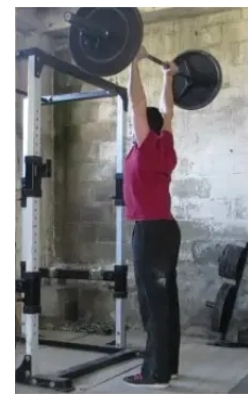
In the case of the OVERHEAD PRESS or vertical press movement:
- The transmission of force begins on the ground and ends in the hands, so the kinetic chain* involved is larger and involves more parts of the body. This makes the overhead press a much more general and global exercise when it comes to strengthening the entire body, and therefore more functional, when compared to the bench press.
- Both the muscles in the front and back of the body are strengthened equally, thus maintaining harmony and balance between the anterior and posterior chains. This point is of great importance to prevent muscle imbalances and to maintain a correct posture or even improve it. It is worth remembering that when practicing any sport, having a correct posture is linked to an improvement in motor skills and greater efficiency in the technical execution of any sport skill.
- The simple act of doing a standing vertical press causes all the core muscles to activate to perform their main function of stabilizing the spine. In this way, balance is maintained in the system formed by the lifter and the bar loaded with plates, thus preventing falls from occurring. This makes the overhead press an excellent core exercise and the fact of lifting heavy weights ensures that we have a very strong and well-developed core.
- The overhead press acts as a medicine since it can be considered as an exercise to prevent shoulder impingement, in which the tendon of the supraspinatus muscle is trapped below the acromion, which limits us from raising the arm to a range beyond the horizontal line. In addition, if we have this injury, we must consider the pain we may feel with the movement. All of this is of great relevance in those sports where it is necessary to raise the arms above the head, such as in swimming, basketball or volleyball. And it is also important in those professions where the same movement is performed repetitively for several hours, such as in grape harvesters.
- At a sporting level, and especially in the sport of weightlifting and in the field of physical preparation, the strength that we develop when performing sets of overhead presses with heavy weights is transferred to other types of vertical presses with the Olympic bar, such as the snatch and the jerk.
- The only downside is that for the same load intensity we lift less weight compared to the bench press.
*A kinetic chain is the set of body parts involved in the transmission of force from the places where it is generated to the places where it is applied.
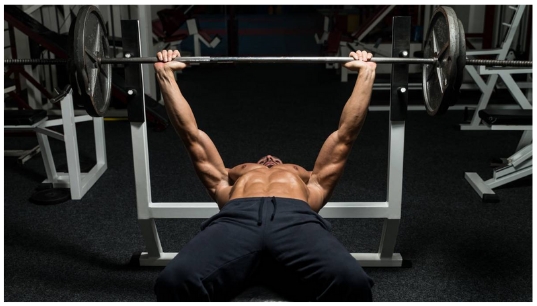
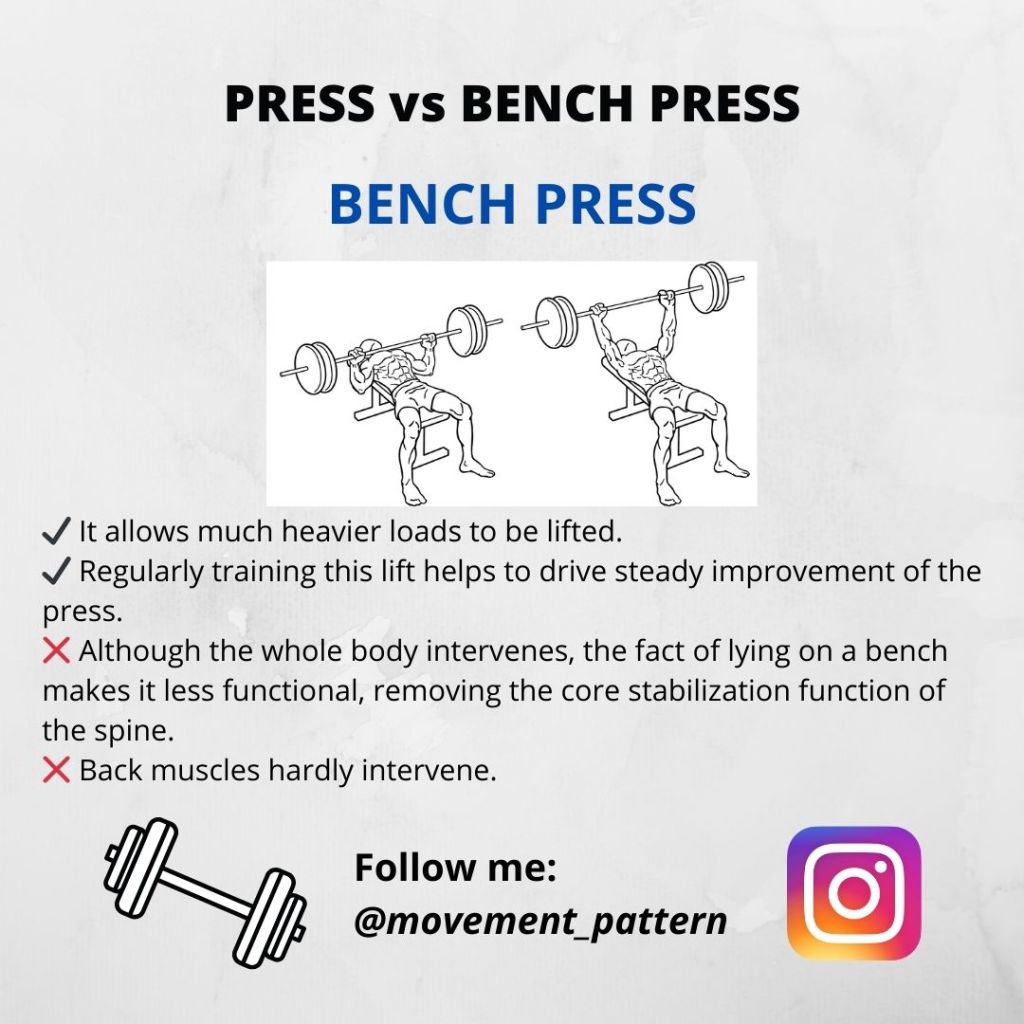
In the case of the BENCH PRESS or horizontal press movement:
- We can certainly lift much more weight than in the overhead press for the same intensity of load. In fact, it is the upper body lift in which we can mobilize the most weight.
- The strength we develop doing our bench press sets transfers when we do our overhead press sets, as it contributes to improving our strength levels in that lift.
- The kinetic chain involved is much shorter, as it extends from where the upper back rests on the bench to the hands holding the bar. It is true that performing a technique such as the leg drive helps to increase this kinetic chain and provides us with extra strength with which we can mobilize more weight. But even so, this does not allow us to consider the bench press an exercise as general and functional as the overhead press due to other details that are omitted.
- In the bench press we only work the muscles of the front part of the trunk and we forget to strengthen those of the back part, such as the trapezius. This leads to the appearance of muscular imbalances between the muscles of the anterior chain and those of the posterior chain, if we only limit ourselves to doing horizontal presses without doing other lifts that develop the back part to compensate. It is very common to see people in the gym, normally with hypertrophy and aesthetic goals, who by only doing bench press, no matter how strong and big they get, acquire a hunched or kyphotic posture, with their shoulders dropped and rotated inwards, and their chin in front of their chest.
- By performing a horizontal press supported on a bench, we cancel out the active work of balance and stabilization of the spine that the core should perform, since these functions are performed by the bench. This characteristic and the previous one make the bench press the least functional of all multi-joint exercises.
- Overusing the bench press without doing other compensatory exercises can be harmful because it makes shoulder impingement more likely due to all the imbalances that this lift entails. As I said before, we must incorporate the overhead press to prevent this injury and at least the volume of vertical presses must be equal to the volume of horizontal presses.
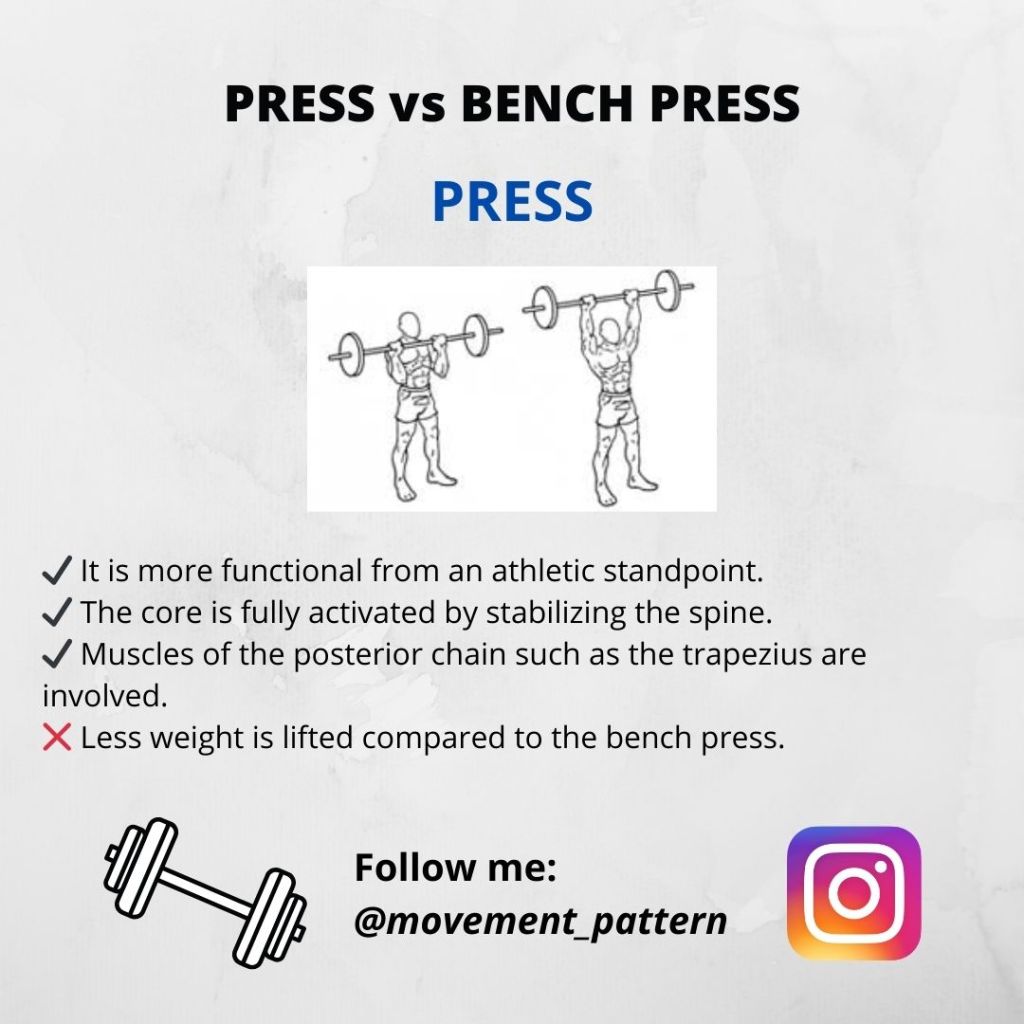
After having done this in-depth comparative analysis, if I had to choose between one of these two lifts and do without one of them, I personally give priority to the overhead press or vertical press with the Olympic bar since it is much more complete and enriching.
Obviously, with my conclusions I am not demonizing the bench press, nor am I suggesting that it is a useless lift that should be eliminated from our training sessions. I also know how good it feels to lift a heavy weight on a bench and how much it boosts self-esteem.
As I mentioned at the beginning of this post, the best and smartest thing to do is, whenever possible, to take advantage of the benefits that both exercises offer us, since in a certain way they complement each other and produce greater synergy. Again, I repeat that it is best to incorporate them in different sessions, especially if we are going to lift heavy weights, so that the effort and energy required by each one does not interfere with the performance of the other and thus perform them in conditions of absence of fatigue and greater freshness in those muscle groups that are involved in common.
I hope I have opened your mind much more regarding this topic in which I simply wanted to convey my opinion through a well-founded and reasoned argument.
“The press is the most useful upper-body exercise for sports conditioning, primarily because it is not just an upper-body exercise.“
Mark Rippetoe
“Any major strength exercise that could be considered “functional” has one important feature — you should be able to fall down while you´re doing it, so that you have to make sure that you don´t.”
“Strong shoulders are healthy shoulders, and the best way to make them strong is to use them correctly, by pressing the barbell overhead.”
“The vast majority of humans on this planet have never had to push really, really hard on anything, and that is a skill that should be developed, along with cooking, critical thinking and interpersonal skills.“
Bibliographic references:
- Sánchez D. (n.d.). Prowellness. https://prowellness.es
- Rippetoe M. (2011). Starting Strength: Basic Barbell Training, 3rd Edition. The Aasgaard Company.
 ATLETA EXPLOSIVO
Leave a comment