Biomechanics

Track and field, Biomechanics

DO YOU HAVE THE RIGHT LEG LENGTH TO SPRINT FAST?

Do you have the right leg to height ratio to be a fast sprinter? It´s simple. Longer legs are unfair advantage because they cover more ground with each stride. But there´s just one problem: long legs don´t make you faster.
Scientists studied elite sprinters and found absolutely zero connection between leg length or leg to height ratio and speed. Now, maybe what you´re thinking: “Didn´t Usain Bolt prove longer legs are the advantage?” Well, here´s the thing: longer legs can cover more ground per stride. But you pay a triple penalty for that extra length:

Track and field, Biomechanics

SPRINT FASTER WITH THIS PROVEN TECHNIQUE

If you want to run faster, mastering the start is non-negotiable. In this post, we uncover the crucial techniques of pushing with the front leg and pulling with the back leg to achieve triple extension, a quick first step and optimal separation right from the get-go. This foundational strategy is key to unleashing explosive power and efficiency during your sprint’s initial phase. It also applies to everything from 2 point starts all the way down to block starts.

Track and field, Biomechanics

GROUND CONTACT TIME AND VERTICAL FORCE

According to Dr. Ken Clark, every step you sprint from acceleration all the way through the end of a 100 meters or 200 meters, or you name it, you need to apply enough vertical impulse. Impulse is the product of force and time. It’s force applied for a period of time. You need to apply enough vertical impulse to support your body weight, so you don’t crash, and to lift your center of mass (COM) into the next step.

Biomechanics, Health, Martial arts

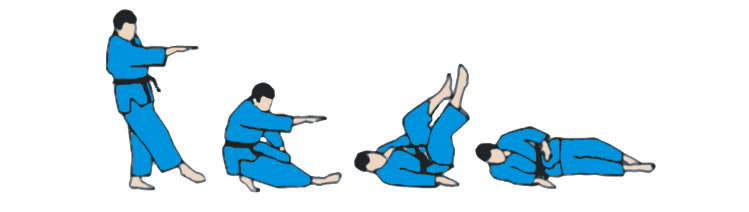
FALLING (UKEMI) IN JUDO AND AIKIDO: WHY SHOULD YOU LEARN TO FALL?

Although falls are not accidents that happen to us every day, the risk of falling always exists and can happen at any time and when least expected.
Falls from an already considerable intensity can produce the following effects:

– They can leave after-effects that permanently incapacitate someone from develop a certain profession or other types of activities in their daily lives.

– They represent high economic losses for companies as a result of sick leave, and also represent a great cost to the public health system.

– And some can even cause death.

Physical preparation, Biomechanics, Kinesiology

REMEMBERING DOCTOR YESSIS

As of the date I am writing this post, it has been more than a year since Michael Yessis, a great authority in sports science, passed away. It was on September 15, 2023 when he left this world and left us orphans who learned from the methodology and work he has been developing throughout his life dedicated to both research and training with athletes of different levels and sports. It was not until the spring of the following year when I found out about his death. It was sad news for me, although not unexpected because I knew it could happen at any time due to his advanced age. 91 years of life is not bad at all.

Biomechanics, Swimming

ANALYSIS OF THE BACKSTROKE TECHNIQUE IN SWIMMING

The backstroke is an alternative swimming style in which the swimmer performs rotating and alternating movements of the arms. To turn, he sinks his head, lifts both legs out of the water and takes momentum off the wall. The existing competition events of this style in swimming are the following: 50 m, 100 m, 200 m. Among them, only the last two are Olympic.

Biomechanics, Swimming

ANALYSIS OF THE CRAWL OR FREESTYLE TECHNIQUE IN SWIMMING

The crawl or freestyle is an alternative swimming style in which the swimmer moves using alternative movements of the feet and arms. He is propelled underwater and recovered on the surface. He turns at two or three meters from the wall. The existing competition events of this style in swimming are the following: 50 m, 100 m, 200 m, 400 m, 800 m, 1500 m, 4 x 100 m, 4 x 200 m. All of them are Olympic and the 4 x 200 m relay is only contested in the men’s category.

Scroll to Top