
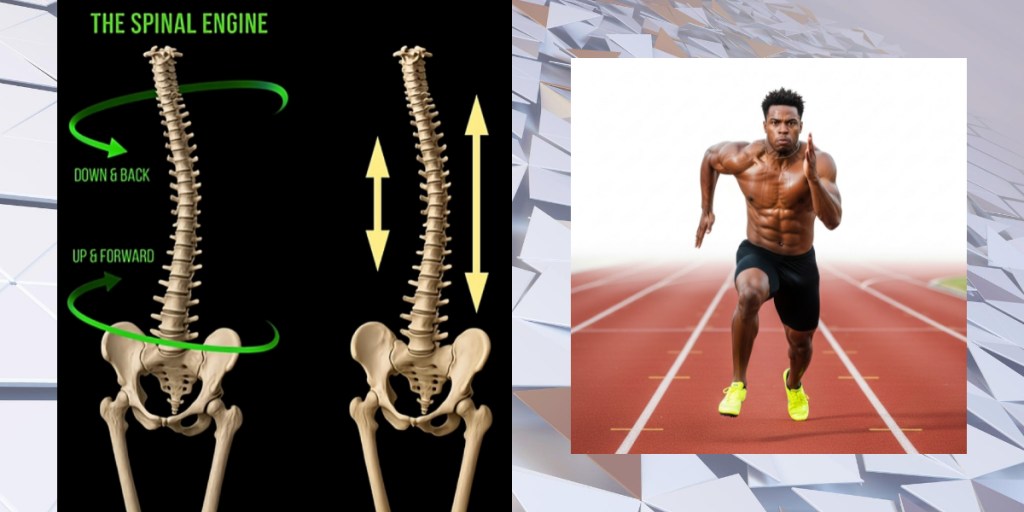
Tony Holler is a track and field coach and a football and basketball physical trainer. He works at Plainfield North High School. He is also a member of the Illinois Track & Field Hall of Fame and co-director of the Track Football Consortium with Chris Korfist. Tony Holler is the author of the “Feed the Cats” training method. In this post, you’ll learn the basics of a new, established, and revolutionary concept called “the spinal engine”. You will also understand its importance in certain movement patterns such as running and sprinting.
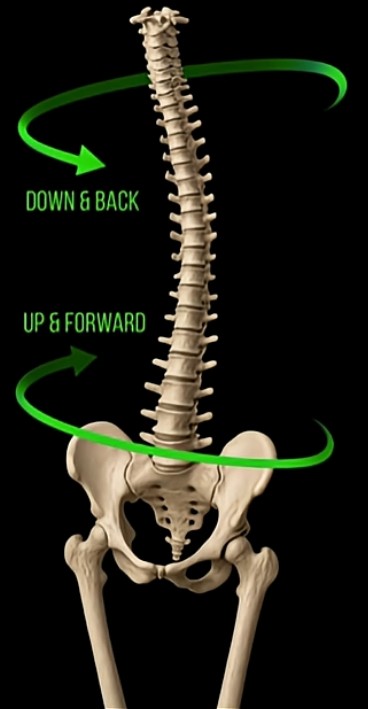
The spinal engine is a twisting and counter twisting. We can call that “torsion”. Torsion is when one part of the body is being twisted while the other part is twisted in the opposite direction.
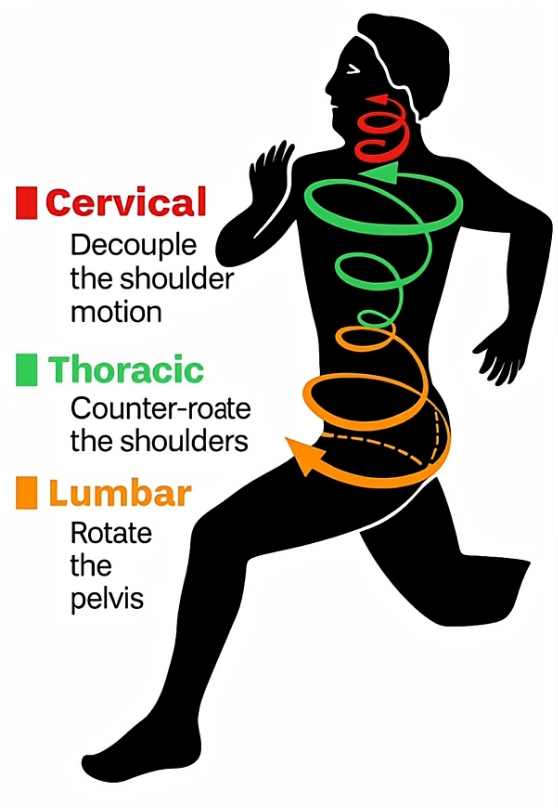
Here you see Deja Stevens with her shoulders twisted towards the left arm. If you look at her hips, her hips are twisted towards the right leg. So, this is a counter rotation.

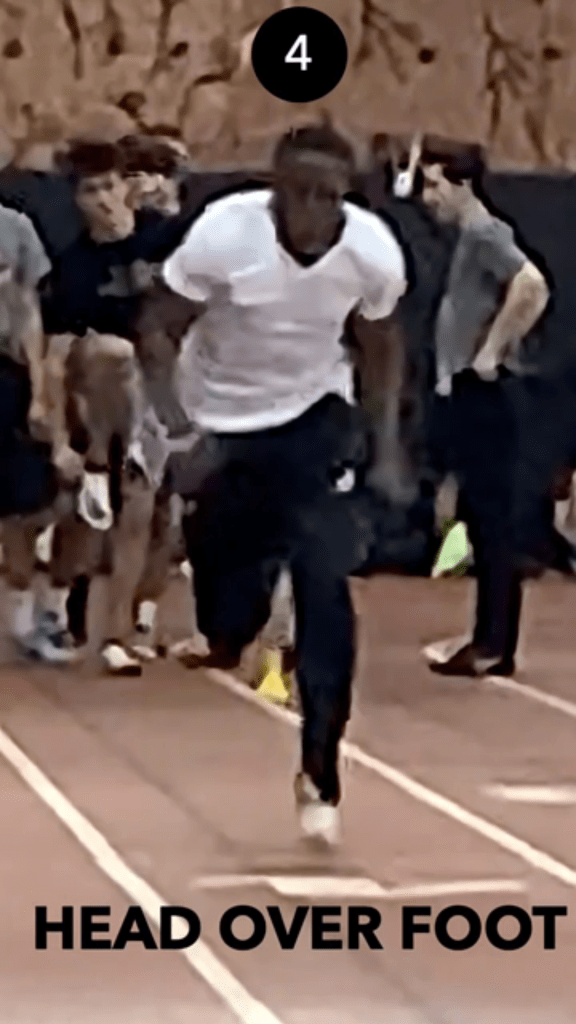
Here is Marcellus Moore running a 40 yard dash. Notice how his head is wobbling left to right to left to right. In the first of four steps you notice that his head is over his foot. In step 2, his head is over his foot. In step 3, same. In step 4, the same. The reason why the wobble happens is because if your head’s over your foot, you have a better landing. The only way you can do that is with a flexible spine.

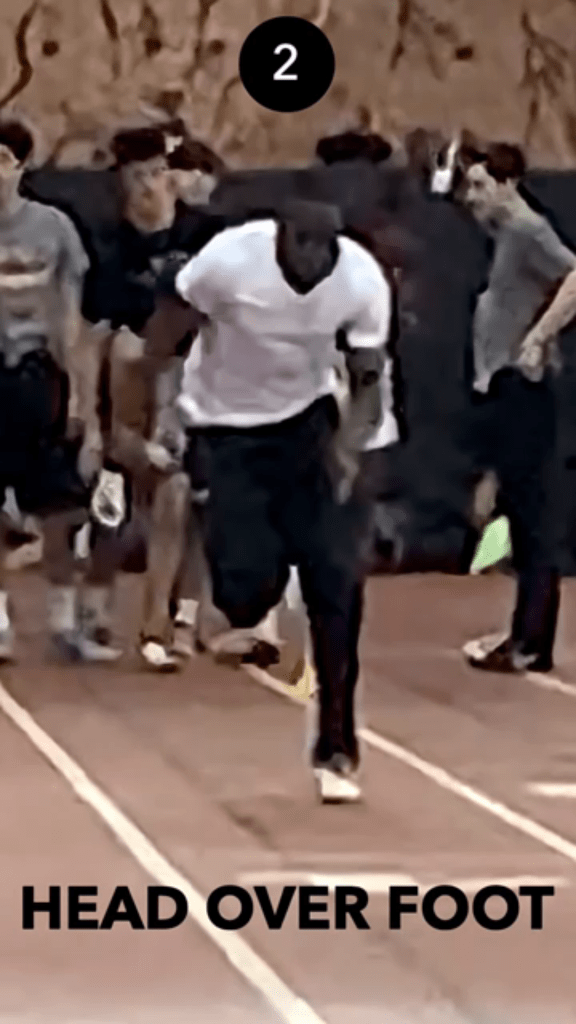
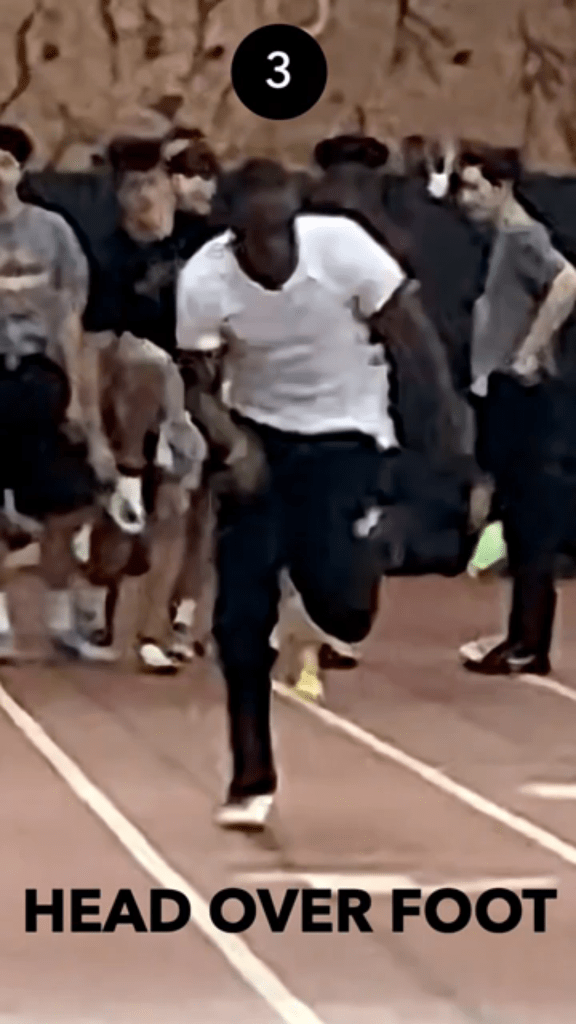
The whole idea of the immobile spine is 100% wrong that we do not want a spine that is braced with all these tight muscles and not able to twist and move. What happens when you sprint is that when your arm comes forward, your shoulder comes forward with it, which means you have a twist of the spine. So if it’s your right arm coming up, their upper right twist forward. The lower half of the spine does the opposite because it twists towards the lead leg. So we have this twisting and untwisting situation going on with the spine. And then, we also have this other thing. When you would lead with that leg, your shoulder would come up with the leg. Literally there would be a tilt of the body (shoulder up, hip up, leg up) in order to get a little bit higher. So not only we are twisting and untwisting in opposite directions, but our spine is tilting one way and tilting the other, and that is what we call the spinal engine.
So that spinal engine will rotate the shoulders one way and the hips the other.
But this also happens. One side, left or right, becomes coiled. It becomes shorter while the other side lengthens. You can see it with this still shot of Marcellus Moore where his right side is shortened. That´s the coiled side. His left side is lengthened.

One thing for sure. When you´re sprinting, the spine is not stiff.
Considering all of the above, now the question is: “What things can we do that teach our spine to twist and rotate and be strong in those ways?” One thing we shouldn’t do is spend our whole life in a weight room where the spine is immobile and it is braced at all times. You’ve just seen all those guys that have lifted too much they become stiff, and we do not want a stiff core. Coach Tony Holler´s athletes never do planks. He believes that sprinting is the best core exercise in the world.
It is possible to train the spinal engine using exercises from the Weck Method, designed by David Weck, the inventor of the BOSU ball. These exercises include rope flow and those performed with the ProPulse® Speed Trainers. You can watch how these exercises are performed in the videos below.
The rope flow consists of four fundamental patterns:
- Underhand pattern figure 8
- Overhand pattern figure 8
- Dragon roll
- Sneak
The first two are easier and the other two are more difficult. You can use different sizes of rope as well.
“Sprint as fast as possible, as often as possible, staying as fresh as possible.”
Tony Holler
“Rest, recovery, sleep.”
“Tired is the enemy, not the goal.”
“Do less, achieve more.”
“Never let today ruin tomorrow. Never burn the steak.”
“You don´t plant beans and grow corn.”
“Speed grows like a tree.”
“Speed is the tide that lifts all boats.”
“Speed is the best barometer of health.”
Bibliographic references:
- Holler T. [Coach Tony Holler]. (2025). How the Spinal Engine Impacts Speed & Power [Video]. Recovered from https://youtube.com/shorts/Vy1M3ZqI4WI?si=goR-5hPbEp3DsmAV
- Holler T. [Coach Tony Holler]. (2025). Explaining Sprint Mechanics, Head Over Foot, & Spinal Engine [Video]. Recovered from https://youtube.com/shorts/iVnLNq91drs?si=GVhz9YwcZQv0vIaE
- Holler T. [Coach Tony Holler]. (2024). Why Sprinting is So Important for All Athletes [Video]. Recovered from https://youtu.be/THGu6DIyds4?si=wju3ZgF_ZFAVRgbQ
- Holler T. [Coach Tony Holler]. (2025). Speed Over Conditioning | Stop Running the Cat Out of Athletes [Video]. Recovered from https://youtu.be/eg7Aqu6nO3c?si=VfgdE6EK3MiZKZGo
- Holler T. [Coach Tony Holler]. (2025). Improving Speed & Athleticism with Sprint Mechanics (ft. David Weck) [Video]. Recovered from https://youtu.be/_diUeZLftOs?si=Kp7OopACwHG9iLYp
- Holler T. [Coach Tony Holler]. (2025). 15 X-Factor Exercises for Speed, Power & Explosiveness [Video]. Recovered from https://youtu.be/4tjaYzCMMyg?si=SY0o4TrleeO215Ht
- Holler T. [Coach Tony Holler]. (2025). What is Rope Flow? (ft. David Weck) [Video]. Recovered from https://youtube.com/shorts/7Kk9madwhvo?si=aFjHTHPYvdRaJBIe
- Holler T. [Coach Tony Holler]. (2025). How Rope Flow Impacts Sprint Mechanics [Video]. Recovered from https://youtube.com/shorts/_-UFk7Ytsfw?si=RdM2PxQ-H1OJ4T8v
- Holler T. [Coach Tony Holler]. (2025). Rope Flow and Sprint Mechanics (Part Three) [Video]. Recovered from https://youtube.com/shorts/4J_on3mI50w?si=HgXBzlF7VPxV2Cpn
 ATLETA EXPLOSIVO
Leave a comment