

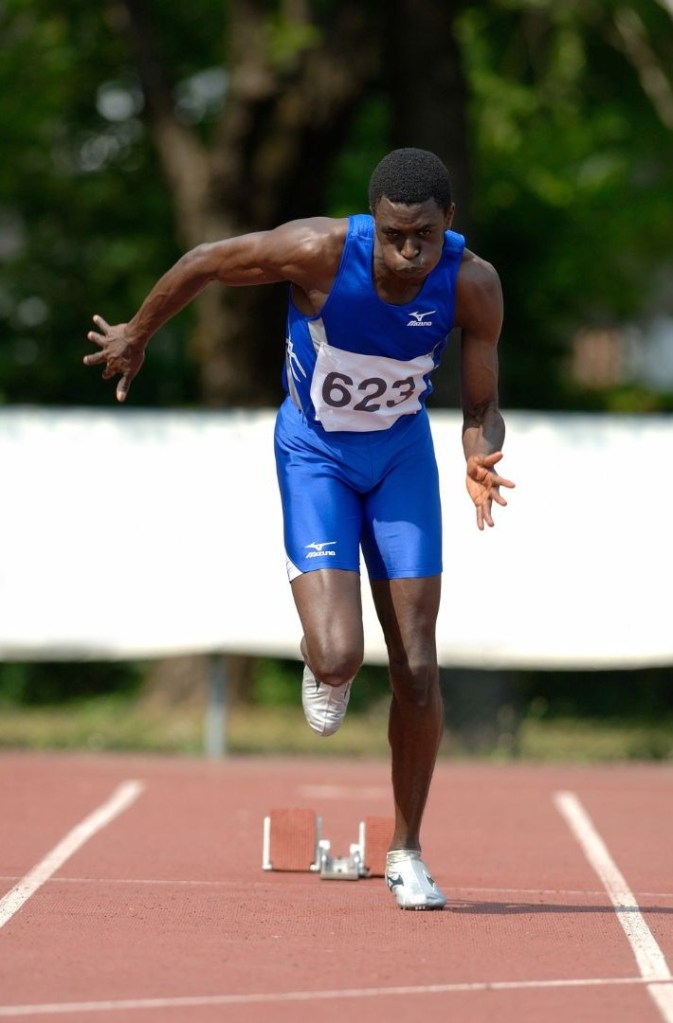
Six pack abs is one of those things in life that nearly everyone wants at least for one point in their life. But very few obtained. Yet Olympic sprinters don’t seem to have that problem. Nearly every single one of them has insane abs. There’s a few obvious reasons why. However, there’s also some less obvious reasons which might surprise you.
To be clear in this post, we’re going to be discussing the rectus abdominis, known as the six-pack. Let’s address the most obvious reasons first, such as genetics. Some of them have abs naturally and develop them before doing any kind of training.
The next obvious reason is low body fat. One 2012 study found that 1 hour per week of sprinting resulted in significant fat loss and to achieve similar results with traditional steady state cardio, it would require 7 hours per week. There’s a lot more studies to mention on the benefits of sprinting. I have an entire post on that which you can click here. But even without mentioning any studies, it’s really no surprise that sprinting is ridiculously effective for fat loss. And think about it. You have these world-class athletes who already have great genetics to begin with, performing sprint workouts multiple times per week, burning lots of calories. Not to mention the other training they do in the gym as well.
And yes, in the world of really athletic steroids are inevitable. But rather than focus on things that we can’t control, we can focus on things that are within our control. If you agree, keep on reading because this is where things get really interesting.

Now let’s address the less obvious reasons that Olympic sprinters have insane abs.
Reason #1: ARM SWINGS
According to a study that examined the best exercises for six pack abs, a crunch type movement with elevated arms shows high muscle activation for the upper rectus abdominis. This looks similar to the downswing of the arms while sprinting. The arm is elevated and although there’s minimal spine flexion, the abs do assist in bringing the arms down. If you want to see for yourself, put one arm on your abs and swing down with the other. You’ll feel a stretch and contraction. Now imagine doing that violently over and over. In the post “Why do Olympic sprinters have insane shoulders” mentions the fact that on average a sprinter is swinging each arm around 22 times during a 100 meter sprint. Multiply that by five or eight sprints during a single training session. On the high end, including both arms, that’s over 300 repetitions of bringing the arms down. Then consider the fact that this is only for a 100 meter sprint. You can multiply that by two or even four depending on the length of the sprint. We’re looking at possibly over 1000 repetitions in a single training session. I doubt there’s many people out there who are doing a thousand crunches in the regular routine. That’s a lot of reps.

Reason #2: LEG RECOVERY
According to that study on the best exercises for six pack abs, the leg raises shows the highest activation for the lower abs. There’s no doubt that this applies to leg recovery during a sprint. On every single step of a sprint you are literally performing a leg raise, a very fast violent leg raise over and over. But the mechanics are different. During a sprint the leg comes up as a result of the force you put into the ground. However, the movement is nearly identical and the same muscles are involved. Not only is the movement fast, but you also have the added resistance of your legs moving backwards, which your hip flexors and lower abs need to work against to change direction and bring the leg forward. Same as with arm swings. Olympic sprinters are performing 300 to a thousand repetitions of a leg raise per single training session, which has been shown to have the highest level of activation for the lower abs among various exercises that have been tested in that study.

Reason #3: PROGRESSIVE OVERLOAD
One fundamental principle of muscle development is the muscle needs to be challenged in a new way to stimulate growth, also known as progressive overload. This is likely why we often see high-level bodybuilders perform weighted ab exercises. It is assumed that normal ab training quickly reaches diminishing returns and needs to add a new stimulus like heavier weight for the muscles to grow. As with all world-class athletes, Olympic sprinters are constantly pushing themselves harder and harder in order to achieve elite level performances, as well as set new records. It’s safe to say that their sprint workouts are progressively more and more difficult. As their workouts get harder and longer in duration, and they personally become faster, the progressive overload is automatically built into the training, which constantly provides new stimulus for their abs to continuously grow. That’s the magic of sprinting. It’s a single movement that trains the entire body so efficiently that it has benefits on top of benefits.

Again the research on sprint topics like this are limited. These are simply theories we put together that attempt to fill in the missing pieces. Whether or not you agree with these theories, something that we can all agree on is that, without a doubt, sprinting is an insanely effective workout. Even if we are genetically gifted Olympic sprinters, if building abs or just becoming leaner in a time efficient way is something we desire, makes a lot of sense to add sprinting to our training routine even if it’s only for a single 1 hour session per week.
Bibliographic references:
- Palacios C. [The Sprint Project]. (2021). Is Sprinting The “Secret’ Behind Insane Abs? [Video]. Recovered from https://youtu.be/fRdGweVuDMA?si=rc5tuqlx_O7H1GpX
- Heydari, M., Freund, J., & Boutcher, S. H. (2012). The effect of high-intensity intermittent exercise on body composition of overweight young males. Journal of obesity, 2012, 480467. https://doi.org/10.1155/2012/480467
- Moussa, A. (2011). SuppVersity EMG Series – Rectus Abdominis, Obliques and Erector Spinae: The Very Best Exercises For Sixpack Abs and a Powerful Midsection. SuppVersity – Nutrition and Exercise Science for Everyone https://suppversity.blogspot.com/2011/07/suppversity-emg-series-rectus-abdominis.html
 ATLETA EXPLOSIVO
Leave a comment