

Tony Holler is a track and field coach and a football and basketball physical trainer. He works at Plainfield North High School. He is also a member of the Illinois Track & Field Hall of Fame and co-director of the Track Football Consortium with Chris Korfist. Tony Holler is the author of the “Feed the Cats” training method, the fundamentals of which we will explain below.
It all comes down to the fact that many sprinters have a hard time during their training sessions on the track and, as a result, they hate training. However, they often enjoy competitions. To this we must add the beliefs held by most athletics and other sports coaches who think that “God makes sprinters. Coaches make milers” or that “Speed is genetic, can´t coach it.” As a result, it can be said that distance coaches damn-near ruined track and field.
Tony Holler aims to break the paradigms of old-school track and field training. After having lived through several momentous events that led to a change of view in his way of training, Tony Holler built a training philosophy called “Feed the Cats”. Because track training wasn’t appealing to anyone, he wanted to revolutionize the experience for his athletes. And the result was a large number of victories in relay events at the state championships in the following years.
But why is the term called “Feed the Cats”? For all of the following reasons: 1) Athletes with a high percentage of fast-twitch fibers are like cats. 2) The more cats on the track team, the better. 3) Cats don’t like running. 4) Cats are competitive. 5) Cats love to win.
The two cornerstones or the two most important elements of “Feed the Cats” are being happy and healthy. To achieve this goal you must know that as a coach you have to learn to see your training program through the eyes of a child.
“Feed the Cats” programming is characterized by all these principles:
- Moderate exercise never leads to high performance. You can´t go out and practice in third gear and every day and then run in fifth gear. Most coaches have practices that are kind of a consistent day-to-day grind. Tony Holler athlete´s try to go high practices and low practices. The reason why they go low practice is so they can have high. High level practices creates high performance.
- Sprinting should replace running. They don´t do anything submax.
- Never let today ruin tomorrow. Never burn the steak. They do some hard workouts called lactate workouts, but they always take the day off the next day. Tony Holler thinks a meet itself ruins the next day, but they take the next day off, so that doesn´t really count.
- Tired is the enemy, not the goal. For many coaches, especially in situational sports (soccer, football, basketball, baseball…) and track and filed, it seems that being tired is the goal. They push their athletes to their limits and beyond.
- Racehorses not workhorses. Many coaches turn their athletes into a workhorse and not a racehorse.
- Rather be 100% healthy and 80% in shape than the other way around. That´s that help happy and healthy thing. Happy and healthy kids accomplish great things.
- Get aerobically fit by crowding together anaerobic work. This is counterintuitive but Tony Holler guarantees it´s 100% true. With more than 21 years of work, their sprinters are great in the 400 meter dash without ever focusing in any aerobic work at all. We are aerobic creatures. We breathe 24 hours a day we have all of our life. So there is an aerobic component in every second of hour day, but it´s amazing how fit you can become by doing intense work, resting, doing some intense work, resting, repeating, etc.
- Aerobic focus interferes with maintaining and increasing speed. Everything we do must be headed in the same direction.
- Eliminate “conditioning”. Tony Holler eliminates the word “conditioning” and “in shape” from his vocabulary all together. Football coaches who follow the “Feed the Cats” program do zero conditioning.
- Practice fast and intense, not long and hard.
- Pareto Principle: “Find the 20%, eliminate everything else”. (Essentialism). We´re going to find the 20% that really works and eliminate everything else. That´s why Tony Holler´s sprinters only practice 45 minutes a day.
- Do less, achieve more. We´re going to do less, but achieve more.
- The foundation of high performance: REST, RECOVERY, SLEEP. This is probably the most important of all. This is the foundation. The reason why it´s a foundation is because you cannot train sprinters when they are tired. If a kid is fatigued Tony Holler sends him home and tell him to take a nap. He´ll get more good out of a nap than he will a sprint workout when he´s tired. So “rest, recovey and sleep” are the building blocks of a sprint workout and sprint workouts are the building blocks of getting faster.
According to Clyde Hart there are 8 types of training:
- Speed endurance
- Tempo endurance
- Strength endurance
- Endurance running
- Power speed
- Event running
- Speed
- Strength
“Feed the Cats” program is the antithesis of Clyde Hart’s program. While four of Clyde Hart’s workouts use the word “endurance,” Tony Holler’s workouts do not use endurance.
In the “Feed the Cats” program, the main thing is to keep the main thing the main thing. And what is the main thing? SPEED. All of our energy goes towards max speed. And you say well don´t you have to have endurance to run the 400 m? No. You got to be really fast and competitive, and you have to train to have biochemically tough. They don´t train endurance. Speed actually creates endurance but endurance never creates speed. Matter of fact endurance hurts speed. According to Latif Thomas, if you improve your max speed, you improve your sub-max speed. Tony Holler says if you train at 100 mph, 80 mph feels comfortable. If you train at 60 mph, 80 mph will wear you out. To break 47.00 in the 400 meter, you must run 18.7 mph for 400 meter. That´s not too hard if you can run 25.0 mph.
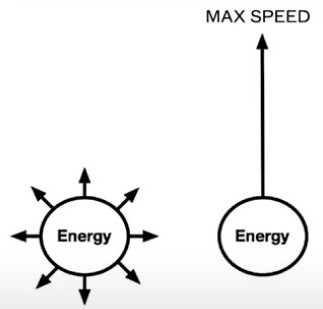
Therefore, speed is the main thing. Make MAX SPEED your one and only priority. Everything else is secondary.
We must repeat fundamentals and we can´t get bored of doing the fundamental things. You cannot get bored with the things that matter. Jonh Wooden´s eight laws are:
- Explanation
- Demonstration
- Imitation
- Repetition
- Repetition
- Repetition
- Repetition
- Repetiton
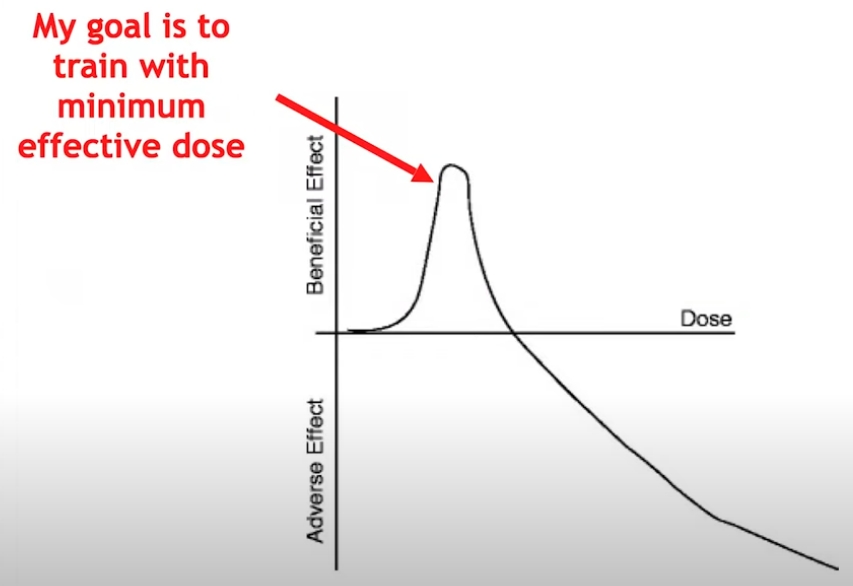
Hormesis is an important part in Tony Holler´s program. This graph reflects a certain dose of a training. Like a medicine, training in small doses has a very beneficial effect, but in large doses has and adverse effect. The goal is to train with minimum effective dose. Well, we have to remember what Harry Marra once said: “We want to get to the line 80% in shape and 100% healthy rather than the other way around.” Harry Marra was the coach of Ashton Eaton, the world record holder in the decathlon.
Why tired is the enemy, not the goal? The 10th event of the decathlon is an endurance race, the 1500 meters. When finishing, decathletes look like they´re terribly undertrained for this event. The fact is they are. The reason is if they would train for endurance, that would make this race a little easier, it would hurt their other nine events. They wouldn´t be as fast, vault as well, long jump as well, and throw as well because they would be leaner and look like a cross-country guy. These athletes train for power and speed, and then gutted out in the 1500. That´s what Tony Holler´s “cats” do as well.
Never let today´s workout ruin tomorrow´s workout. Tony Holler´s athletes only train lactate during the season. That allows them to do, for example, a monday lactate workout and it will ruin tomorrow´s workout. So they don´t have a workout the next day. Their sprinters go home after school.
Size never creates speed. We´re not bodybuilders. Craig James, player of the Philadelphia Eagles, once said: “The best piece of advice I can give you is don´t let them take away your speed. As soon as you get there, they will try to get you to pack on the weight and live in the weight room. My biggest mistake was living in the weight room and not sprinting. I have never been as fast as I was in high school.” The myth is stronger = faster. But fast people are strong. There are certain things in the weight room that might really produce high results. But it´s important to note that speed and plyometric training produce high levels of tension and high levels of neural excitement you can´t reach in the weight room. Frans Bosch said: “The stronger you are against heavy resistance, the less explosive you will become.” You don´t plant beans and grow corn. We don´t push sleds or pull sleds because is too slow. Tony Holler is not anti-strentgh, not anti-weight room. Sprinting is the most underrated strength builder in the world. Good sprinters are tipically strong. They´re naturally strong. Weight training can be an accessory to speed training, but should not be the focus of speed training. Nothing Tony Holler witnesses in the weight room is a KPI of speed. Brian Kula once said: “Everything I do is pertinent to track. All my speed work is with a track coach. All my lifting is with a track coach.” So Tony Holler´s recommendation are: 1) Lift 2-3 times a week after sprinting on speed days. Heavy and low reps. 2) Other than the Barry Ross deadlift program, stay general. 3) Never create a secondary recovery issue if speed is your priority. If you have more than three priorities, you don´t have any.
You need to be out in the sun as much as possible. There´s a reason why California, Texas, Georgia and Florida has 90% of the best sprinters in the U.S. It´s the dopamine. It´s really hard to be super fast in cloudy states. Dopamine is really important. High dopamine creates an excitatory effect on motor neurons. High dopamine levels literally will make you faster. High dopamine also creates a reckless confidence and sprinters need it. So, how do you increase dopamine? By sunshine, sleep and winning.
Tony Holler´s sprinters don´t do tempo running because is slow running. They do “X-factor” work instead, 2-3 times per week on non-sprint days. X-factor days are characterized by all this:
- Short in duration, high in intensity (maximum).
- Tired is the enemy, not the goal.
- Tony Holler has a reasonable hunch that the exercise is good for speed and explosiveness.
- Micro-dosed strength, agility, hip mobility, plyometrics, and wickets. Incorporate new stuff. Be creative.
- Do not harm. Do things that might actually improve the next day´s sprint workout.
- X-factor is an alternative to an off-day. X-factor days are almost like recovery days that we want to set up the speed workout the next day. We should something on that day but we shouldn´t sprint everyday.
- You need to have enough recovery to repeat at the same intensity.
- X-factor satisfies the “need to constantly vary the exercise and training routine if you want maximum results”. If kids are not given new stimuli, they will never adapt anything new, and they´ll stay the same. You need to repeat the things that need repeating: sprinting. X-factor is the non-repetitive thing.
- Charlie Francis did “tempo running” on non-sprint days. Tony Holler doesn´t believe in running because running confuses the nervous system of the sprinter. We do X-factor instead.
- Doesn´t X-factor overload the CNS? No because 90% of the time we are just loitering. Microdosing is the key!
- Things you can do on X-factor days: box jumps, lunge pop-ups, long lunges, rocket lunges, reverse lunges, Russian lunges, star jumps, oscillatory booms, depth jumps, assisted plyos, lateral assisted plyos, line races, boom boom booms, boom-wicket hybrids, pogo jumps aka toe pops, bosch drills, step ups, wickets (full arms, hands high, airplane, pistol, hugs, raise the roof, full arms), measured 6 bounds, measured 5 single leg bounds, timed wickets, competition wickets, competition wickets on turf, hip mobility, leg swings (fast and high), block starts, cat jumps…
According to Charlie Francis, “athletes should never be sore from training”. They may be unintentionally sore, and that´s OK. But the goal should never be to create soreness in athletes. This flies in the face of mainstream thought “No pain, no gain”. Everything about “Feed the Cats” is countercultural.
Any fool can get another fool tired. There´s a lot of fools out there as coaches. And matter of fact the hardest practices are usually run by fools.
Essentialism is the disciplined pursuit of less. You almost have to become accept the fact that you´re going to be uncomfortable with how little you´re doing as a coach if “you´re feeding the cats”. So, how do you train a cat? Sprint as fast as possible, as often as possible, staying as fresh as possible.
- “Sprint as fast as possible” doesn´t mean run. If you are not wearing spikes, if you are not being timed, if those times are not recorded, ranked and published, then you´re not sprinting. If you tell someone on the track that´s not in spikes to sprint, if there was like a secret timer timing him, and then you do the five thing said before, he would sprint 10 to 20% faster. If you´re not doing those five things you´re not sprinting. And if you´re not sprinting maximally, you are not learning to feel a different speed. You must teach your central nervous system to sprint. It is totally central nervous system control. Speed is totally electrical, it´s not muscular at all. You got to sprint really really fast and try to sprint a little faster everyday.
- “Sprint as often as possible” means like a high school track team that´s like 3 times a week. For a elite runner probably 2 days a week. Based on the person, whether if he´s fragile may only be 1, but 2 or 3 days if you want to force pushing it. A 9 year old can sprint every day because he will never overtrain since he basically has no central nervous system high output potential.
- “Sprint staying as fresh as possible”. As said earlier, “tired is the enemy, not the goal”. The reason why it´s the enemy is that you cannot train speed or run super fast when you´re tired. So that´s why “rest, recovey and sleep” is the entire foundation of everything they´re doing.
There´s only three sure-fire ways to increase speed:
- Sprint mechanics. Get tall. Cross the hips with the hand. Foot high and in front of the body. Tony Holler´s sprinters work on everyday during their wake-up drills. They don´t do a warm-up because is something slow that gets them half-tired. In the more than 21 years that Tony Holler has been training, no one has ever been injured doing the speed drills and plyos that are performed at the beginning of training.
- Max speed training. Under the conditions already mentioned: 3 days a week, with spikes and timing.
- Jumping. Jumping improves sprinting and sprinting improves jumping. So they jump a lot.
The thing that´s missing here is the weight room. According to Tony Holler, the weight room is the most overrated thing for a sprinter.
The grind is the opposite of “Feed the Cats”. “Grindind” means you work even though you don´t want to, you´re going to work really hard even though it hurts you phisically, and you´re going to do the work without loving the work because it´s going to pay off later. Those are antithetical to “Feed the Cats”. In the “Feed the Cats” system, your practice is your favorite think to do. If coach gives you a day off, you would wish you was practicing. Tony Holler believes is the secret of high performance.
Do less, achieve more. When Tony Holler´s athletes do three 200s in their hardest workout of the year (the called 4 by 4 predictor) with 3 to 4 minutes rest instead of 10 200s, they are running 23s instead of 29s. What is more appropiate to run a great 400 meters? 23 second 200s with short rest or 29 second 200s with bad mechanics and hating?
Record, rank and publish. You have to time. You´re not sprinting if you´re not timing. It can be done with a stopwatch. The only problem is you can´t do the most important thing with a stopwatch, and that is the 10 meter fly. The 10 meter fly is a measurement of max speed. So you must have max timing system to measure max speed. Tony Holler use the Freelap system.
For Coach Tony Holler the 10 meter fly is the key performance indicator (KPI) for all running events in track. It´s the best indicator of absolute speed performance for all track events. If you can run 25 miles an hour, you´re going to run 10″30 the 100 meter dash. There´s nobody that can run 25 miles an hour for 10 meters who can´t run 10 low in the 100 yard dash. Everybody that runs 10 low 100 yard dash can run sub 21 the 200. And everybody that can run sub 21 the 200, can run a 400 at 46 with strategic training (lactate workouts). And what would you rather have for a good 800 meter dash guy? Somebody with lots of endurance or lots of speed? Tony Holler will take speed all the time because you can train endurance. Speed is hard to train. Speed grows slow. Speed grows like a tree. So you gotta plant it early and water it every damn day. It has to be a priority because is much easier to train that way. Sprinting just it takes a lot more work but it can be done.
The general concepts of the speed and X-factor programming: 2-3 speed days per week. 2-3 off-days per week. No endurance training (you can get aerobically fit by stacking together high intensity anaerobic work). Considering that S: Speed, X: X-factor, and O: Off-day, a typical school week type: S-X-S-X-S-O-O. What they do at Plainfield North in the winter is: S-X-S-X-O-O-O. Tony Holler thinks that taking Friday off gives you more benefits than doing a speed day on that Friday. If you´re only going to work on three days: SX-O-SX-O-SX-O-O (Do some X-factor afterwards. Notice that every workout is followed by an off-day). Always train speed when you´re fresh.
During the off-season we are going to build a speed reserve. The planning of each week along with the program of each session is as follows:
- MONDAY (SPEED DAY): No “warm-up”. Ten speed drills (high intensity drills, plyos and accelerations). Three timed sprints (40 s, 10 m-flys…). Weights for football players (don´t do any type of crushing of their legs until Thursday so it doesn´t mess with the speed work).
- TUESDAY (X-FACTOR): Alternative speed drills. X-factor drills (plyos, strength, wickets, hip mobility…) Things you have a “reasonable hunch” of having a positive effect on sprinting. 100% intensity. Low dose. Weights for football players (don´t do any type of crushing of their legs until Thursday so it doesn´t mess with the speed work).
- WEDNESDAY (SPEED DAY): No “warm-up”. Ten speed drills (high intensity drills, plyos and accelerations). Three timed sprints (40 s, 10 m-flys…). Weights for football players (don´t do any type of crushing of their legs until Thursday so it doesn´t mess with the speed work).
- THURSDAY (X-FACTOR): Alternative speed drills. X-factor drills (plyos, strength, wickets, hip mobility…) Things you have a “reasonable hunch” of having a positive effect on sprinting. 100% intensity. Low dose. Weights for football players. *Not to do the same exercises as you did on Tuesday.
- FRIDAY: Off-day.
- SATURDAY: Off-day.
- SUNDAY: Off-day.
To plan sessions during the track in-season using the “Feed the Cats” approach, you simply need to keep the following premises in mind:
- No more than two lactate events per week. Meets are lactate events.
- No endurance, no tempo, no laps, no sub-max.
- The total number of off-days per week is two or three. Three is better.
- There will always be an off-day after lactate events (because there is a 48-hour hangover). If you can´t do this, do a half-ass X-factor workout the day after a lactate event.
- The overarching in-season mission is survival.
- The secondary mission is staying fast, sprinting futher, and staying happy and healthy.
Lactate workouts, which are fundamental mainly for the four-hundred-meter runners, consist of the following premises:
- Running at goal 400 pace or faster.
- 15-25 seconds of sprinting.
- Incomplete rest.
- Enough rest to repeat previous rep.
- Must be “posisoned” before starting the final rep. For example, you could not do three half-assed 200s and run the fourth one superfast, and call that lactate workout because the true lactate workout is running through acidosis to build up biochemical toughness.
- Never allow failure.
- Volume low (400-800 meters total). The key is the speed and the strategic rest in between bouts.
- Sell it and apologize to your athletes. Lactate workouts really hurt but this is the time we man up because we´re going to be great in the 4×400.
- Our goal is biochemical toughness.
- When we apologize to them before a lactate workout we tell them “Tomorrow we have a day off”.
There are 4 types of lactate workouts that Tony Holler includes in his season planning:
- 23-second drill. The inventor was Chris Korfist. Tony Holler´s athletes like to do this indoors and make it a 24 second drill about in a 178 m track. Early season is their preference. They run solo with a falling start. They have pylons at every 5 meters from 165 to 210 meters. They have the big pylon at the 200 meter mark because that is their goal. The goal is to run 200 meters in 23 seconds. The atmosphere is very noisy because everybody goes freaking crazy. That´s why every lactate workout is more exciting than a meet. 8 to 10 minutes rest, repeat it and try to get within 5 m of the first effort. Record, rank and publish every workout. Girls typically do 27 seconds.
- 600 m 4×400 predictor. It´s the favorite outdoor lactate workout. It consist of doing 3 x 200, with 3-4 minutes rest. It takes 10-12 minutes. Run each one like it´s the first 200 m of the 4×4 at the state meet: “Fast and loose”. It´s the best training for kids to learn how to run the 400 m. They do a single file, with 10-12 guys and 10 m run-in. Spacing should be 5 to 10 m. They go from fastest to slowest to prevent passing. Tony Holler has guys in order on clipboard, so it´s quick to record times. Freelap finish cone goes on 1-2 lane line. They always run with the wind because they always feel fast. Great weather is preferred. If it´s done without Freelap, they would run in groups of three, dropping at hand at start 200. The predictor is the sum of times x 0.667 + 2. In other words, 23, 23, 23 would predict 46 + 2 = 48. To break world record in 400, you would need to run your three 200s in sub-21, sub-21, sub-21. Remember, these are fly times.
- 450 m 4×400 predictor. Just like the 600 m 4×400 predictor but it´s 3 x 150 m, with 3-4 minutes rest. It takes 10-12 minutes. Run each one fast, like a 200 m. Save this for a windy day. Kids will need the help. They do a single file, with 10-12 guys and 10 m run-in. Spacing should be 5 to 10 m. They go from fastest to slowest to prevent passing. Tony Holler has guys in order on clipboard, so it´s quick to record times. Freelap finish cone goes on 1-2 lane line. Great weather is preferred. If it´s done without Freelap, they would run in groups of three, dropping at hand at start 150. The predictor is the sum of times. In other words, 16-16-16 would predict 48. To break world record in 400, you would need to run your three 150s in 14.33-14.33-14.33. Remember, these are wind-aided fly times.
- Critical zone. Only if athletes are really healthy. Run-in start, 200 m at goal 400 pace. Then they´re going to take a 45 second rest and repeat. They´re going to tale 8-10 minutes rest after that double 200 that broken 400. Then they´re going to repeat it (200/200). They´re going to add the times and divide by 2. For example, somebody that run 24-24-25-25 would predict open 400 time of 49.0. They only do this once, in late season, approximately 10 days before the State Meet. It must have sunshine, blue skies, and low wind. Only do this with your potential 400m star or your star-studded 4×400, and only if healthy. This is not for your average kid. Created by Paul Souza in 1999.
The “Feed the Cats” coaches is a passionate group of like-minded thinkers. By like-minded, it means they think in similar ways and they agreed to these general principles.
“Feed the Cats” is characterized by all of these:
- It´s simple. It´s understable.
- It´s reproducible. Many trainers who put it into practice have observed surprising changes within a year.
- It´s cheap. You can make your own wickets using PVC pipe. Only you need the Freelap.
- It works for group instruction. Tony Holler doesn´t coach individuals. He doesn´t have individual practice plans for all 50 of his sprinters. He coaches a group.
- “Feed the Cats” network = Support. All coaches enjoyed can talk about workouts, in the same jargon to each other. They can learn what is working in their situation.
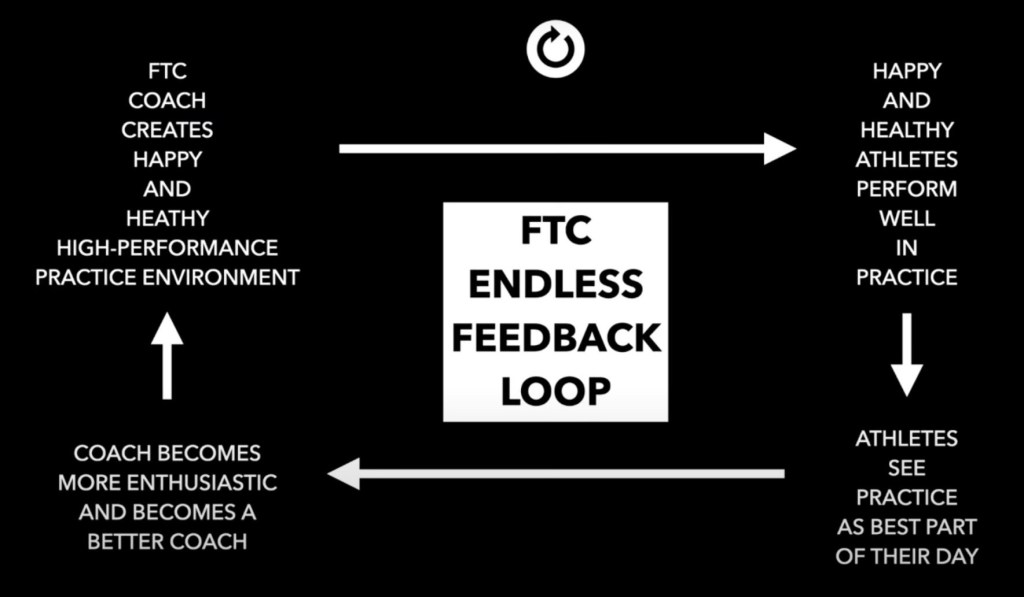
“Feed the Cats” coaches creates happy and healthy high-performance practice environment. When that happens, happy and healthy athletes perform really well in practice. Because of that, athletes start to see practice as the best part of their day. And then it comes right back to the coaches because instead of a coach looking at miserable depressed athletes who are going trudge through one more practice because they have to do in order to play in those fun games, they see happy, enthusiastic athletes that want to practice they want to perform. And when that happens, the coach actually becomes more enthusiastic and becomes a better coach. And when taht happens, that healthy performance-based environment becomes even better. And so this endless feedback loop just grows and grows.
“Burn your goals, go on a mission, surrender to the outcome.”
Joshua Medcalf
“The person you want beside you in battle is the guy who has surrendered the outcome, and surrendered to the fact that he might die.”
“Sprint as fast as possible, as often as possible, staying as fresh as possible.”
Tony Holler
“Rest, recovery, sleep.”
“Tired is the enemy, not the goal.”
“Do less, achieve more.”
“Never let today ruin tomorrow. Never burn the steak.”
“You don´t plant beans and grow corn.”
“Speed grows like a tree.”
“Speed is the tide that lifts all boats.”
“Speed is the best barometer of health.”
“In speed development, the nervous system only understands quality.”
Boo Schexnayder
“Always choose quality over quantity.
His Holiness the Dalai Lama
This rule applies to every life situation.”
“The quickest way to destroy fast twitch muscle fibers
Kelly Baggett
is to bathe them in lactic acid for prolonged periods of time.”
Bibliographic references:
- Holler T. [Coach Tony Holler]. (2020). Introduction to Feed the Cats | Sprint Training [Video]. Recovered from https://youtu.be/We_3Jv9BzpI?si=IO-W9pieygV6ZhD8
- Holler T. [Coach Tony Holler]. (2021). Feed the Cats Speed Training | Converting the Infidels [Video]. Recovered from https://youtu.be/pB0GONTvc9g?si=4i9eoCrcDcd2rkky
- Holler T. [Coach Tony Holler]. (2021). Coaching and Training for the 400m | Feed the Cats [Video]. Recovered from https://youtu.be/80nWL1GR7wY?si=eZMWkjRBWf0kYfIa
- Holler T. [Coach Tony Holler]. (2021). The Pursuit of Speed | How to Maximize Your Sprint Training [Video]. Recovered from https://youtu.be/KY4DIIWpPug?si=YNocY-iuVPZxj3b4
- Holler T. [Coach Tony Holler]. (2022). How to Coach a Sprint Phenom (Part 1/2) [Video]. Recovered from https://youtu.be/YgQ6OtoczP8?si=1VCtvlMLW3ju46ID
- Holler T. [Coach Tony Holler]. (2022). How to Coach a Sprint Phenom (Part 2/2) [Video]. Recovered from https://youtu.be/f_siE4iPaF0?si=tYBM9h_aPbQWNaTL
- Holler T. [Coach Tony Holler]. (2022). How to Teach a Kid to Sprint | Feed the Cats Drills Explained [Video]. Recovered from https://youtu.be/dKtaIi5whgk?si=jZP3-mR6_nP_mSGY
- Holler T. [Coach Tony Holler]. (2022). Feed the Cats Drills Explained | How to Teach Kids to Sprint – Part Two [Video]. Recovered from https://youtu.be/93OXEEaWfHg?si=dFwUIoTnvTtbBvom
- Holler T. [Coach Tony Holler]. (2022). Off-Season Speed Training & Workouts | Feed the Cats [Video]. Recovered from https://youtu.be/1wUotltG1Ic?si=yOaiMXzA3D-XQCk0
- Holler T. [Coach Tony Holler]. (2022). Introduction to Feed the Cats Speed Training | The Key Pillars of FTC [Video]. Recovered from https://youtu.be/tt1TDSqjpHI?si=Xr5eHJPSMIvbtF0H
- Holler T. [Coach Tony Holler]. (2022). Do Not Train for Speed Endurance | The Key Pillars of Feed the Cats [Video]. Recovered from https://youtu.be/8HZ0UWv8r40?si=fYpH8tdEa5OGwKO7
- Holler T. [Coach Tony Holler]. (2022). The Key Pillars of Feed the Cats | How to Improve Your Track Program [Video]. Recovered from https://youtu.be/wna67YxnuGI?si=l4AUk4aYFenoGflh
- Holler T. [Coach Tony Holler]. (2022). The Track-Football Connection | The Pillars of Feed the Cats [Video]. Recovered from https://youtu.be/chKMzoi59SE?si=m4AiAqDlGVD7V0jo
- Holler T. [Coach Tony Holler]. (2022). The Four Essentials of FTC Speed Training | The Pillars of Feed the Cats [Video]. Recovered from https://youtu.be/wv1yMd7Ukcw?si=GquyPkcHKDg7oWip
- Holler T. [Coach Tony Holler]. (2022). Essentialism for Speed Training | Do Less Achieve More [Video]. Recovered from https://youtu.be/kDPF8SLA12E?si=XeGJ3–3pY3ezSG3
- Holler T. [Coach Tony Holler]. (2022). The Grind: The Antithesis of Feed the Cats Speed Training [Video]. Recovered from https://youtu.be/N5KoRDrv9kk?si=vEhX3YJajYa0amPu
- Holler T. [Coach Tony Holler]. (2022). The 10 Point Summary of Feed the Cats Speed Training [Video]. Recovered from https://youtu.be/bBHePkVG-Tg?si=ekOcy0TpSY1guBsk
- Holler T. [Coach Tony Holler]. (2022). Feed the Cats Speed Training – The Revolution Starts Now [Video]. Recovered from https://youtu.be/WEMo84saQa8?si=oarYPfOA4HctoSoG
- Holler T. [Coach Tony Holler]. (2022). How to Implement Feed the Cats Speed Training (Part One) [Video]. Recovered from https://youtu.be/AAKJdB-S45c?si=SgpdNZ3R16njgEi4
- Holler T. [Coach Tony Holler]. (2022). SPRINT TRAINING – How to Implement Feed the Cats Speed Training (Part Two) [Video]. Recovered from https://youtu.be/U-twFVckWTY?si=pdq1EMu6ywwjZ0uC
- Holler T. [Coach Tony Holler]. (2022). How to Implement Feed the Cats Speed Training (Part Three) [Video]. Recovered from https://youtu.be/J9miZV0MaV4?si=-ghqorB18Eb23Ax0
- Holler T. [Coach Tony Holler]. (2022). Manage the “Disease of More” | How to Implement Feed the Cats Speed Training (Part Four) [Video]. Recovered from https://youtu.be/qsXfo6Vehh4?si=seCZXG-8D6isqsni
- Holler T. [Coach Tony Holler]. (2022). The Sisyphean Task | How to Implement Feed the Cats Speed Training (Part Five) [Video]. Recovered from https://youtu.be/GhfuX4FKfww?si=_zqZjdxT0-CFxfpo
- Holler T. [Coach Tony Holler]. (2023). Why You Should Be Prioritizing Speed | Feeding a Track Team [Video]. Recovered from https://youtu.be/ENFLCb8DXIc?si=jpq8L1gPzjZyFInL
- Holler T. [Coach Tony Holler]. (2023). How to Develop a Strong Team Culture in Track & Field [Video]. Recovered from https://youtu.be/UtsQ26UGmTg?si=ilLIBF7n6uIy3LdK
- Holler T. [Coach Tony Holler]. (2023). Coaching Sprint Mechanics, Technique, and Fundamentals [Video]. Recovered from https://youtu.be/AD13zSTJhJI?si=os5Or8pFEUgsWPf4
- Holler T. [Coach Tony Holler]. (2023). Our Standard Track Practice | Feed the Cats Speed Training [Video]. Recovered from https://youtu.be/aaRHY05nvnw?si=kg1-PGXDFDjQ_Cpx
- Holler T. [Coach Tony Holler]. (2023). X-Factor & Lactate Workouts | Feed the Cats Speed Training [Video]. Recovered from https://youtu.be/7cW0R2PJRXo?si=6yHv1BqRDvqZiz5_
- Holler T. [Coach Tony Holler]. (2023). Feed the Cats Programming | Training Principles and Guidelines [Video]. Recovered from https://youtu.be/nIRAsjAxMJM?si=xkwS4nMciN40B3Jl
- Holler T. [Coach Tony Holler]. (2023). Making Speed the ONLY Priority in the Off-Season [Video]. Recovered from https://youtu.be/_mvCgGBxTdw?si=0LJUDcLOqvX0PszM
- Holler T. [Coach Tony Holler]. (2023). SPEED IS TRAINABLE & THE PRIORITY | Sprint-Based Football [Video]. Recovered from https://youtu.be/14Zn5p_EDRU?si=G3WZaK3vMIpfaJ0E
- Holler T. [Coach Tony Holler]. (2023). Why PRIORITIZING SPEED is Most Important for Athletes [Video]. Recovered from https://youtu.be/Z20_lj0hGsQ?si=VL9-GRBUfuqx76_1
- Holler T. [Coach Tony Holler]. (2023). Never Drift From a State of Performance | Sprint-Based Football [Video]. Recovered from https://youtu.be/busD5YfQgZY?si=K8tgWWtpa1UFd-ck
- Holler T. [Coach Tony Holler]. (2023). What Does a Performance Day Look Like? Speed Reserve & Sprint Capacity [Video]. Recovered from https://youtu.be/Fzxd6iEV5TI?si=ZYqnHZ6wyssIt-n1
- Holler T. [Coach Tony Holler]. (2023). Why Speed Training (CNS Training) is a Priority for ALL Sports [Video]. Recovered from https://youtu.be/-VMFxOv7V98?si=friJ0CxDspgcK0o8
 ATLETA EXPLOSIVO
Leave a comment