
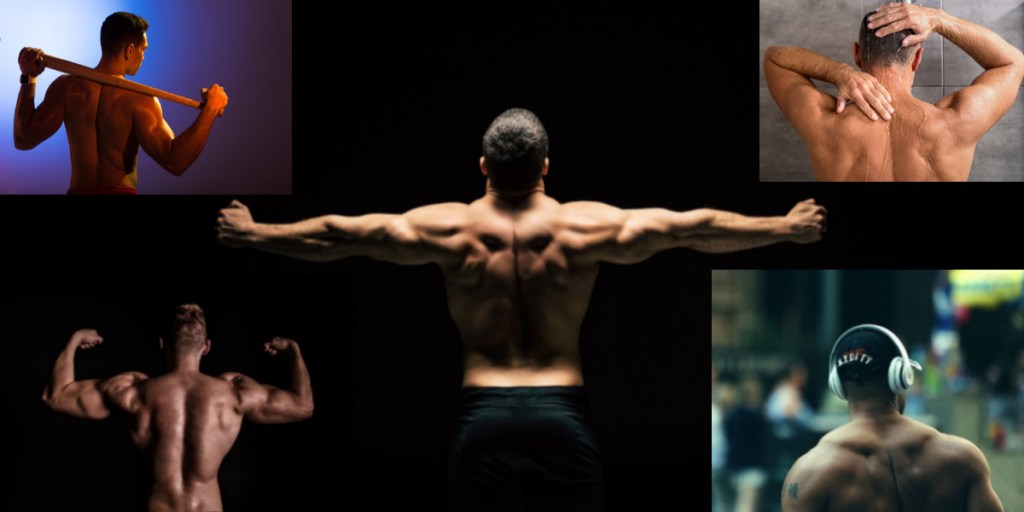
When performing a movement, the muscles of our body act in the form of kinetic chains. But what is a kinetic chain? We understand the kinetic chain as each part of the body (including muscles, joints and nerves), which is related together to produce a certain movement of the bones. There are several ways to classify kinetic chains and one of them is:
- Anterior muscular chain (referring to the muscles of the anterior part of the body and which mainly have a flexion function).
- Posterior muscular chain (referring to the muscles at the back of the body that primarily have an extension function).
In this article I am going to put special emphasis on the latter due to its importance both in postural hygiene and in the correct execution of the technique of any sport skill.
The posterior muscular chain is made up of all these muscles: neck muscles, trapezius, latissimus dorsi, spinal erectors, glutes, hamstrings, adductor magnus and triceps surae.
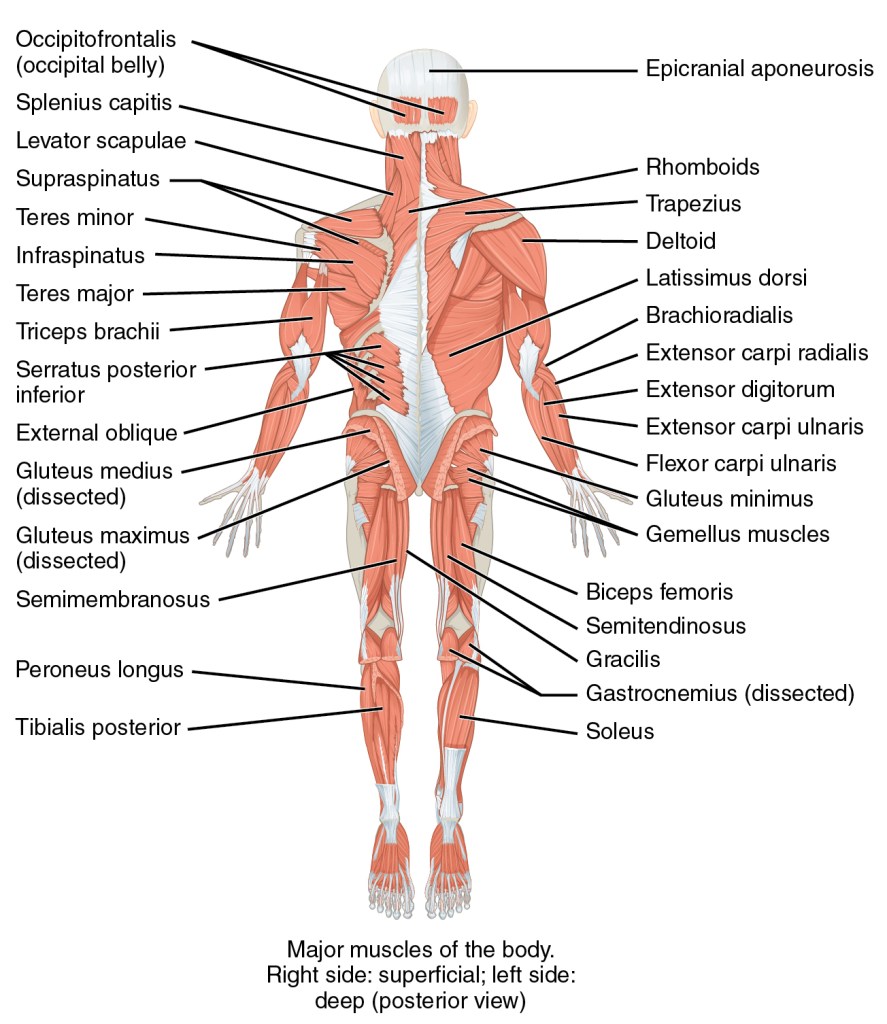
The posterior chain is essential so that we can maintain a very upright posture, that is, fully extended. However, we tend to underestimate it by adopting a kyphotic position as a result of performing unnatural spinal flexion movements day after day, since this structure was not designed for this. All of this is conditioned by the sedentary lifestyle in which many of us live and have been educated to follow since childhood.
The main context is that which occurs when sitting in a chair or seat for a long time, which results in all of the following things:
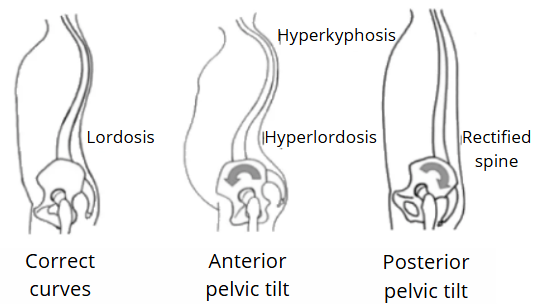
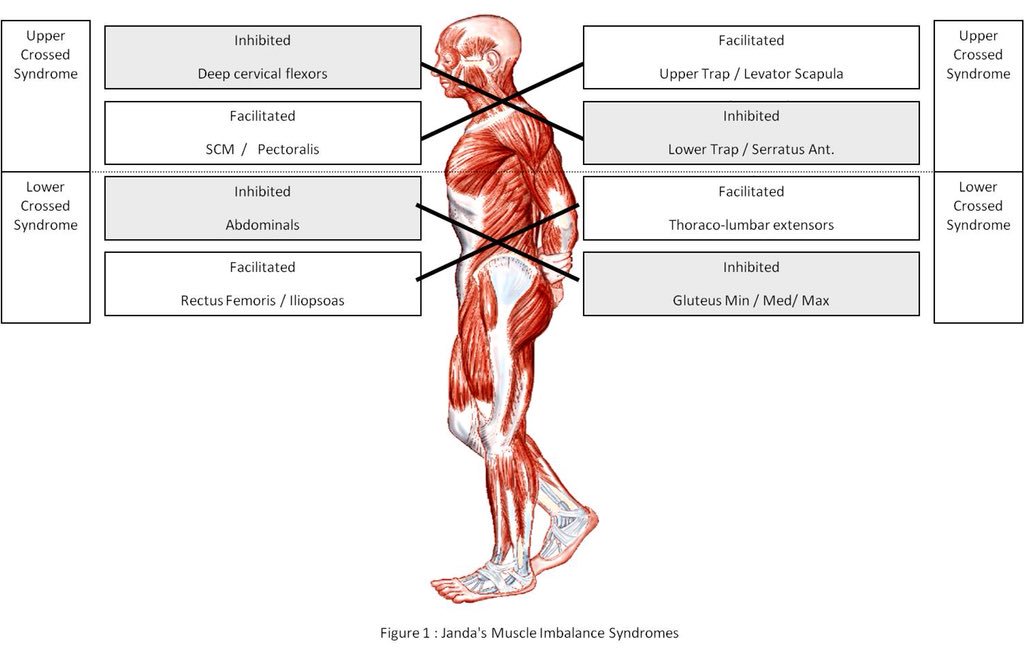
- The appearance of lower crossed syndrome in which a pelvic imbalance occurs, that is, the hip is no longer in a neutral position but is in anteversion (turns forward).
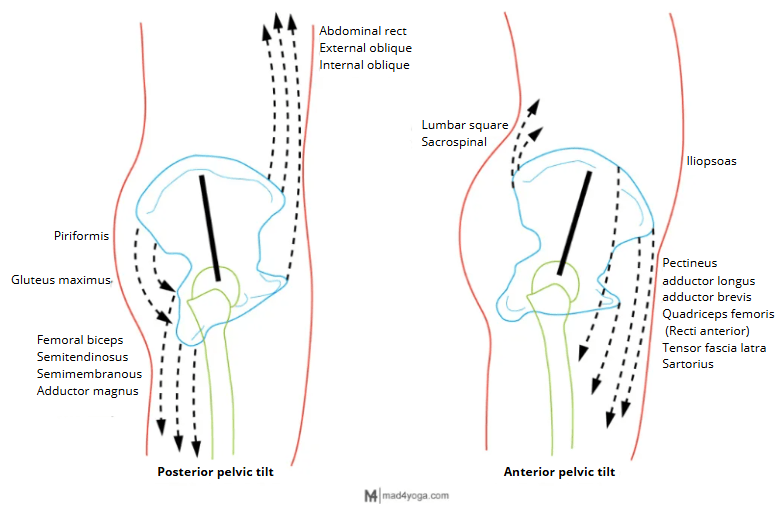
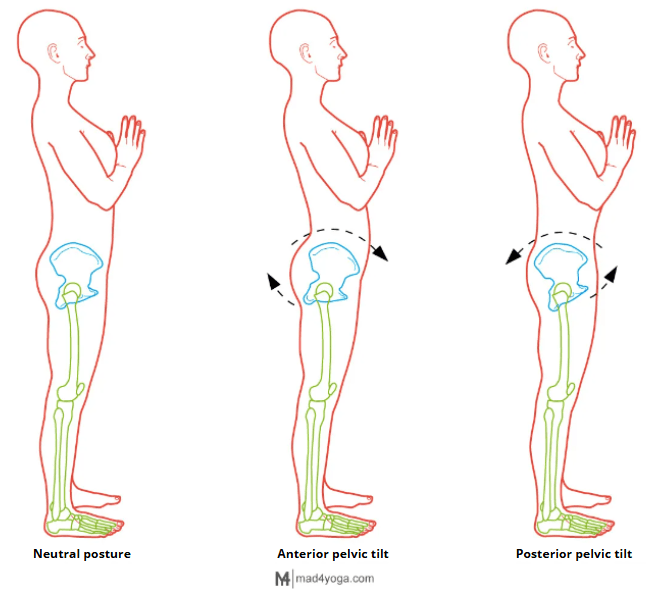
- A shortening of the hamstrings and adductors.
- Shortening of the iliopsoas results in the appearance of gluteal amnesia, in which the muscles in our buttocks cannot effectively perform their function of extending the hip.
- The shortening of the hamstrings causes the loss of the ability to perform lumbopelvic dissociation and to make a gesture as everyday as bending down to pick up an object from the floor or leave it on it, the natural curve of the lumbar area of our spine (known as lumbar lordosis) is lost and our back arches. If we lift a heavy object under these conditions, it makes the joints of the vertebrae suffer easily.
If the chair also has a backrest, you must also add this:
- The muscles of our back do not work and are resting, so little by little they lose their tone.
- The core muscles are not activated to perform their function of stabilizing the spine, since this mission is already done by the backrest.
And if in addition to sitting we do tasks such as writing, typing on the computer or cell phone, sewing or driving; taking into account are actions that are characterized by being unnatural skills for our biomechanical design:
- Our shoulders rotate inward (internal rotation) as a result of the shortening of the pectoralis major, pectoralis minor and the anterior deltoid bundle, along with the retraction of the pectoral fascia. All of this leads to the emergence of upper crossed syndrome, which causes the appearance of a kyphotic attitude, that is, in the form of a hump.
- And as a consequence of the shortening of the hamstrings, every time we want to move forward we will do so by forcing our spine to curve since we will not be able to do so through hip flexion because we are not able to maintain lumbopelvic dissociation.
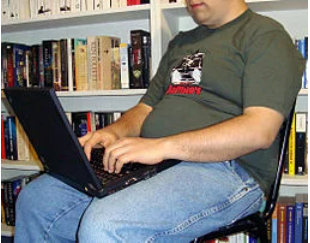
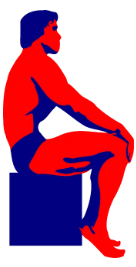
Who doesn’t feel identified with this situation? That is why I personally consider that the chair is one of the worst inventions of humanity and, no matter how comfortable it is, it is slowly destroying us in terms of body posture, joint mobility and motor skills, unless we do something to reverse their efects. We should all be able to do a deep squat as it is the natural way to sit when we want to.
The result of chronically abusing the chair is that the muscles of the anterior chain are shorter because we request them much more, while the muscles of the posterior chain lose their tone since they are not demanded, losing the harmony and balance that must exist between both kinetic chains. A sedentary lifestyle and bad habits tip the balance towards the anterior muscle chain.
Another example of muscular imbalance that occurs between both muscle chains is that which can be observed in those people who go to the gym mainly with the aim of hypertrophy and who abuse isolation exercises and only work on a single muscular plane, the anterior one, since they are the muscles that you see in the mirror. For example, it is common for many bodybuilders to abuse the bench press and forget to compensate for its negative effects by doing vertical thrusts, pull-ups, and deadlifts. The result is the appearance of a kyphotic or humped posture, shoulders dropped and rotated inward, and the chin in front of the chest. And an attractive aesthetic is more conditioned by having good body posture than by the simple fact of having more muscle mass.
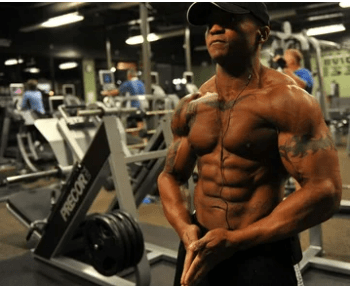
Postural problems affect more than 90% of the population in the West, above overweight and obesity, whose prevalence is 40% of the world’s population, and it is curious that when talking about a sedentary lifestyle it is not given the importance it really deserve nor it is given enough publicity. In the generations of our grandparents and great-grandparents, a postural hygiene subject was usually taught in schools and great importance was given to the topic of having good body posture. For some reason all this has been lost.
If you want to learn more about the correct way to sit, I invite you to watch this video on postural hygiene that is worth gold.
And this other one too.
But all this not only has its implication in terms of health, but also in sports performance. It results that having a strengthened posterior muscle chain, and as a consequence good posture, allows us to execute practically any sport skill efficiently and effectively. Otherwise it would be difficult to do it fluently and elegantly. Here I give you two examples.
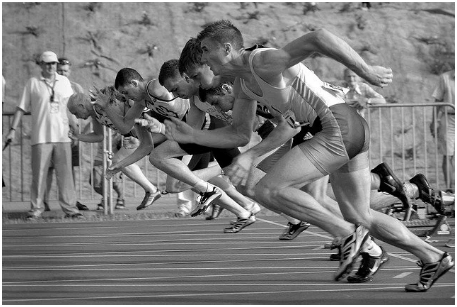
When sprinting in a speed race, it is necessary to have a highly developed posterior muscle chain to be able to face this trial properly. After the acceleration phase in which we run inclined with our entire body, we progressively rise up vertically and reach our top speed sprint. At this moment it is necessary for our trunk to be in extension to be able to raise the thigh to a nearly horizontal position with respect to the ground and thus be able to cover the maximum possible distance with each stride. Next, the downward and backward strike of that same limb will occur and the contact of the foot with the ground will coincide exactly in the axis of gravity and will occur with the metatarsus, allowing us to take advantage of the stretching-shortening cycle of the Achilles tendon and benefit of the elastic energy that is stored. This form of sprinting is known as the anterior cycle running technique, which is the most efficient and effective. If our back is flexed when standing, we would not be able to bring the thigh until it was parallel to the ground and the contact of the foot with the surface would occur through the heel and in front of the axis of gravity. This is the posterior cycle running technique and apart from being ineffective for moving quickly, it consumes much more energy and is more damaging.
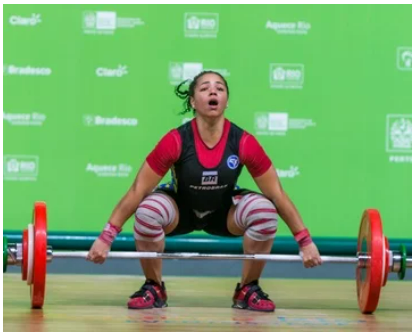
When doing a deadlift and also an Olympic snatch or clean, whose starting position is still a deadlift, it is also essential that the muscles at the back of the body intervene by carrying out their specific functions. During the execution of these lifts, the paravertebral muscles will allow us to stabilize the spine and maintain the natural curve of its lumbar region (lumbar lordosis) every time we bend down to pick up the bar or leave it on the ground, thus making it possible to protect it from stress which is subjected if the weight to be lifted is of considerable intensity. But in addition, the hamstring muscles, apart from carrying out their dynamic action of hip extension together with the glutes, it is important that they have sufficient flexibility to allow the paravertebral muscles to be activated and thus be able to do their job, preventing them from the back arches.
And what are the most appropriate exercises to strengthen the posterior muscle chain?
Without a doubt, the main and most complete is the deadlift, since it involves all the muscles in the back of the body. But so are pull-ups, the shoulder press and even if we do a low bar squat since the back is more inclined compared to a high bar squat. And for people who are starting out and have great deficiencies and difficulties in the technical execution of all these exercises, one option is to perform lumbar extensions in a Roman chair or similar devices.
I hope it has become clear to you the great importance of our body being in muscular balance, not only for health, but so that efficient function and movement are possible during sports practice.

Bibliographic references:
- Yessis M. (2013). Biomechanics and Kinesiology of Exercise. Second Edition. Ultimate Athlete Concepts.
- Sánchez D. (s.f.). Prowellness. https://prowellness.es
 ATLETA EXPLOSIVO
Leave a comment