
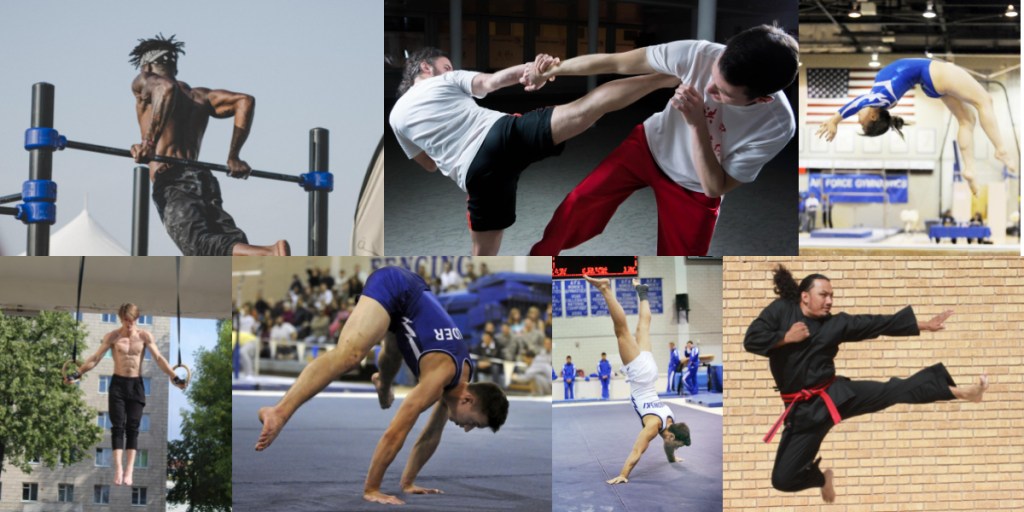
Surely you have heard phrases like this from the mouths of many sports coaches: “If you start lifting weights you will get stronger, but you will sacrifice your flexibility and joint mobility.” And vice versa: “If your goal is to gain a lot of flexibility you have to avoid lifting weights so that it doesn’t limit you.” These approaches that have always existed are not entirely wrong, but they are not 100% correct either. And it depends on how we do things.
If we limit ourselves to working strength on stationary machines, or select muscle isolation exercises, or even more global exercises but without performing the full range of motion that allows us to reach our joints, the result will not be beneficial for the fluidity of the movements and motor skills. After repeating all of this over time as a sequence of bad habits, we will lose mobility in the shoulders, hips, ankles and wrists. But if that were not enough this does not end here. Normally this situation of loss of flexibility is accompanied by a worsening of our body posture as a result of the imbalances between muscle groups that occur. Seen from this perspective, everything mentioned at the beginning is true.
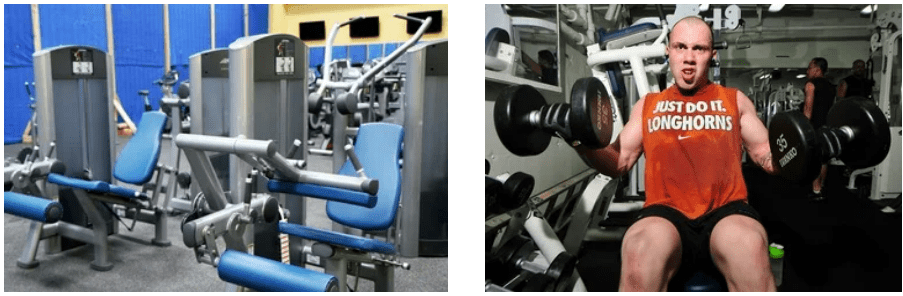
But if we opt for multi-joint exercises in which we work the entire body at the same time and in which we strengthen large muscle groups and kinetic chains, completing the entire possible range of motion of the mobile joints involved and, furthermore, using free weights as a training tool (preferably the Olympic bar), it turns out that apart from getting stronger we also gain flexibility because the eccentric phase of this type of exercise continues to act as a dynamic stretch that contributes to deforming the dense and fibrous connective tissue fascia that surrounds our muscles and thus facilitate its elongation. All this makes what many coaches have commented about the controversy between strength and flexibility become partly a myth.

Many athletes need to be strong and flexible at the same time, that is, they need to perform their motor skills by applying force or even power, but they also need flexibility so that these skills are executed with efficiency, fluidity and elegance from a technical point of view. Therefore, the way to work on bodybuilding in any athlete must be by incorporating multi-joint exercises into their sessions performed in the full range of joint movement. So it is possible to be strong and flexible at the same time.
But in case you still doubt it, below I will give you some examples that show there is compatibility between strength and flexibility.
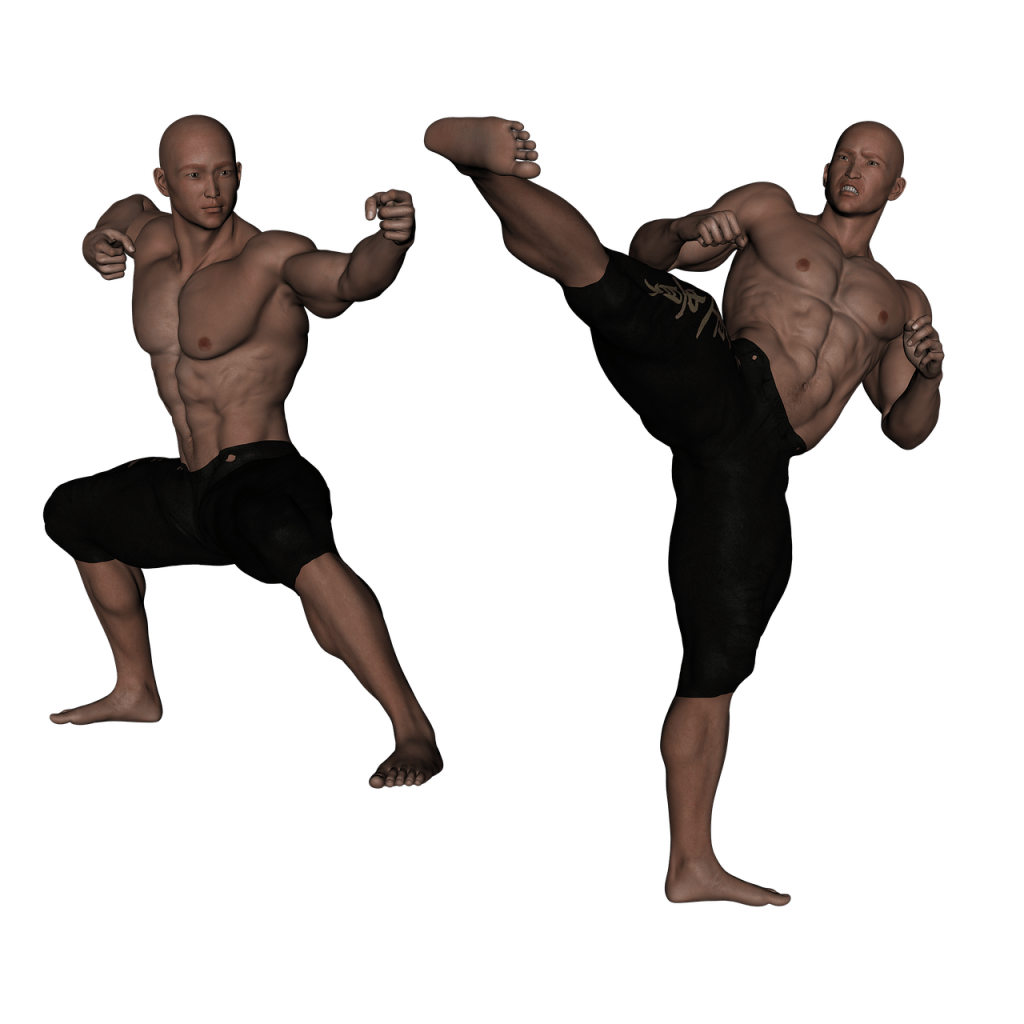
Perhaps the most representative athletes of all are martial arts fighters. Surely some of these characters that I am going to mention sound familiar to you:
- Jean-Claude Van Damme, who was a very famous actor who made his boom in the 1980s in “No Retreat, No Surrender” and participated in many other highly successful films.
- Scott Adkins, famous for playing the mythical character called Yuri Boika in the “Invicto” saga.
- Bren Foster, taekwondo expert and also an actor. This is probably my favorite.
- Michael Jai White, jiu jitsu and karate practitioner, who debuted in quite a few films.
- Mark Dacascos, another great actor on the list who masters more than one martial art.
- Giga Ovgod, a youtuber perhaps not so well known, but with an enviable level of fighting and physique. I also like this one a lot. Well, actually I like them all and I want to be like them.
Obviously not all the people you see practicing martial arts are very strong or muscular. This is because they have not incorporated weight training sessions and do not lift heavy weights in their training. Therefore, it is no contradiction in terms of demonstrating that it is possible to develop high levels of strength with long ranges of joint mobility.
We can also find many athletes who are equally strong and flexible in other sports such as in different gymnastics disciplines: artistic, acrobatic, trampoline or calisthenics.
But we don’t only need flexibility to practice martial arts and gymnastics. This physical quality is also demanded in other sports, although perhaps it is not required to express it to the same magnitude as in the other two.
We can see an example of this when doing the stride during a sprint. During its course we need to have a very mobile hip to be able to flex it until bringing the thigh to a position almost parallel to the ground. Only in this way we will be able to cover many meters of distance with this hip flexion skill, which is highly effective and requires less effort during its execution.
Also weightlifting lifts, that is, the snatch and the clean and jerk, demand a lot of mobility in both the shoulders and hips, and there is no doubt that the level of strength and power of weightlifters is very high.
I hope that with all this explanation you are now clear that you can improve your strength and flexibility at the same time, and that to do so you must train in the gym in the correct way. Remember that both abilities are equally demanded in many sports and as an athlete you must enhance them to stand out and excel in the practice of your sports specialty.
Bibliographic references:
- Sánchez D. (n.d.). Prowellness. https://prowellness.es
 ATLETA EXPLOSIVO
Leave a comment