
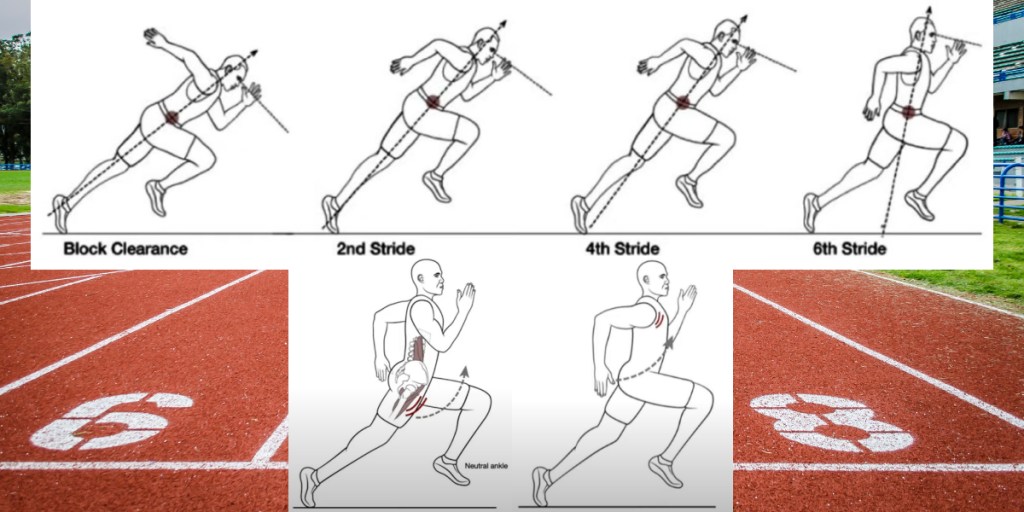
Below, you´ll read an analysis by coach Tony Holler, author of the “Feed the Cats” program, on the mechanics of the acceleration and max velocity phases of a sprint. You’ll also learn about the most common mistakes people make and several exercises to help you overcome them.
ACCELERATION MECHANICS
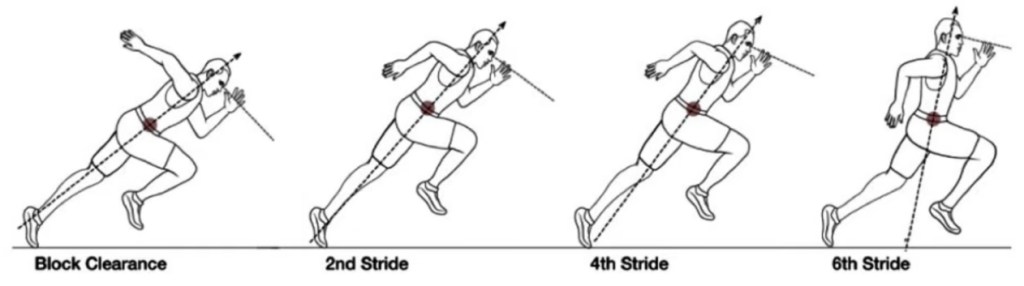
With acceleration you want to come up and out. Your eyes are perpendicular to the line of your body. We really like those straight lines because that means you are finishing with the glutes. It is a gradual rise. With every stride you have a gradual rise. It is not stay low for 30 meters and then pop up.
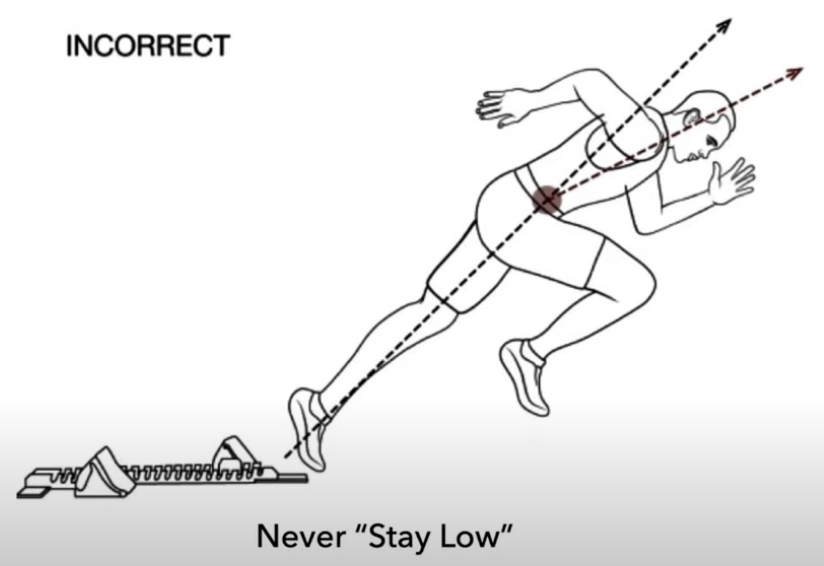
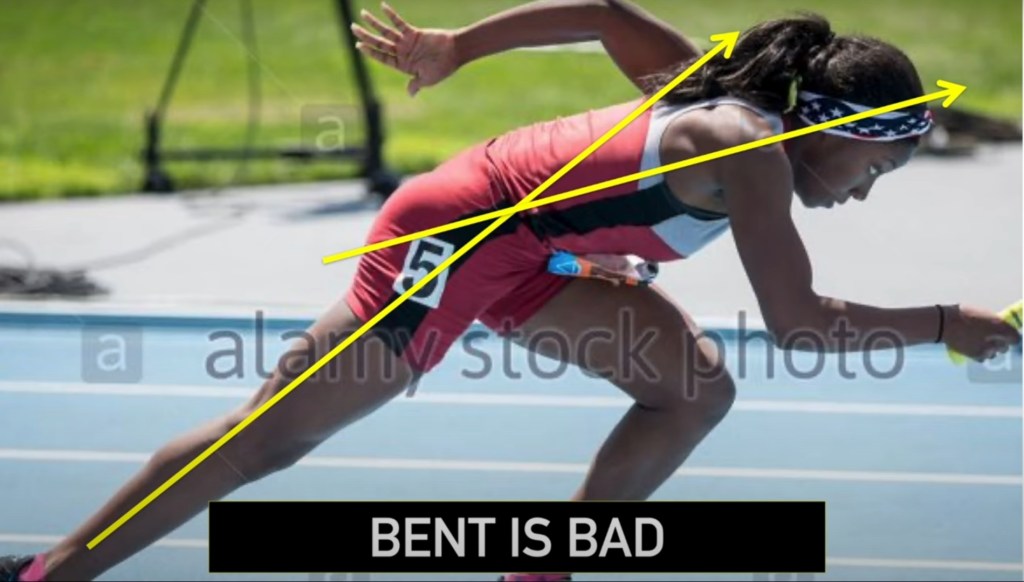
It´s really important that we see what incorrect looks like. The number 1 cue is to “Stay low” and the number 1 wrong cue is to “Stay low”, because what stay low does is you create these artificial lows where athletes are bent at the waist we´re not very strong when we´re bent. Bent is bad. We want to come up and out with good straight lines finishing with the glutes.
We want to have a big split of our thighs. But if it´s too big, your vector force is going to be down into the track and not back into the track. So you don´t want to overstride coming out.
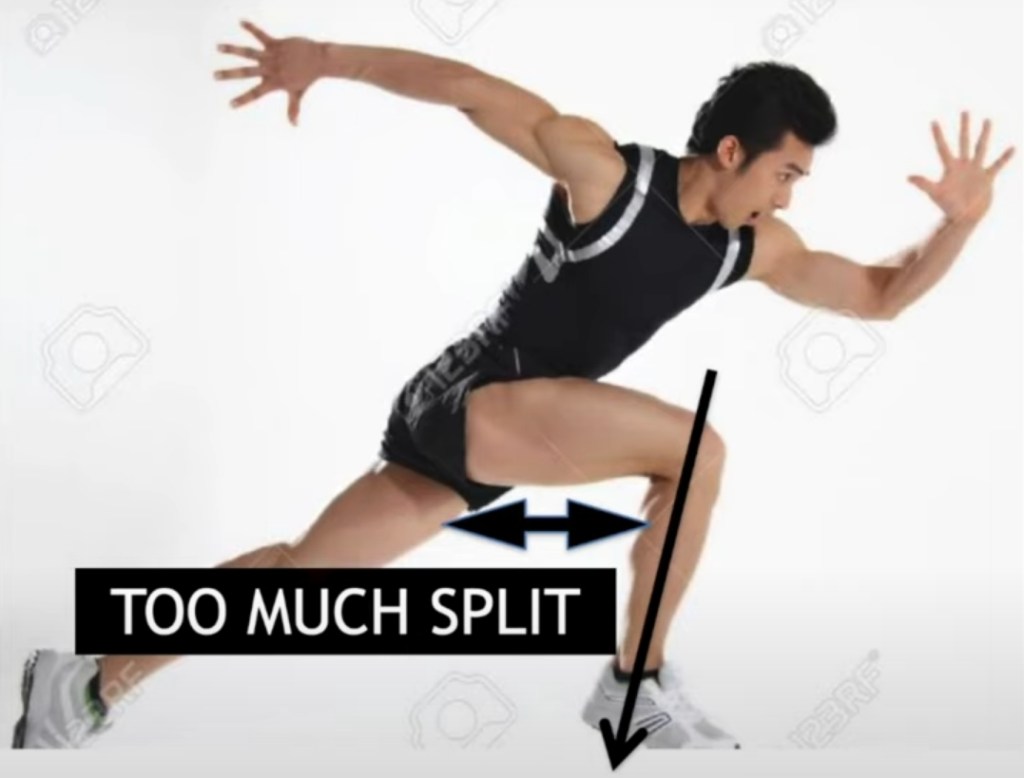
So what we want is an airborne, coming out hard, and having a big split of the thighs. 45º is kind of the default but only really strong good athletes can come out at 45º. If you´re younger or weaker, you come out higher. If you try to come out 45º, even if you are some freshman 14 year old girl, you gonna have what we call stumble reflex where the foot is going to try to keep you from face planting, so that foot will automatically your brain just sends a message like “Hey, we´re falling. Step out, so we don´t fall down”.
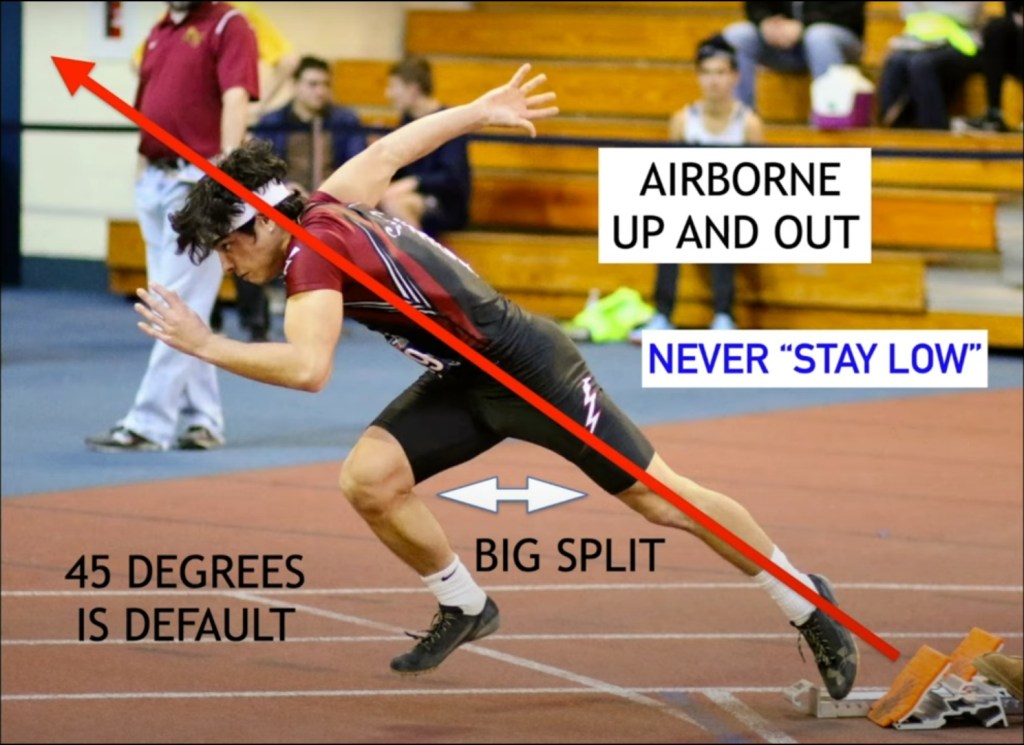
We want to see the track. Eyes perpendicular to the body. We do not want to be bent. We don´t wanna stay low ever.

When you come out too low, your toes are going to stab into the ground. You are not going to hit going backwards. The vector of force is going to go into the ground, not into the ground behind you.
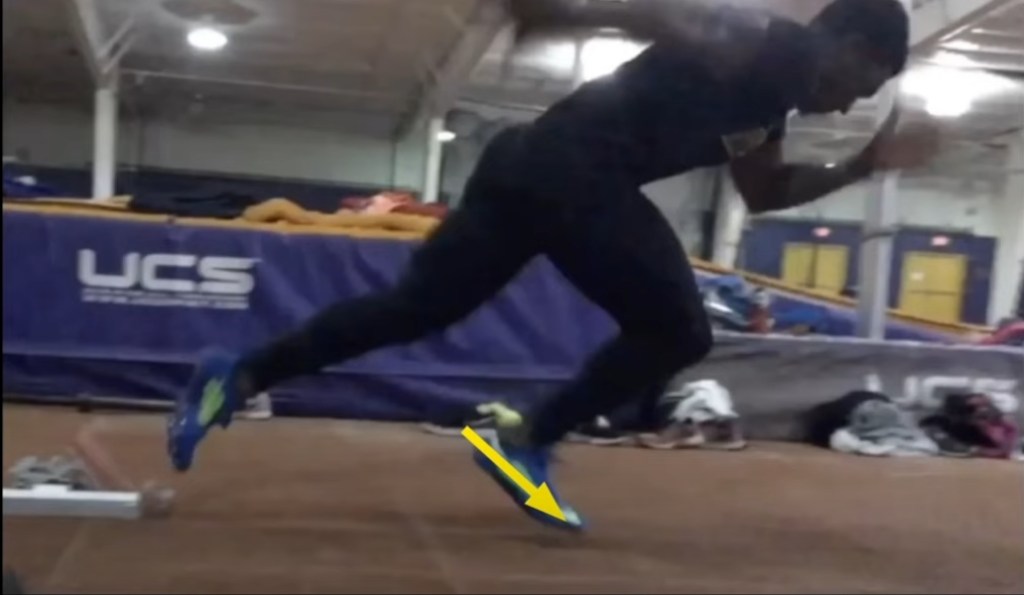
Doing right coming up and out, you´re not stabbing your toes into the ground. Now you can watch Jonas Dodoo calls a violent whack the track behind you. Your foot is now going to hit in a direction. That´s going to be advantageous to getting you down the track projecting your hips down the track.
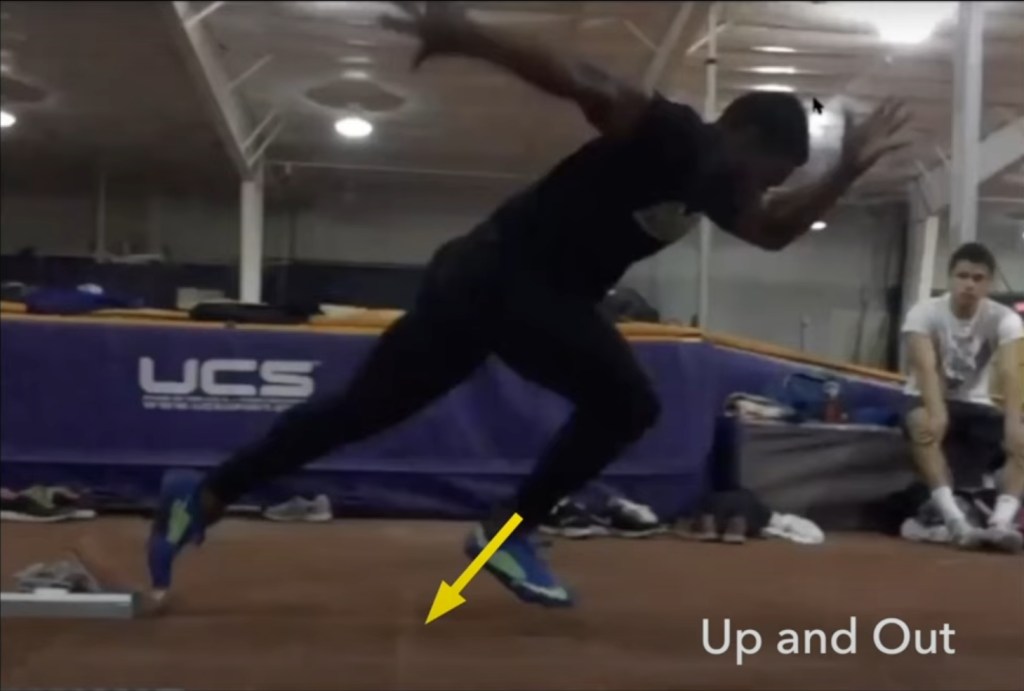
The second step is really important too. If you come from the too low start, you have both feet on the ground. Both feet on the ground is bad, but that´s what happens when you come up too low. Not only is your first step bad, your second step´s going to be bad as well.
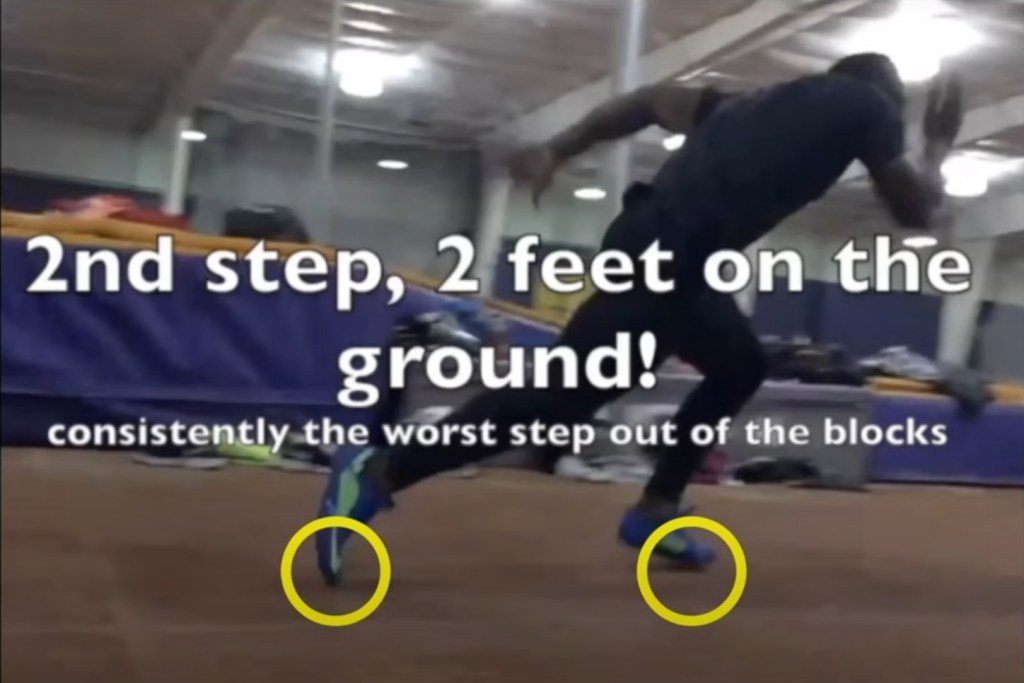
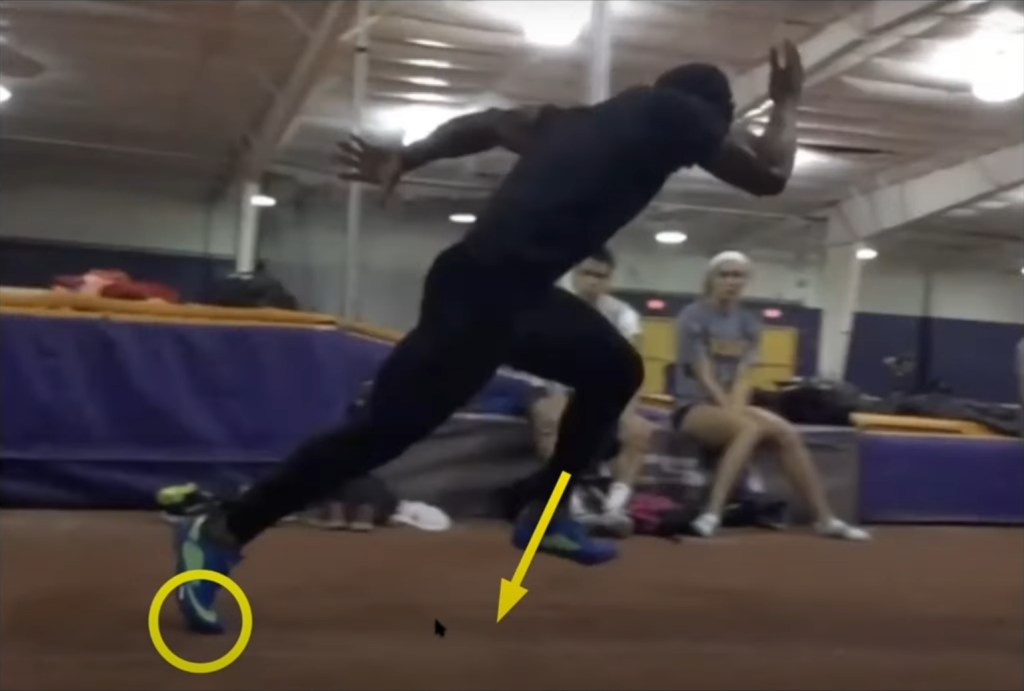
But when you came out higher, not only is your fisrt step in a position where you can whack the track violently. Now your second step is even better. Now you can hit the track underneath you and have a violent push sending you down the track.
Acceleration sure looks like you´re pushing a car. This is why people think you got to lift weights like crazy and do a lot of squats to be a good accelerator. This is slow pushes. If you´re pushing a car it´s going to be slow pushes. Back to whacking the track, “whack” is an onomatopoeia like you think about like an ax whacking a tree. That´s the type of violent hitting the track that we do. This guy pushing a car is not whacking the track. These are long slow pushes but we do like the lean and the straightness of his body.

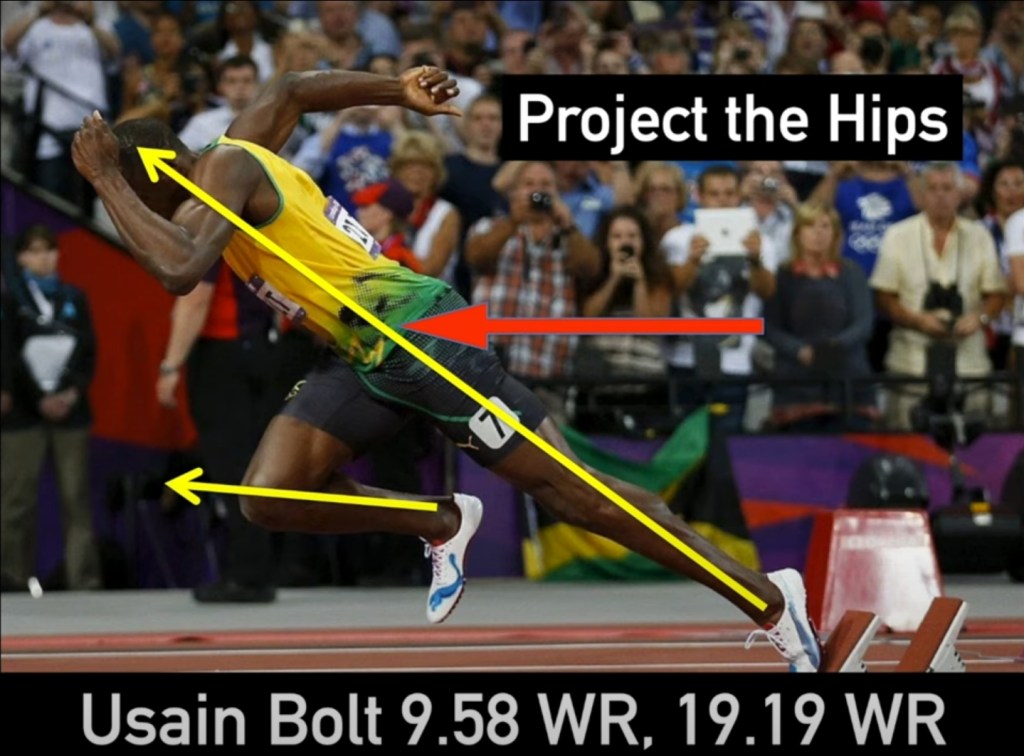
Usain Bolt was a fabulous starter in the first 60 meters of his 100 meters in Berlin. He ran faster than the world record in the 60 meters. Anybody says that Bolt was a bad starter doesn´t know what the hell they´re talking about. You look at the great shin angles and the straight body projecting the hips.
You can do these 7 drills to get better at acceleration:
- Partner pushes – Where you want to split and rip, and the person with their hands on your shoulders will give ground backwards for two or three steps and then step out of the way like a bull fighter and let you go. This drill just adds some resistance to a start.
- Med ball throws (Finish the glutes!) – We´re just doing a high throw so that we will get totally straight and do that straight line with the body and really finish with the hips. You can do 3 sets of 8 reps.
- 10 meter hill sprints – 10 meter starts up a hill. You´re trying to work on strength and body angles by going up a gradual hill. You´re only going like the first three or four steps.
- Wall drills – You get a 45º angle. You can either do singles or a set of three. We´re really working at enganging the core and just getting our brain used to coming out that angle, so that we don´t have that stumble reflex and want to put our foot in front of us.
- Resistance bands
- Seated pop-ups – We´re really trying to get extension with the hips. You can do this with arms or you can put your hands on your shoulders like in a hug position. You want to project the hips down the track, so projecting it in a vertical plane like that is also pretty good.
- Sleds – Brian Kula with McCaffrey says you never go more than 10% body weight when you drag a sled. You don´t want to have real slow pushes here. You want to have violent pushes. You want to whack the track and really project the hips down the track.
MAX VELOCITY MECHANICS
Common threads of great sprinters:
- Ground contact times approaching 0.08 seconds (1/12 of a second). We want to do things where we hit the track hard enough to get back off the track quickly. That´s a force absorption, a transition to a fourth generation. By the way, that´s one of the reasons why sprinters wear sprint spikes. They have no padding. There´s no leakage of energy at all. Everything that goes into the track comes right back at you.
- Big split of thighs. A lot of the things that we do in practice is to try to develop the big split habit.
- High angular velocity (fast “switch”). Not only is there a big split of the thighs, but there´s a fast switch that goes from toe off to knee up very quickly. Slow people are very slow with that. Fast people are very fast.
- Big in front. We want to big in the front. Not only do we have a big split of the thighs, but the angle is tilted towards the front.
- Elastic – Snappy – Twitchy. The fastes guys are elastic. Snappy is like a stretch rubber band you let go of it and it snaps. And they´re twitchy. All those things are basically descriptors of the same thing. That´s why people that get like that last place in a race seem very muscular and they try really hard and they seem really tired at the end of the race whereas the guy who wins the race does not seem tired. It doesn´t seem like he´s put out much energy at all because it´s this elastic rubber band, snappiness, twitchiness where the efficiency of the energy expense is just incredible. So we want to be snappy, twitchy and elastic.
We want to coach to a certain model like Carl Lewis and that is:
- Get tall. The hips are underneath our trunk.
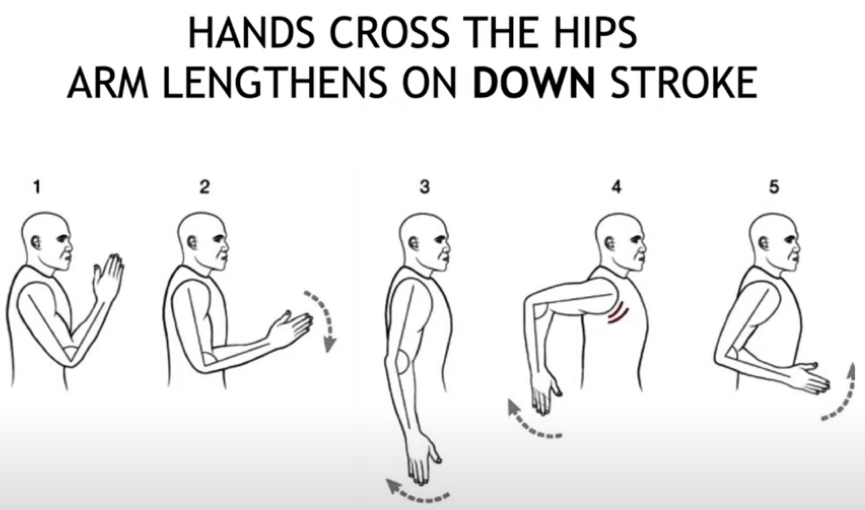
- Cross the hips. We want to cross the hips with our hand. If you see Carl Lewis´ back hand there is, maybe 12 inches past his pocket, so that´s what we´re looking for. Carl likes to talk about putting your elbow to the sky. If your hand is where it is right here, your elbow is to the sky.
- Foot high and in front. We want that big front side with the knee up nearly flat with the front thigh, and the foot out underneath the knee out in front of the body.
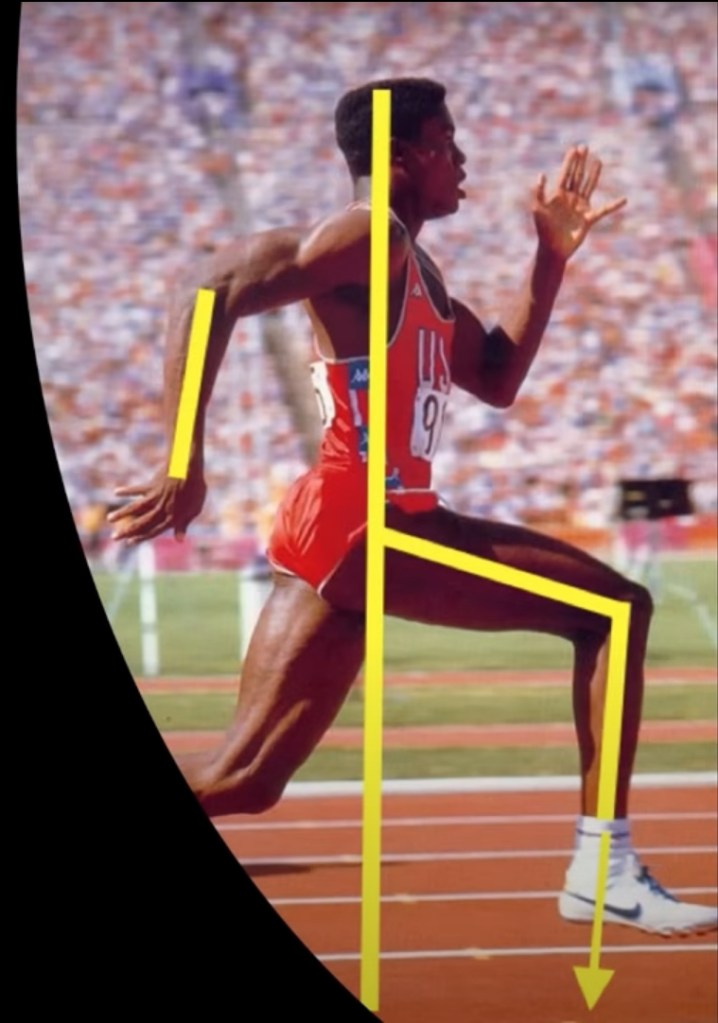
To clarify some arm action stuff about the downstroke, the arms do not stay at 90º. Matter of fact they´re less than 90º up at the top. As your arms go down and back, the arm elongates and then bends again. As a coach it´s important that you don´t ever tell your athletes to keep their arms bent at 90º.

There is a stretch reflex when the elbow goes to the sky (or the hand crosses the hip). There´s a stretch that happens up in the shoulder. When that stretch happens, there is a stretch reflex which is a spring back. So if you´re keeping your hands out in front of you, you´re never going to get that stretch reflex. Distance runners have T-rex arms. Their arms stay in front of their body. It´s like they have these little short arms and the reason for that it´s very efficient. It´s just not fast. What they´re trying to do is save energy so they can run 10 miles. As a sprinters we want to have a full range of motion with the arms.
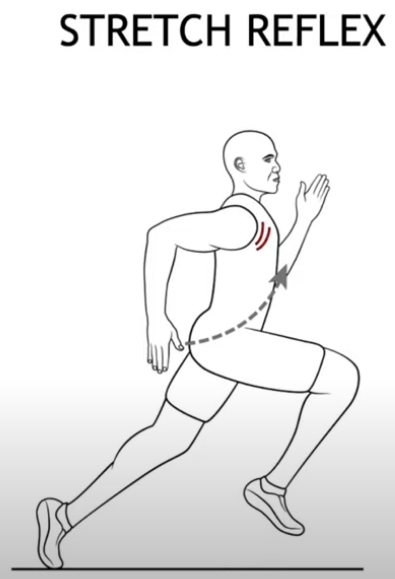
You can see the elbow goes to the sky in the picture below. The hand cross the hips. The elongation of the arm (figure 3). The simple act of being bigger in the arms can have huge impacts on the lower body.
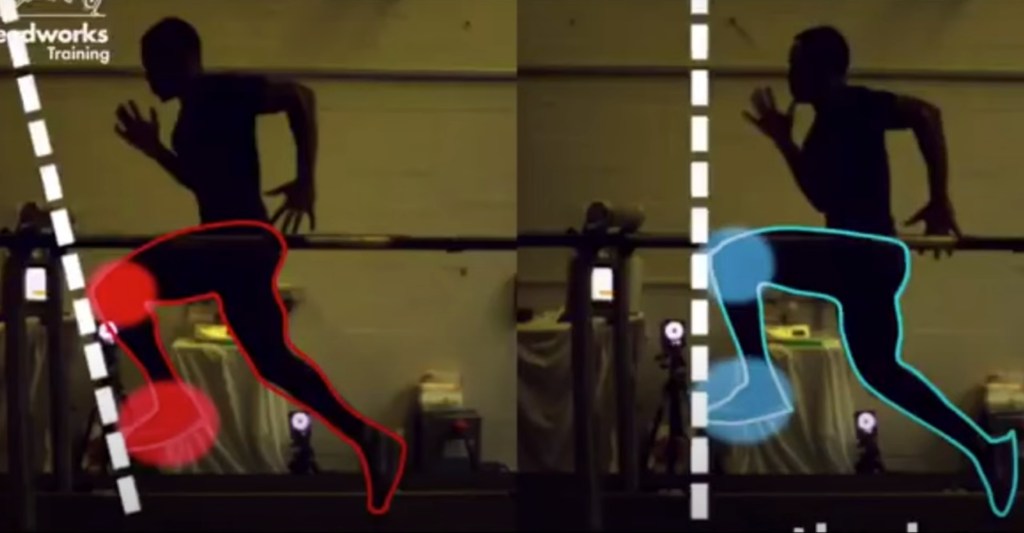
The guy on the right is more optimal: the knee is up a little bit more and the foot is underneath the knee. That´s a bigger split of the thighs. It´s the same guy in both pictures, but in the right picture he´s opened up a little bit better. By opening up that big split of the thighs you get more of a stretch reflex of that back leg. So it´s not just the shoulder that undergoes a stretch reflex. By the way if you look at the hands crossing the hips, you also see that the elbow is going to the sky.
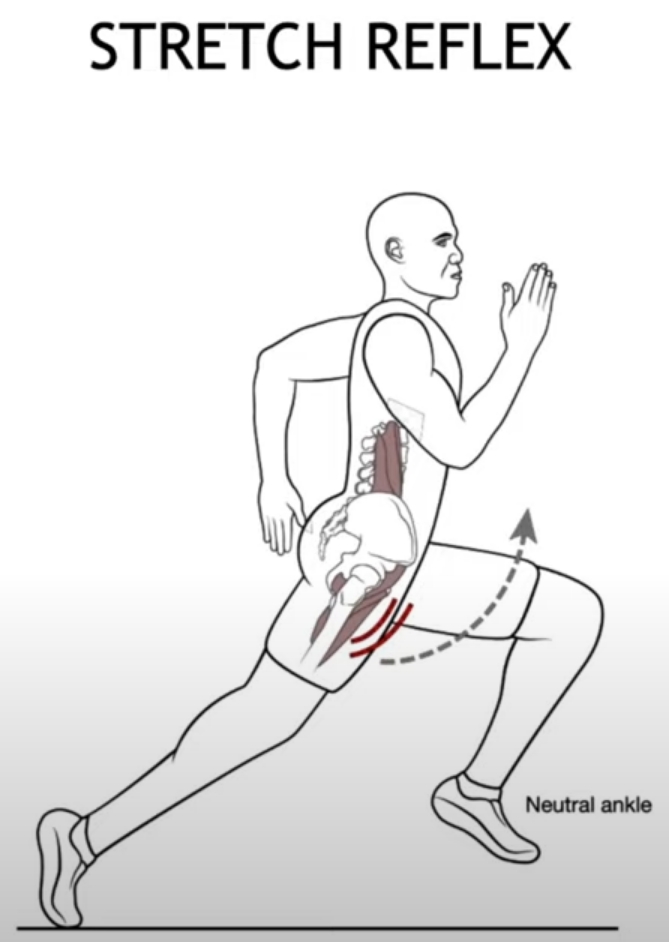
There is also a stretch reflex that happens on toe off. The bigger the split, the bigger the stretch and the less energy that it takes to snap that back leg through to become the knee up.
Big split drills:
- Skipping taking a 6 pound medicine ball and let that ball bounce into your knee.
- A-skip – You´re driving the knee a little higher than normal. The foot is out in front of the knee. There´s an exaggerated split. The hands have crossed the hips (the elbow to the sky). Everything we do we´re trying to reinforce this and create habits of mechanics that becomes ingrained in our brain, so that even when our brain becomes lazy which it does with habits, the habits will take over.
- Long lunge – We are just really getting long. That´s like the definition of a big split. We´re gonna pick up that back foot and step over our knee. We´re also going to coordinate our arms like we do when we are sprinting.
- Rocket lunge – We want the back knee to rock it through. With the big split we want to snap that knee through. We want to be twitchy looking when we do this. Snap it through. Remember all great sprinters switch quickly. They´re able to have a big split, a stretch reflex and snap that knee through.
- Boom boom booms – We have a big split and we´re also switching quickly. You want to be snappy, twitchy and elastic. We´re trying to coordinate our arms. Big split. More to the front.
- Bounding hands high – We´re throwing our hands up in the air just to create a little chaos.
- 6 bounds – We´re going bound from a two-footed start and we´re going to measure how far we go. We´re working on big splits driving that knee up high, table top front thigh. You can go with a double arm or a single arm.
- Russian lunges – We´re trying to bounce bounce bounce, jump high and switch. After switching we land and absorb with a flat front leg and we repeat again the sequence. We´ll do like three left and three right.
- Air lunges – You´re going to collect yourself and get right back up, and air lunge. This is kind of the introductory type of air lunge. The more advanced is the exact same thing except for there´s more of a bounce. Anything where we bounce sure seems better.
- Wickets – We go over wickets because we are big in the front and short in the back, our hand is crossing our hips, and our elbow goes to the sky. We are tilted towards the front and with a big split. We also have the foot out in front of the body under the knee. This is why we do wickets. We´re not wearing spikes. Wickets are at 6 feet. Another thing you can do is time people over wickets because that makes people much snappier and faster going over. When you video and time people you really change them. You can also separate the upper body and lower body. The reason for doing this is because when we sprint, we develop good habits. Our brain gets lazy, which is good because that means with a lazy brain we know how to do sprint mechanics even when we´re not thinking about them. That´s what a habit is. But whenever we want to really hardwire those messages from the brain to take away the laziness of the brain, we can create some chaos. What we are going to do is: 1) Run through with full arms just a normal sprint; 2) Run through with eyes left; 3) Run through with eyes right; 4) Run through with eyes up; 5) Run through with left fist high; 6) Run through with right fist high; 7) Run through putting the arms back in. So we´re doing all kinds of things that really kind of scramble the brain and make us really focus on lower body mechanics. If you play a sport like football or baseball, a lot of times our upper body is not on the same page with our lower body: we´re like looking to the side or we´re trying to find the ball… and we don´t want to slow down. In track our eyes are always forward. So why would we ever go eyes left, eyes right and eyes up? We want to take away that lazy brain and like double the reinforcement of the brain´s messages to the lower body.
FIXING POOR SPRINTING FORM: FRONTSIDE AND BACKSIDE MECHANICS
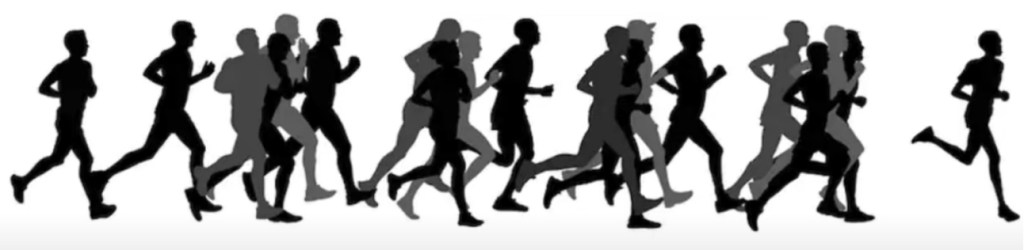
Endurance running makes bad mechanics a habit:
- T-rex arms. They hardly move their arms.
- Long ground contacts.
- Short split. If you measure the angles between their thighs, there are no big splits.
- Slow angular velocity. The back leg becomes the front leg very slowly.
- No snap. There´s no snap because there´s no stretch reflex.
- Not twitchy.
- Long in the back.
- Not big in the front.
In the picture below you see what distance runners look like. None of these silhouettes look anything like Carl Lewis or Marcellus Moore.
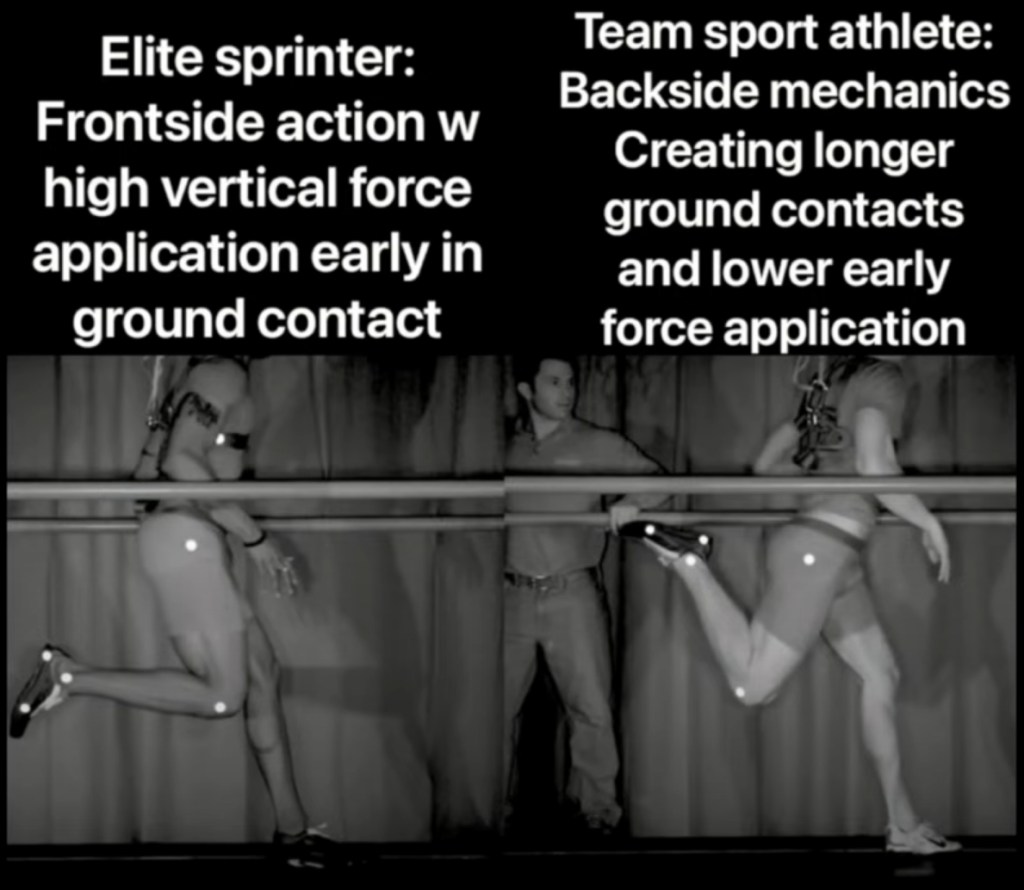
If you look at the two pictures below, the guy on the left is a sprinter and the guy on the right is not. You can see a huge difference in their backside. You can´t see the frontside here because this is with the foot coming down. But you see that really big pronounced backside stuff with the guy on the right.
One thing that good sprinters do is their calf meets their hamstring when the other leg is posted up. That creates a short lever, which means that´s quick to pop through.
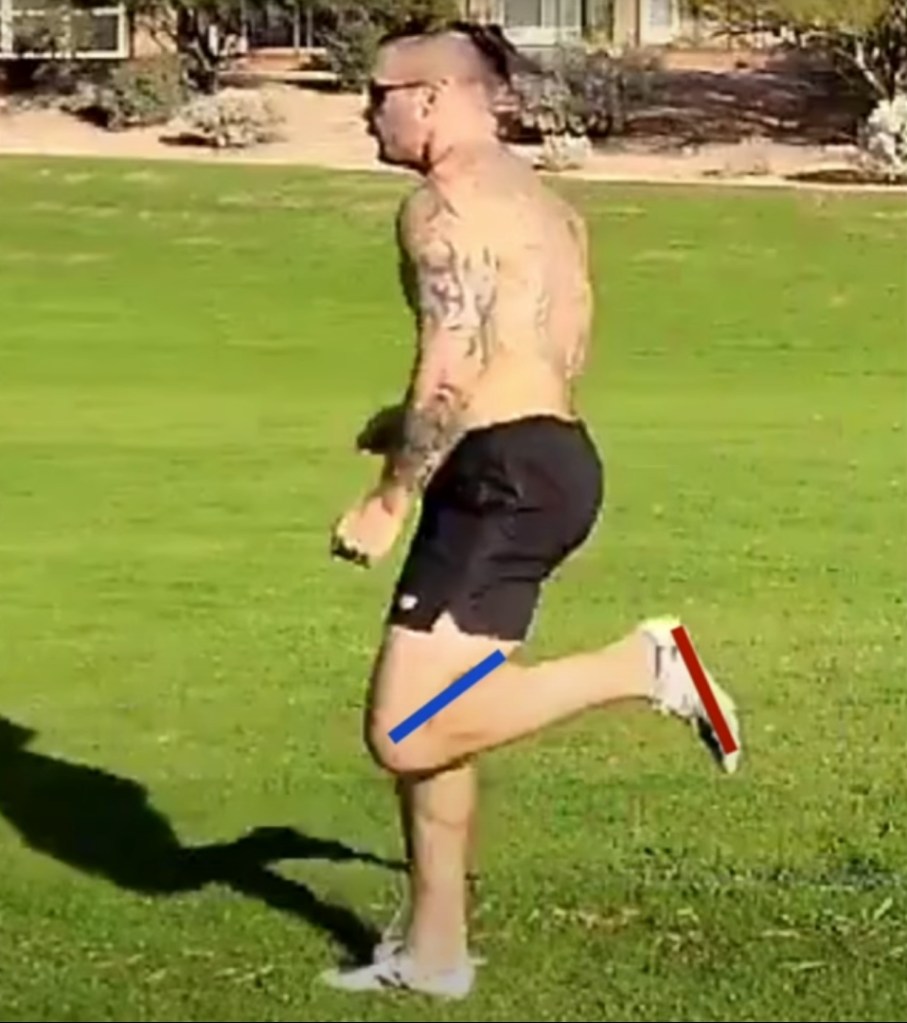
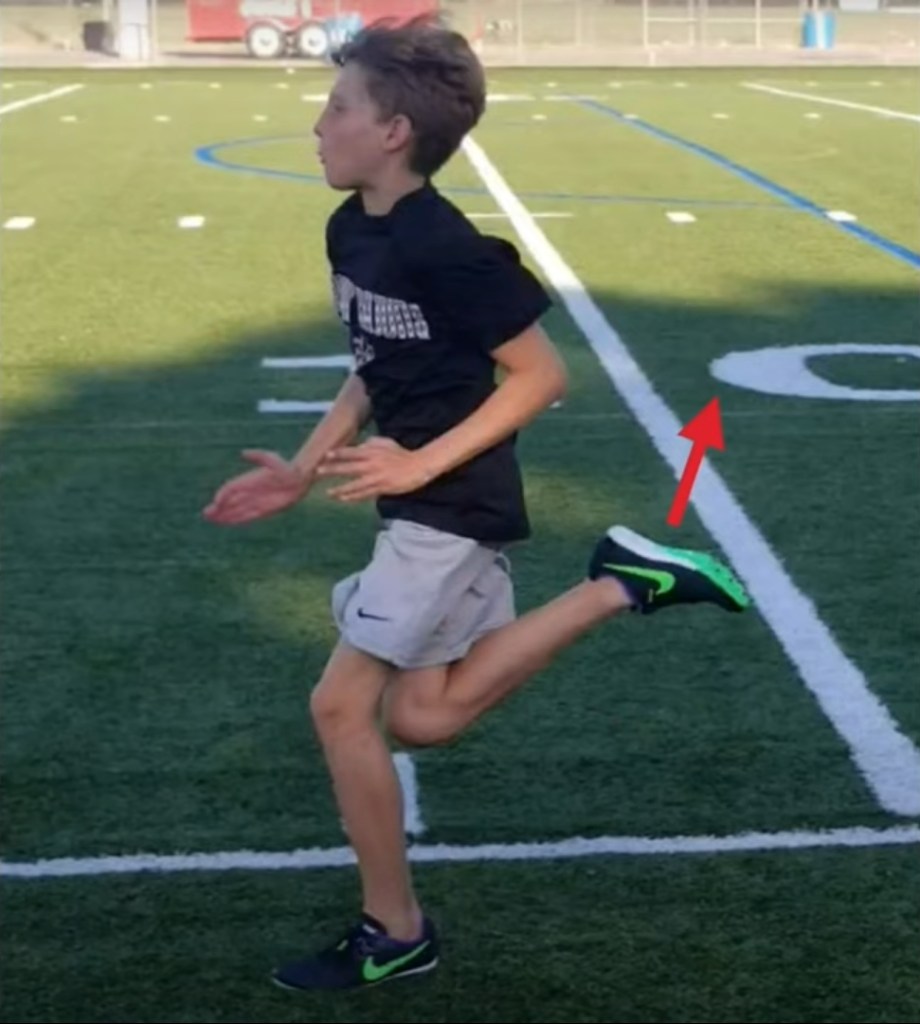
But what can we do if an athlete showes his sole to Jesus? Coach Tony Holler suggests performing the following sequence of technique drills to try to fix this error:
- Fast march. When you´re fast marching, you have no backside.
- Fast march over wickets 3´spacing.
- Fast sprint over 5´ spacing wickets.
- Video fast sprint over 6´ spacing wickets. You need the video. You need to really work it at being frontside.
- If backside returns, back to fast march.
It takes a lot of patience to be a sprint coach because the work that you do today does not pay off tomorrow. Tony Holler call it the 6-6-6. We´re not what we did yesterday. We´re what we did for the last 6 weeks or the last 6 months or the last 6 years.
Here´s Marcellus Moore in the same position basically, except for his knee is already rocketing through. He has a really quick twitchy back leg. You see great stiffness. He´s not all bent up like an accordion. He´s not showing his soles to Jesus. His triceps is contracted because that back arm is really pulling through. The elbow goes to the sky to snap forward. Remember that the calf comes up to meet the hamstring and that creates a short and fast lever coming through.
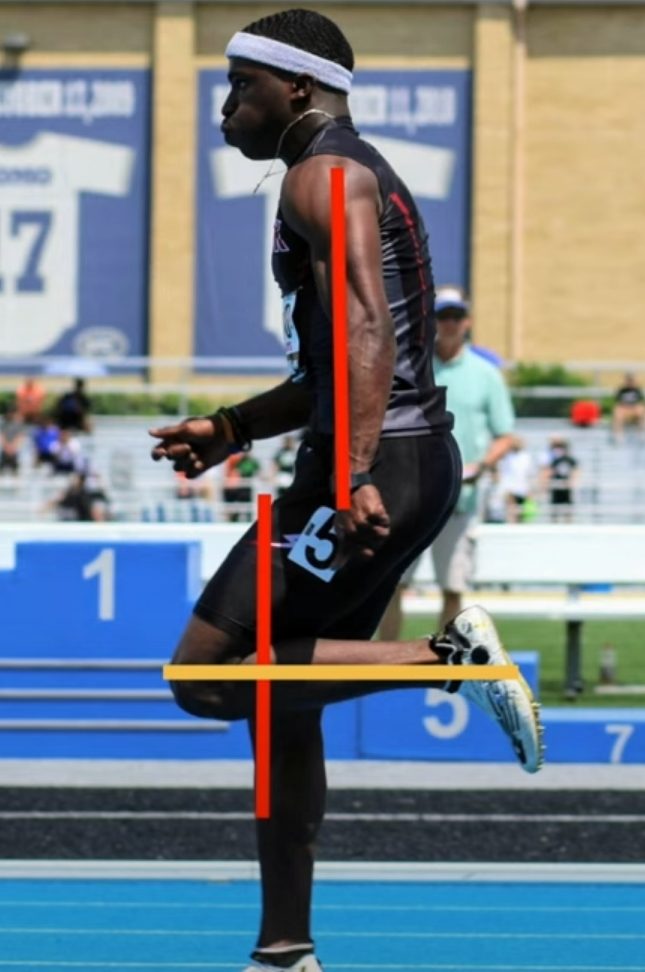

You can see the old accordion collapse. To fix that you should try to stay tall and get stronger.
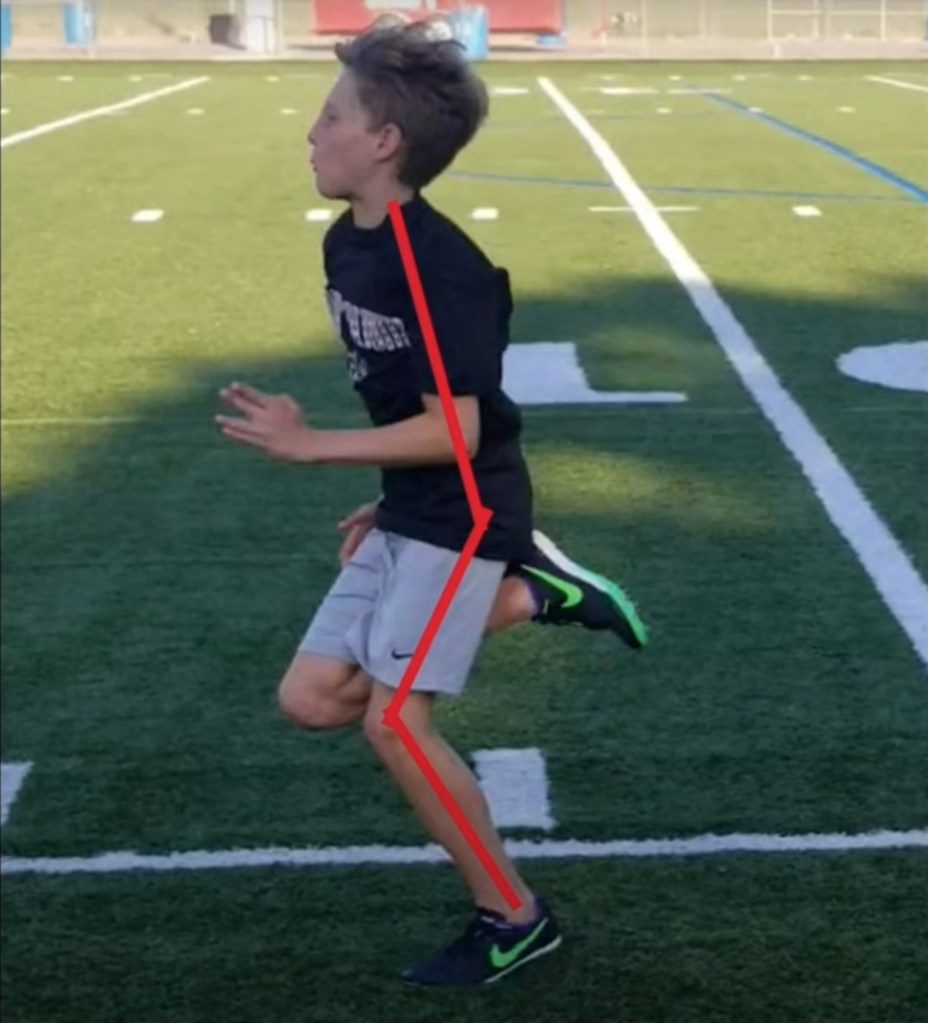
Stiffness is really important. The elites will collapse less than 2 centimeters throughout the race. That´s less than an inch of collapse.

Obviously you don´t want to have a breaking effect by having the leg land way out in front of the body like the guy on the left. And you definitely don´t want to have that forward lean with your soles of your spikes showing to Jesus. You´re going to see a lot of this, especially with guys that have never been coached.

You do not want to breaking action. This breaking action needs to be noted. Oftentimes when that contracted hamstring is being lengthened is when you have problems. To prevent hamstring injuries, one the best things you can do is start sprinting. Make sprinting into something you do as a habit. You inoculate yourself from high speed injuries when you do that. The average sports team in America, even the average track team in America, practices in 3rd gear and then tries to compete in 5th gear. Tipically if you practice in 3rd gear you´ll never find 5th gear. And even when you´re in 4th gear you may pull a hamstring because you´re just not accustomed to the mechanics involved in running fast.

In this picture Usain Bolt has a hip hike going on with his right hip. His left glute medius is contracting and he´s also getting a little bit of help by those oscillating shoulders. So his shoulder is moved up slightly, which all that really allows him to get upward on that right side.
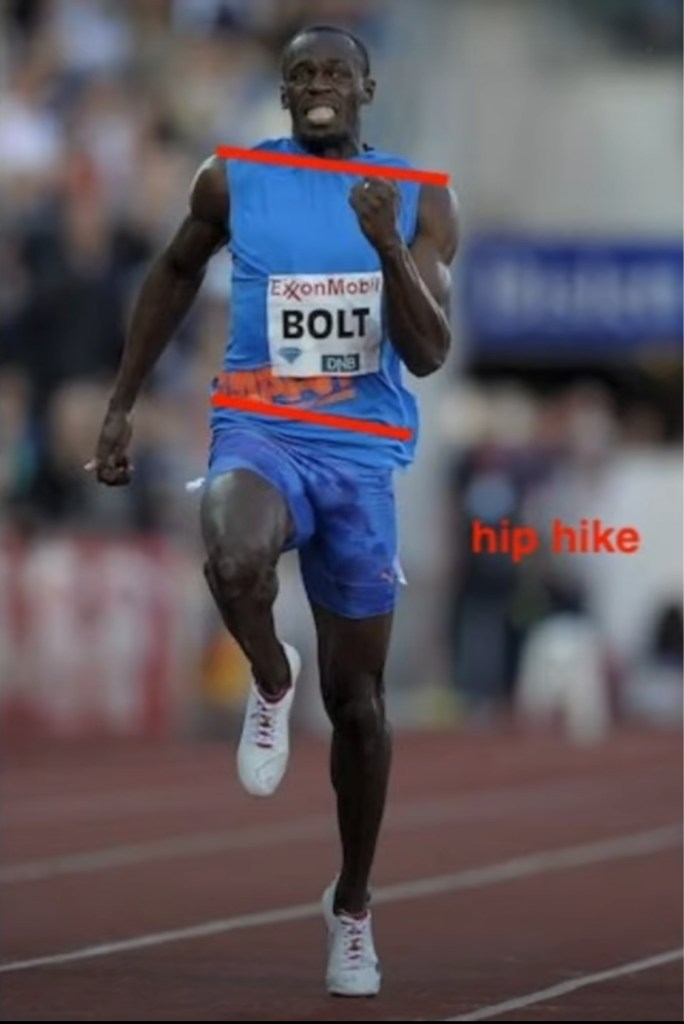
In the second picture the athlete has good stifness, and in the other two it doesn’t have it. In the first picture you see a very fast knee coming through when you´re in an upright pose. The knee is 14 inches past his posed knee, which means that you got a really fast leg. Regarding the second picture we don´t want to be bent. The guy in the middle is much more like a guy that´s never been trained and play lacrosse, rugby, baseball or football. That´s why sprint training is so important. The person on the right picture is the exact opposite of Usain Bolt. Instead of getting that good glute medius on his left side, they´re getting nothing and that´s why there´s a tilt going on. That´s a total collapse. We would want that person´s right side to be upward. With Usain Bolt and Marcellus Moore that shoulder on the right side would pop up just little bit. The glute medius on the left would contract and it would get that knee up and that collapse would not happen.

Another benefit of improving glute medius is that improve crossover, a typicall error obseved in distance runners.
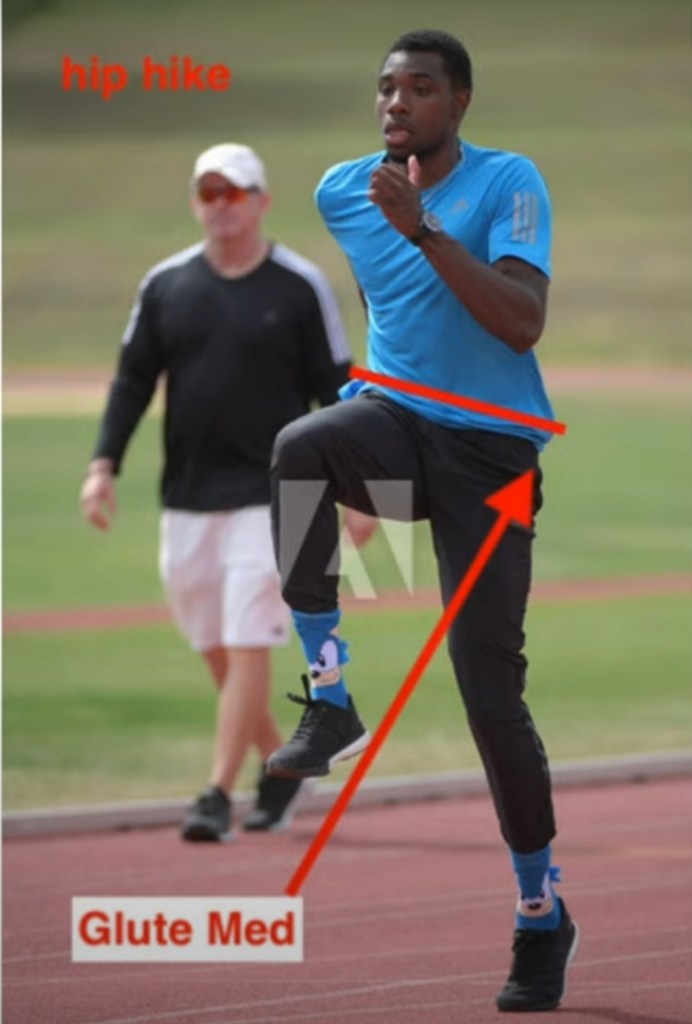
Here is Noah Lyles. The glute medius on the left is helping that right leg hike higher
And finally I show you a video in which Coach Chris Korfist, a leading expert in speed & athletic training, demonstrates essential foot and ankle exercises designed to enhance your sprint mechanics and boost your speed development. Whether you’re a competitive sprinter or just looking to improve your running efficiency, these targeted exercises are a game-changer.
Bibliographic references:
- Holler T. [Coach Tony Holler]. (2023). How to Fix Block Starts & Acceleration | Training out of the Starting Blocks [Video]. Recovered from https://youtu.be/kqRL5aEcAuo?si=xNoOY5GAuNHW3mh2
- Holler T. [Coach Tony Holler]. (2023). Top 6 Drills to Improve Acceleration [Video]. Recovered from https://youtu.be/VhmdnAyykMc?si=GhMKNGyP3EBHGN4O
- Holler T. [Coach Tony Holler]. (2023). How to Sprint Faster: Sprinting Technique & Running Mechanics [Video]. Recovered from https://youtu.be/9qQ8r0eCFYw?si=Ibw7N9MPOi2rOCiU
- Holler T. [Coach Tony Holler]. (2023). How to Sprint Faster: Big Split Drills to Improve Sprinting Mechanics [Video]. Recovered from https://youtu.be/1tEZ2aUotb4?si=oz1Y22xUwdHzIwGi
- Holler T. [Coach Tony Holler]. (2023). Drills to Sprint Faster: New Wickets Series Explained [Video]. Recovered from https://youtu.be/j1FJquyGZ3g?si=g45Grh7CLGvlBAjr
- Holler T. [Coach Tony Holler]. (2023). Fixing Poor Sprinting Form: Frontside & Backside Mechanics [Video]. Recovered from https://youtu.be/bKPie299yWc?si=bpM-dP1_pmZGyfAD
- Holler T. [Coach Tony Holler]. (2024). Feed the Cats: Speed Training Through a New Lens [Video]. Recovered from https://youtu.be/xz32rvnxSrA?si=fyTxMw0BCctF9OEQ
 ATLETA EXPLOSIVO
Leave a comment