

In recent years sprinting has changed. There’s a benchmark that has long stood as a testament to speed and human achievement: running 100 meters in under 10 seconds. Once an elusive goal, the sub-10 barrier has been broken by an increasing number of athletes in recent years. This phenomenon prompts a compelling question: As more sprinters join this exclusive club, does achieving a sub-10-second sprint still hold the same awe and prestige it once did? Just how rare is it to run a sub-10 100m compared to other athletic feats?
It’s a story that starts with pioneers like Jim Hines, whose feats on the track rewrote the rules of speed. Explore the evolving landscape of elite sprinting, and learn how advancements in training, technology, and sports science are contributing to this trend, and whether the feat retains its status as one of the crowning achievements in sports.
In the world of sports the line between good and great often blurs, but in the 100 meters it´s definitive. They´re fast and then they´re sub 10. Running 100 metres in under 10 seconds marks an athelte´s entry into an elite circle. But in the modern era of sprinting athletes are breaking the sub 10 barrier more than ever before. This poses an intriguing question: Does running sub 10 still carry the same weight, the same awe that it once did?
Rarity of Sub 10 100m
Let’s start by comparing the rarity of running 100 meters and under 10 seconds to a completely different kind of human achievement: living to 100 years old. Now pretend we’re getting people completely at random from the global population. We’ll start with 100,000. Statistically speaking around six them would be centenarians. Yet in the same crowd it’s almost a certainty that none of them has run sub 10. Okay, let’s go bigger. What if this crowd were 10 times larger? In a sea of a million faces you’d find around 63 people who have lived to 100 but still no one who’s broken the 10-second barrier. To find just one of these rare sprinters you would need to extend your reach to an astounding 42 million people. The odds of being a sub 10 second sprinter are 1 in 42 million.
Okay. But what about some more relevant comparisons in the world of sports. Of the more than 255,000 men that have played in the NFL only around 2200 have a Super Bowl ring. And on the global sporting stage just 471 players have been on the winning team in the world cup. So how did these feats compare with running 100 m in under 10 seconds?
According to data from World Athletics only 189 men have ever crossed this threshold. Statistically speaking you’re around 14 times more likely to meet a billionaire. But there’s more to the sub 10 story. When we look at the data over time there’s a noticeable acceleration in the number of athletes achieving this feat. It’s a fascinating shift one that we’ll explore further but before we do let’s meet the trailblazer. The first man to ever run sub10.
Night of Speed
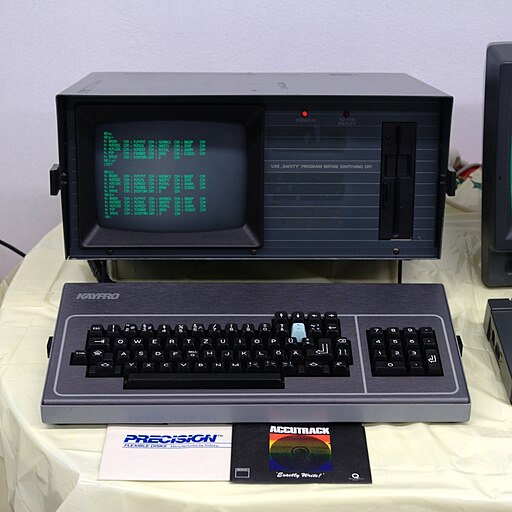
It’s 1968 and the sprinting world is a buzz. At the US championships an event that would later be known as “The Night of Speed” three sprinters clock with legal times under 10 seconds in their semifinal heats. For a moment it appears the 10-sec mark has finally been broken but there’s a twist. The 9.9 seconds were hand timed. A new automatic state-of-the-art timing system was also being used and the Accutrack tells a different story, recording all three runs at just over 10 seconds. So from an automatic timing standpoint the barrier remains intact.
Jim Hines
In the middle of all this is Jim Hines. According to Accutrack he’s the quickest of the trio. Even though he lost to Green in the finals, Hine was unbelievably confident. When a reporter at the Oakland Tribune asked him if he thought he would win gold at the Olympics, he responded with three words: Yeah, for sure. And it’s even more impressive when you consider the competition just coming from his teammate Charlie Green. Remember Green was the national champion who just beat Hines and he wasn’t lacking any confidence either. A reporter asked Hines about Green and he admitted he was his biggest challenger but then said: “To tell the truth, I’m faster than he is”.
1968 Olympics
At the 1968 Olympics there would be no hand timing. Everything was electronic. If the barrier was broken, it would be broken forever. Hines made it to the finals along with Charlie green and all the other top contenders, and then he made history.
100m Record Progression
Finally, in 1983 Calvin Smith run at 9.93. Just to one hundredths of a second faster. It wouldn’t be until 20 years later, in the 1988 Games, where Carl Lewis in a bittersweet victory which set a new Olympic record after Ben Johnson was disqualified for doping. Which means Hines olympic record stood for 20 years.
Now to help illustrate how impressive this is, let’s compare it to another legendary barrier: the 4-minute mile. In 1954 Roger Banister ran the mile in 3 minutes and 59 seconds. A record that wouldn’t even stand for 6 weeks. And today it’s actually not uncommon for top high school athletes to achieve it.
Sub 10 by Country
Speaking of age, according to World Athletics no athlete under 18 has ever ran a sub 10 in the 100 and only five have done it under 20. And the 100 meter stats get more interesting.
When we look at the total of sub 10 performances across countries, it’s clear that the US dominates (68). But what’s even more impressive is Jamaica. They’ve produced 28 sub10 sprinters, which is incredible from a country that has a population of just 2.8 million people, which is about the same as Kansas.
Powell, Gatlin, Collins
Of course when you’re talking about Jamaica, you’re talking about the current world record holder Usain Bolt (9.58). But the record for the most sub 10 performances goes to his Jamaican teammate Asafa Powell with an amazing 97 sub 10 performances. These numbers are even more impressive when you consider that out of the 189 athletes that have ran sub 10 to date, 40% of them have only done it once.
So what about longevity or the length of time a sprinter has been able to maintain sub 10 performances throughout their career? Here Justin Gatlin is the undisputed king. He maintained the ability to sprint under 10 seconds for 18 years.
And then there’s the second athlete on that list, Kim Collins. In 2016 Collins becomes the first person ever to break the 10-second barrier at age 40. But here’s where the plot thickens. Rewind 13 years to 2003 Collins is the world champion in the 100 meters clocking in at 10.07. Fast forward to 2016 and he outdoes his younger self running the 100 meters in 9.93 seconds. The fastest he’s ever run.

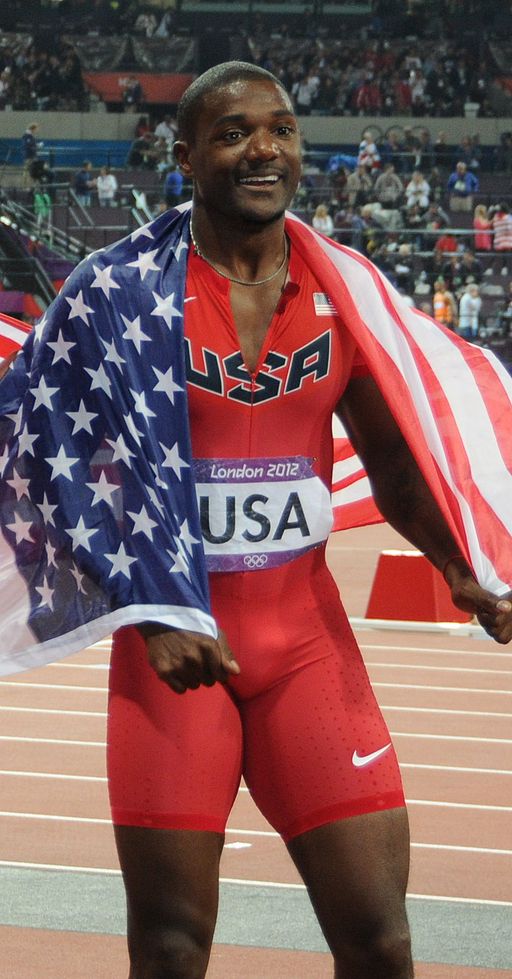

(1) Chell Hill, CC BY-SA 3.0, via Wikimedia Commons; (2) AmericanRelay4x100London2012.JPG: Citizen59derivative work: Selligpau, CC BY-SA 3.0, via Wikimedia Commons; (3) Zorro2212, CC BY-SA 4.0, via Wikimedia Commons
Evolution of Sprinting
Amidst these stories of longevity and record-breaking feats, a broader pattern in sprinting emerges. When we look back at that first graph, it’s clear that the sport is evolving at an unprecedented pace. Consider this. In the finals of the 2000 Olympics only two athletes ran the 100 m in under 10 seconds and in the 2023 NCAA finals there were seven. Now to be fair the wind conditions were better at the NCAAs, but they were still legal. So what’s fueling the recent surge of sub 10 seconds sprinters?
The easy answers point to the ground in the gear. Tracks are being crammed with more and more technology shoes or super spikes fitted with carbon plates for that extra spring but there’s something else. Something more subtle at play here. Perhaps it’s the democratization of coaching and training that’s truly revolutionizing the sport. Sprinting at its core is a skill perfected over thousands of hours. Not so long ago the secrets to this mastery were locked within elite sports programs. Today they’re available to anyone with a heart and hustle to pursueit.
Now obviously, very few people are born with the genetic potential to break the 10-second barrier but every top sprinter has natural talent. It’s the mindset, it’s relentless dedication, it’s the meticulously optimized training that ultimately determines how fast an athlete will be. The rapid rise in sub 10-sec sprinters is a topic that’s right for debate and there are certainly many factors at play. Yet, amidst this evolution one fact stands timeless. The barrier first shattered by Jim Hines in 1968 still reigns as one of the ultimate achievements in sports.
Bibliographic references:
- Outperform. (2024). Why Running a Sub 10 Second 100m is Still Mind-Blowing [Video file]. YouTube. https://youtu.be/5GZ1fxqbHNw?si=uqrQiW4BLsENTTZu
 ATLETA EXPLOSIVO
Leave a comment