
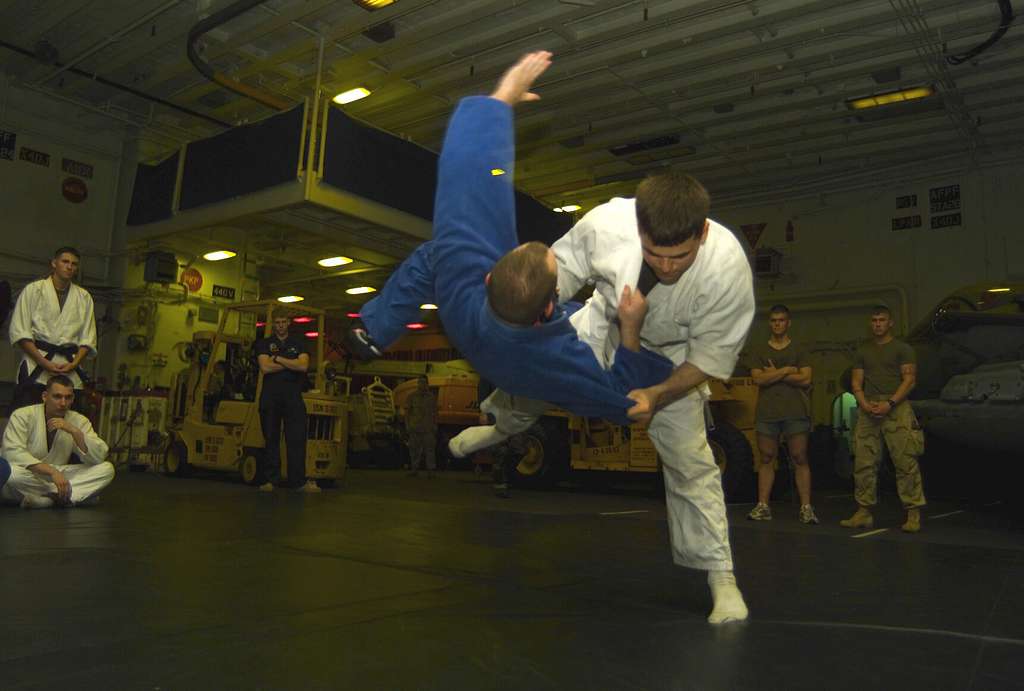
Although falls are not accidents that happen to us every day, the risk of falling always exists and can happen at any time and when least expected.
Falls from an already considerable intensity can produce the following effects:
- They can leave after-effects that permanently incapacitate someone from develop a certain profession or other types of activities in their daily lives.
- They represent high economic losses for companies as a result of sick leave, and also represent a great cost to the public health system.
- And some can even cause death.
Prevention is certainly the best option, but when faced with an event in which we lose our balance and can no longer turn back, it is important that we learn to place ourselves in the correct position and make the appropriate movement to cushion the impact against the ground as much as possible.
That is why everyone should learn how to fall in order to avoid or minimize many of its serious consequences. Teaching how to fall should be taught as part of Physical Education classes in schools so that from childhood onwards we can assimilate and internalize this very basic motor skill that we are not allowed to develop due to living in a sedentary society. Knowing how to fall will save us from going through many problems and will provide us with health.
Based on all this information, it is essential that you value the importance of falling well, and certain Japanese martial arts such as judo and aikido provide the basis for mastering this essential motor skill.
Before we get into the subject, I encourage you to share this content with other people, as it could surely be very useful to them. Both for your health and to avoid unpleasantness for your loved ones, you should learn to falling well, just as they should do for you.

As Shu Taira explains in his book “La esencia del judo”, ukemi is the method of softening the impact when falling on the mat. Therefore, ukemi is the way to ensure the least possible suffering when falling on the tatami. If the judo or aikido apprentice is not trained to perform falls correctly, he will always be reluctant to fall or be thrown, so he will opt for a defensive position, not daring to initiate attacks. This situation will hinder his progress in this martial art. On the contrary, with perfect mastery of these techniques, the judoka will have no qualms about being thrown and, consequently, this will help him to progress technically based on the correct movements.
Ukemi distinguishes for having the following two characteristics:
- Soften the impact with your arms. When you hit the ground with your arms, you significantly reduce the power with which the rest of your body hits the ground, as it opposes the upward force exerted by your arms when you hit. That is why the harder you hit the ground with your hands, the less momentum your body will have when hitting the ground, which will reduce the likelihood of injury. Your arms should go as fast as possible and when you hit the ground they should be completely horizontal. If you hit too soon, your arms will not be horizontal and the impact will be made at a slower speed, increasing the risk of joint dislocation.
- Soften the impact by turning. Ukemi should be performed with the body completely bent, simulating a sphere. If we fall tense and fully extended, the body is subjected to a stronger impact, transmitting the vibrations to the head. Only by fully bending the body we will avoid the resonance effect, as the relaxed body will absorb the vibration. In addition, the force of the fall will be transformed into rotational force, causing the body to turn.
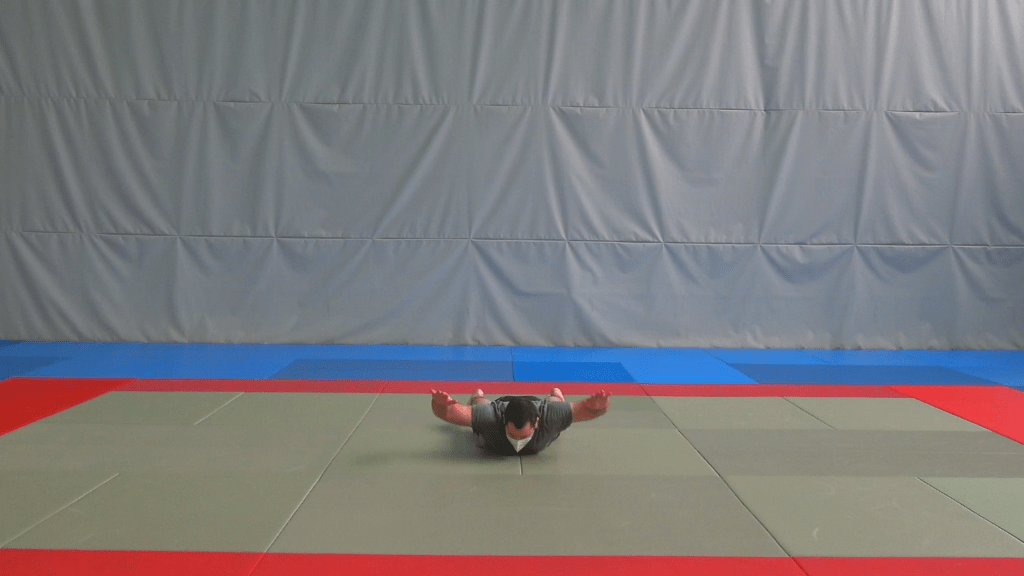
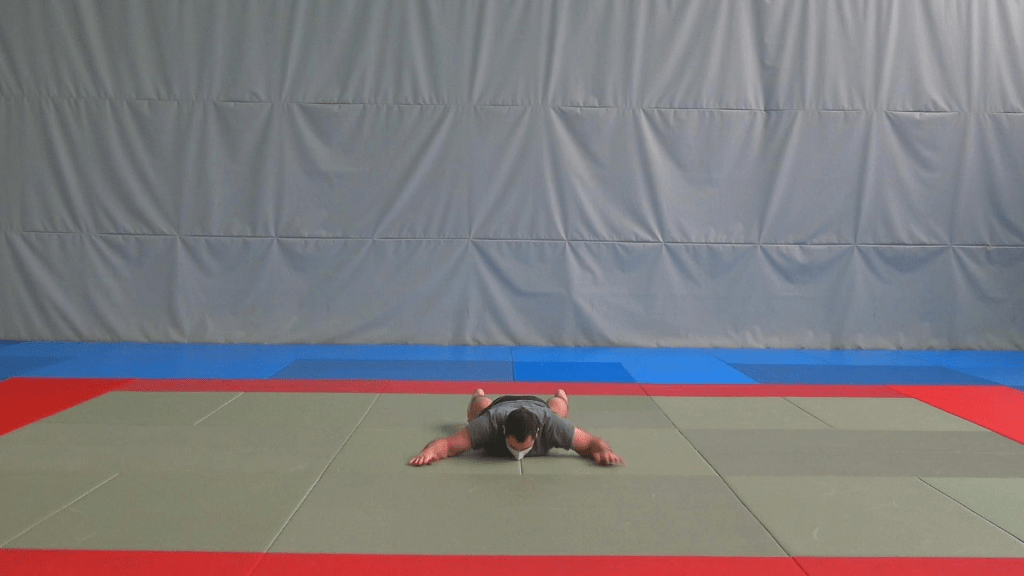
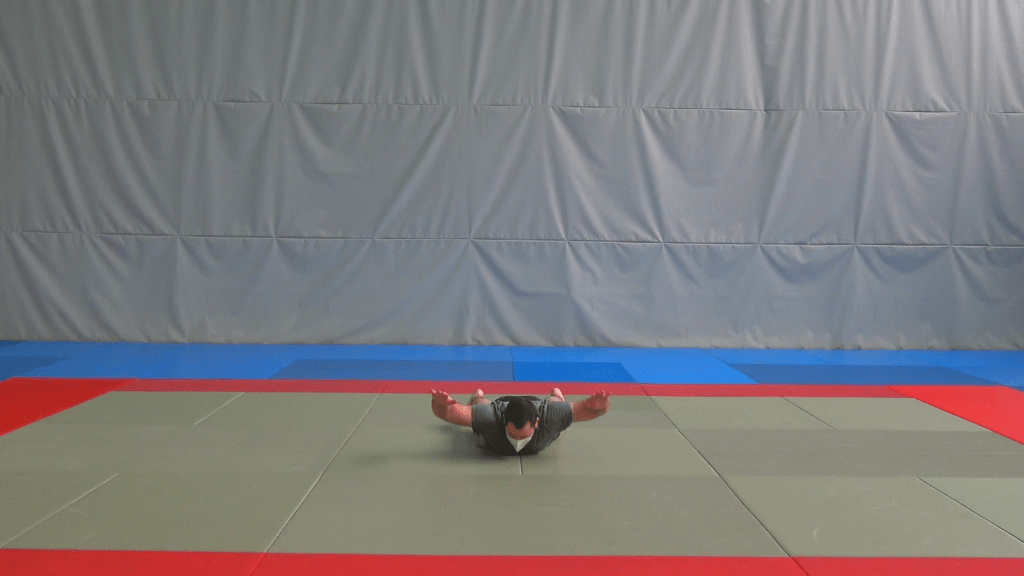
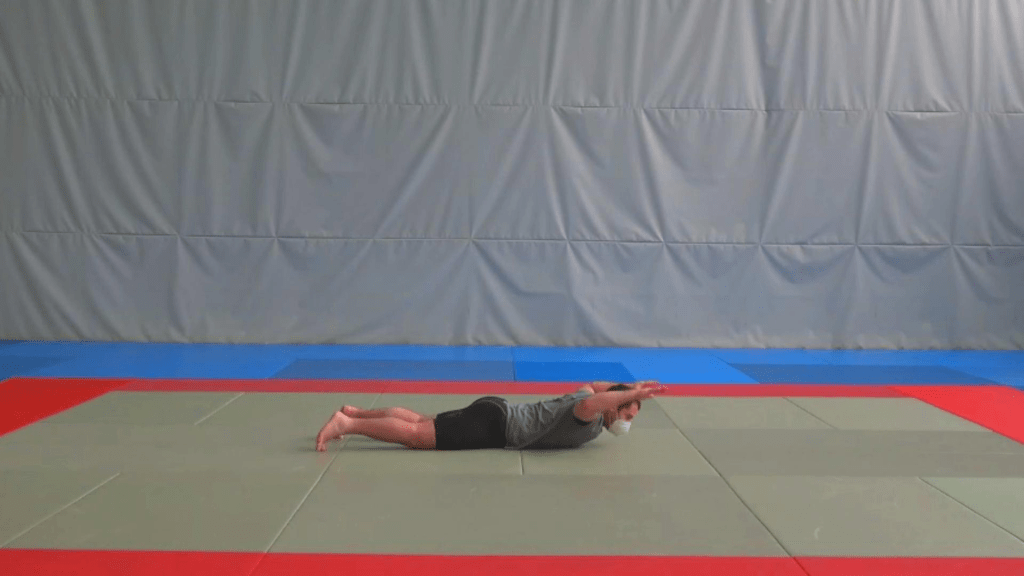
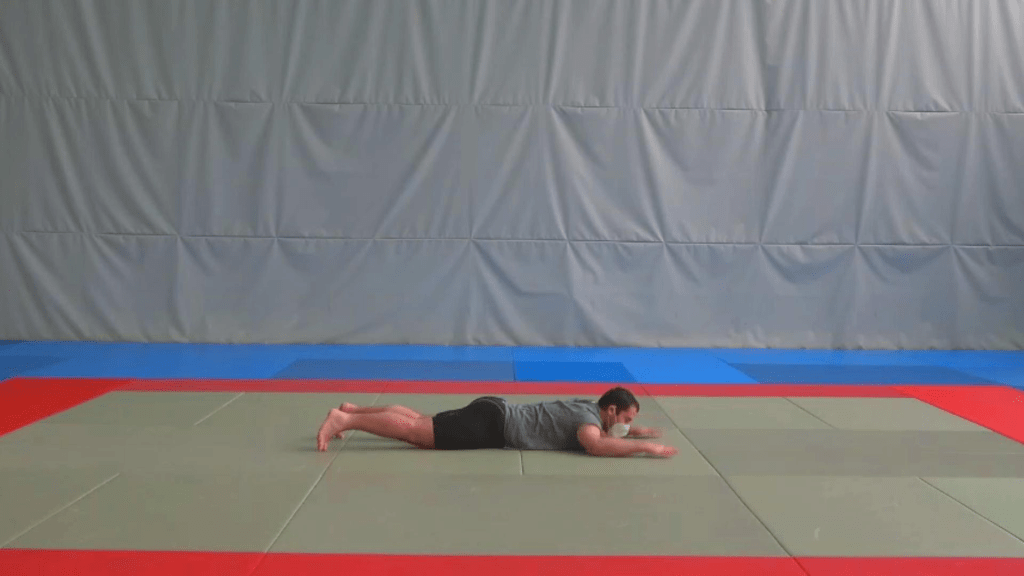
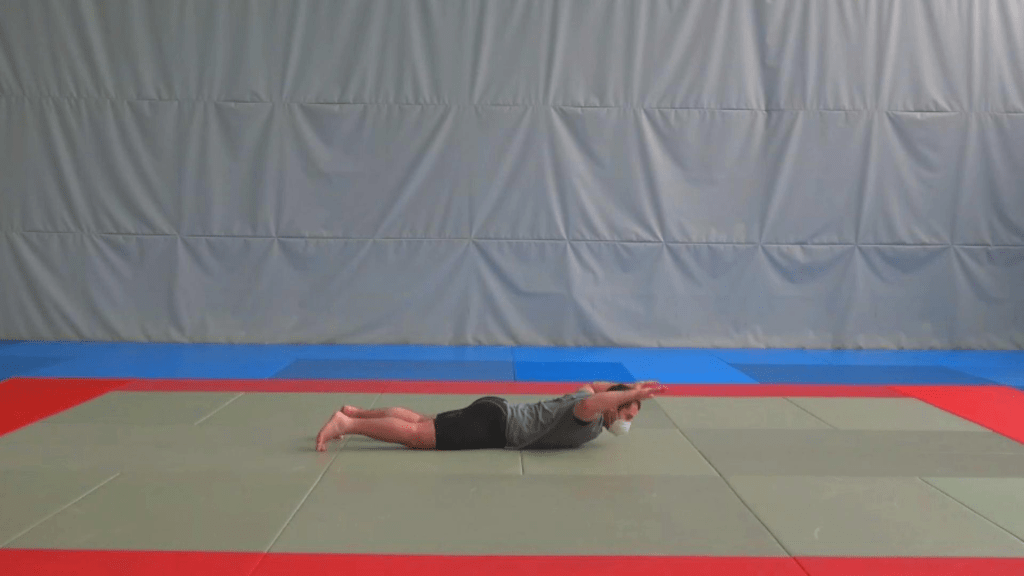
Before starting to learn ukemi, it is necessary to begin with a familiarization drill with the hitting on the ground known as bat-mace-whip. The main objective is to learn how to hit the ground.
- Starting position: Lying prone (face down).
- Execution: Hit the ground quickly with the palm of the hand and the front of the forearm. The hit must be strong, fast and sharp to take advantage of Newton’s 3rd Law (Law of action and reaction).
- General mechanical principles:
- Soften the force of the fall by hitting it with your arms.
- Optimal impact surface.
In the next posts we will describe the progressions for learning each of the ukemi: ushiro ukemi, migi yoko ukemi, hidari yoko ukemi, migi zempo kaiten ukemi and hidari zempo kaiten ukemi.

Bibliographic references:
- Taira, S. (2014). La esencia del judo (Tomo 1), 2ª edición. Satori.
 ATLETA EXPLOSIVO
Leave a comment