
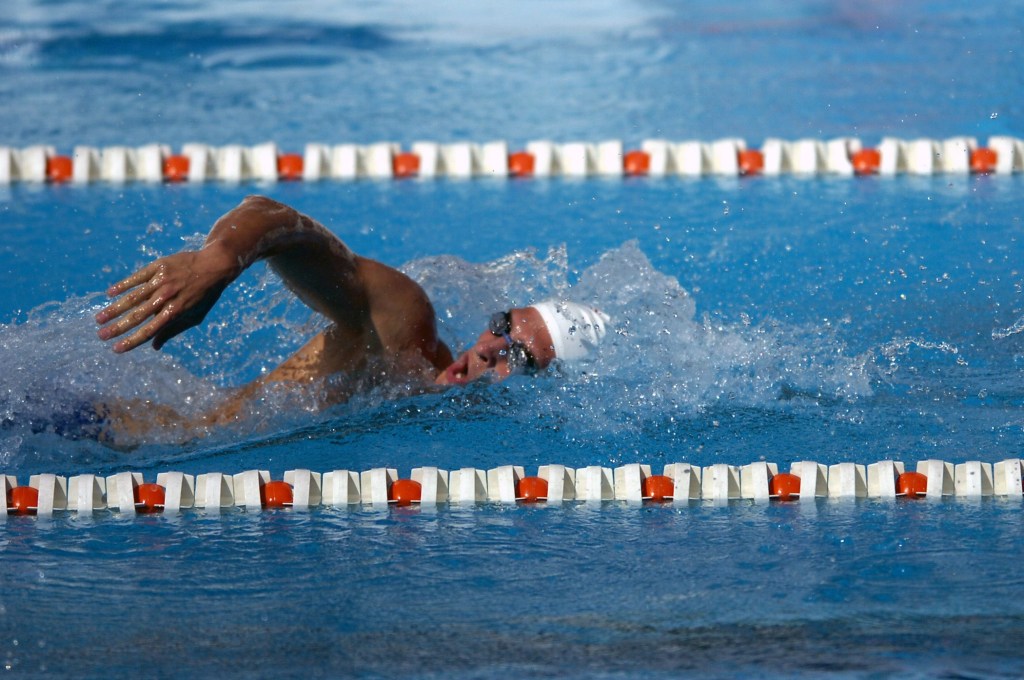
The crawl or freestyle is an alternative swimming style in which the swimmer moves using alternative movements of the feet and arms. He is propelled underwater and recovered on the surface. He turns at two or three meters from the wall. The existing competition events of this style in swimming are the following: 50 m, 100 m, 200 m, 400 m, 800 m, 1500 m, 4 x 100 m, 4 x 200 m. All of them are Olympic and the 4 x 200 m relay is only contested in the men’s category.
When analyzing the technique of any swimming style we must pay attention to observing four body segments: arms, legs, trunk and head. The arms are the most important segment in technical analysis. In this way, in crawl or freestyle swimming we can contemplate all of the following:
- ARMS
- Air phase or recovery. The elbow is more extended in sprinters and more flexed in distance swimmers. The end of the air phase is the entry of the hand into the water.
- Aquatic phase or traction. It is the most important phase because it is the one that allows the swimmer to propel himself. It is divided into 3 subphases:
- Grip. It is the most important subphase of all because it is where traction begins and conditions the other subphases. It is the subphase in which the most force is generated.
- Pull. It is the subphase in which the most power is generated.
- Push. It is the subphase in which the most speed is generated.
- LEGS
- Ascending phase
- Descending phase. It is the most important phase because it is the one that allows the swimmer to propel himself.
- TRUNK. It must be in a horizontal position. Along with the head, it intervenes in rolling and breathing.
- HEAD. The look should be diagonal. Together with the trunk, it intervenes in rolling and breathing.
Rolling is the forward turning or rotating movement of the shoulders and the rest of the body in the longitudinal plane. It is important for two reasons:
- It provides fluidity in swimming as it allows you to expand the range of motion in both the stroke and the shake.
- It allows breathing because it is related to head movement.
In the freestyle you can make three types of shakes that determine three speeds of movement:
- 2 times: 2 shakes/cycle
- 4 times: 4 shakes/cycle
- 6 times: 6 shakes/cycle. It is the one done by sprinters.
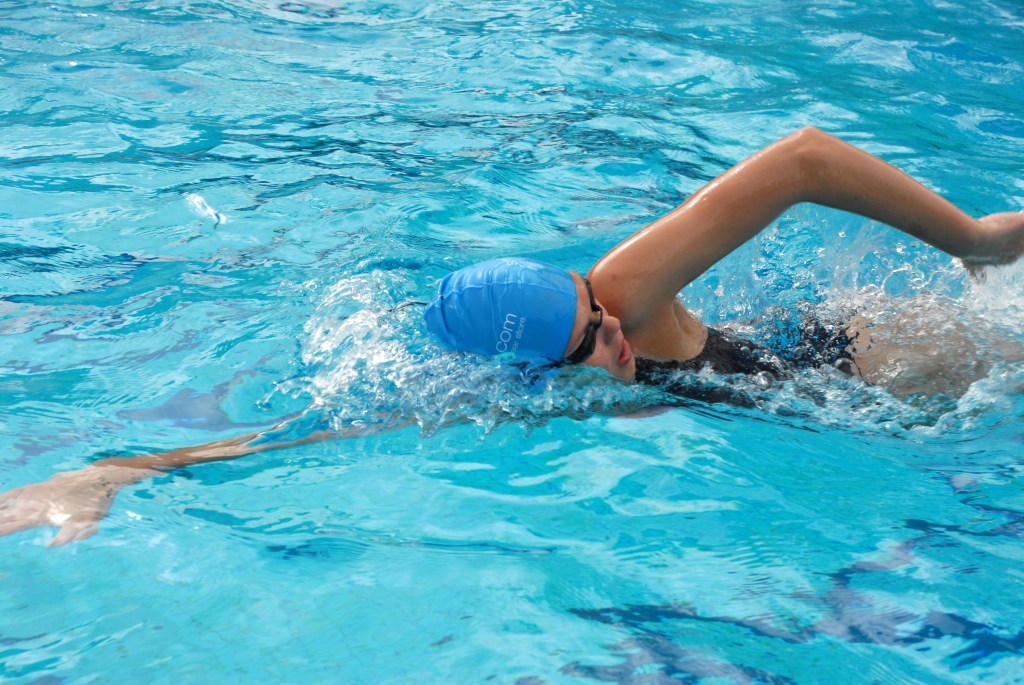
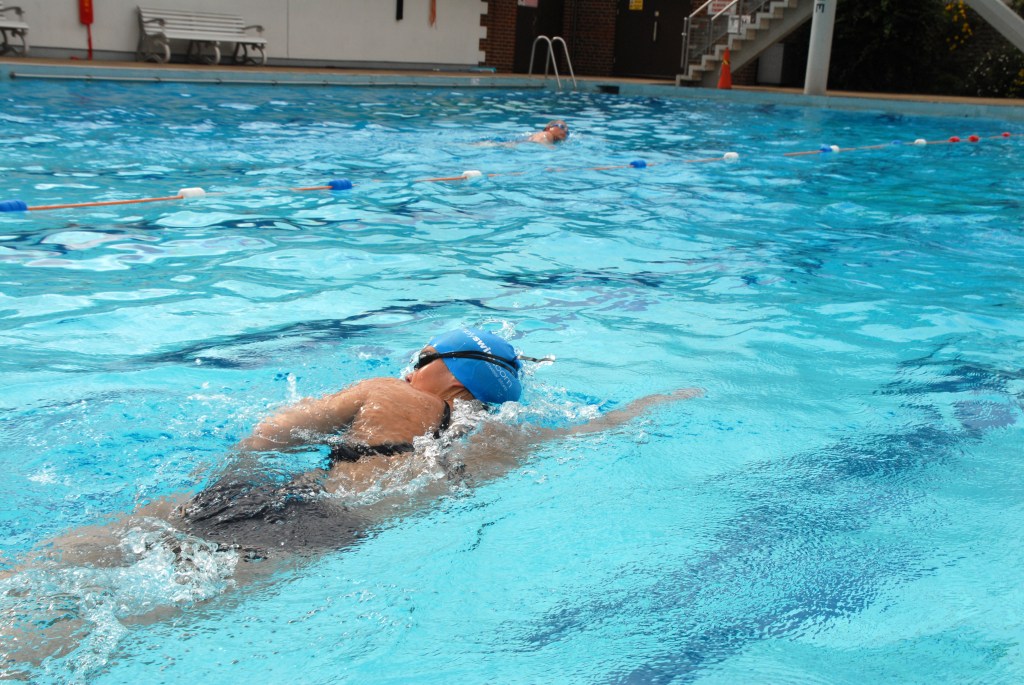

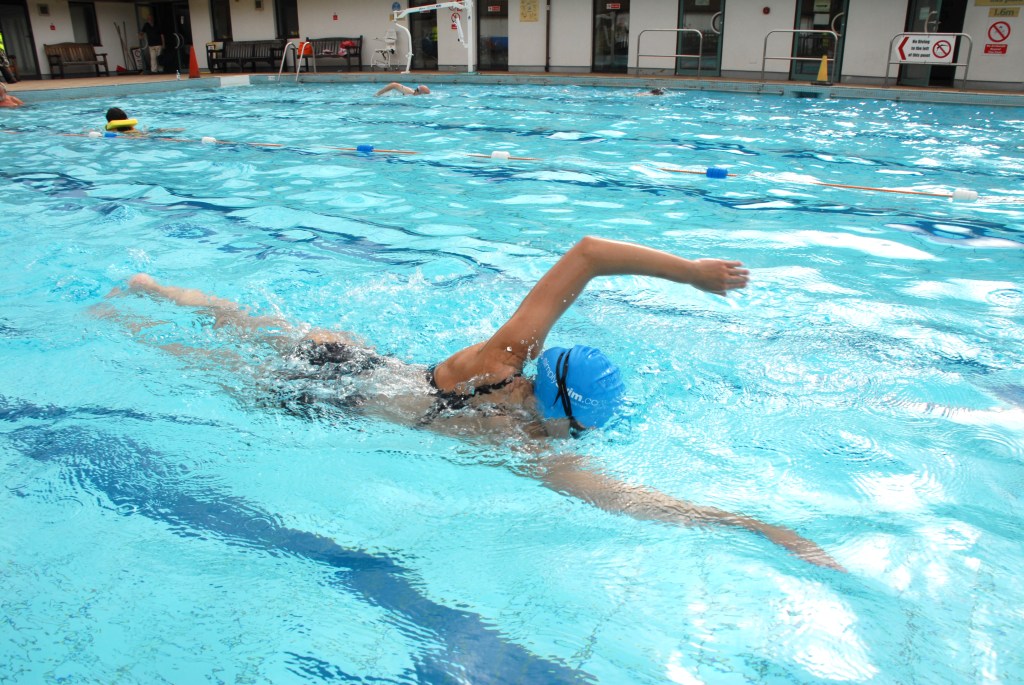
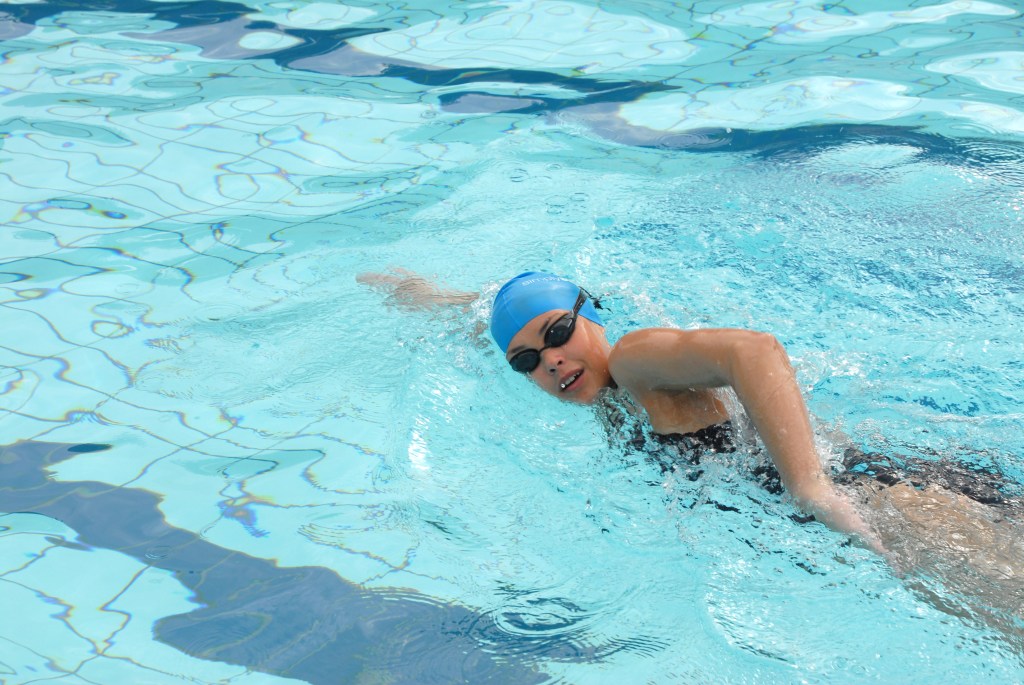
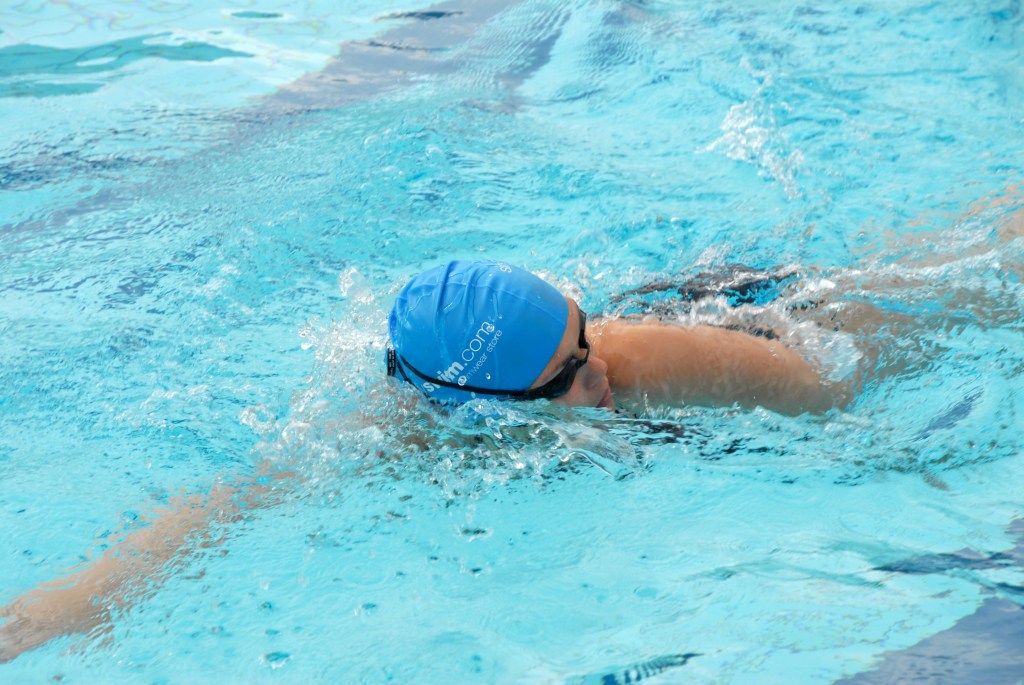
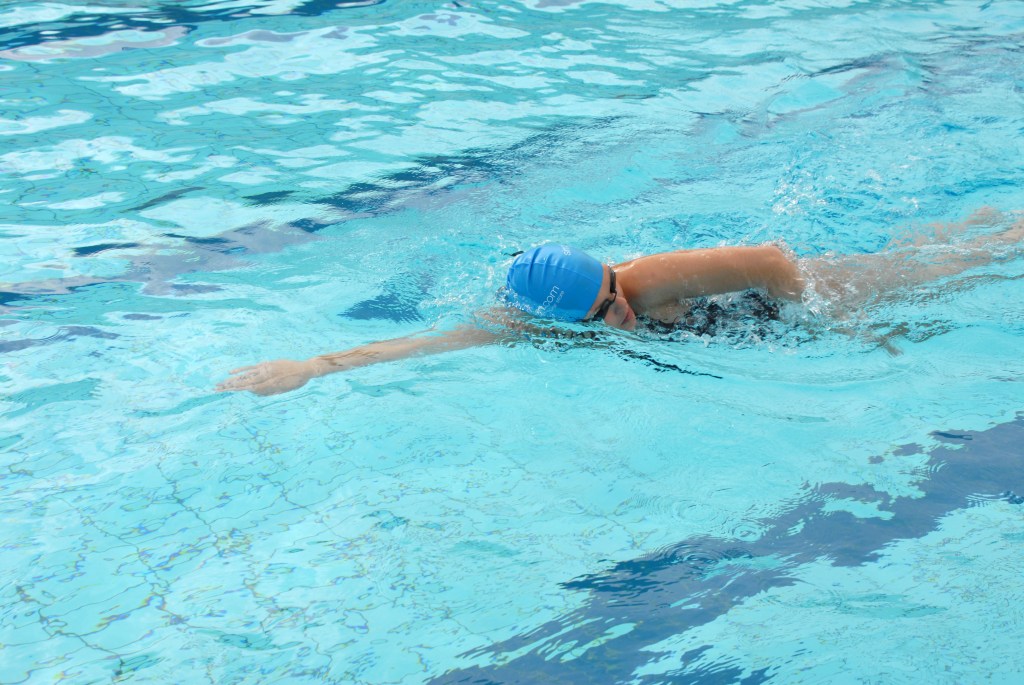
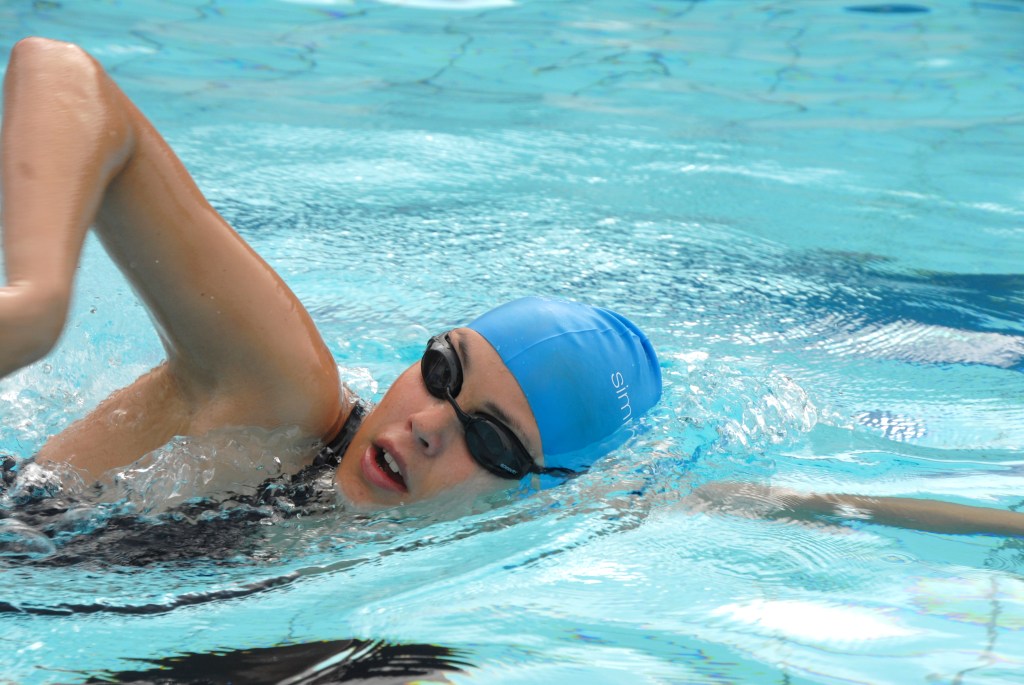
All these images are courtesy of http://www.simplyswim.com
Grip is always the number 1 priority when observing a swimmer’s technical performance. When performing the grip, all of the following considerations must be taken into account:
- Raise the elbow (bend). The elbow looks up, not out or down.
- Position your arm as if you wanted to hug a fitball.
- Push the water back (towards your feet) with your palm and forearm. The hand flexes and pushes towards the feet.
The grip begins when the hand enters the water and to do so you must:
- Extend and rotate your hand along the shoulder line. This hand rotation should not be exaggerated. To do this you have to keep your shoulder close to your face and not turn your shoulder under your face.
- Point the fingertips downward, while the face should be in line with the shoulder.
- Bend the elbow outward. The elbow should be farther out than the shoulder.
- Create a good power triangle with all of the following aspects:
- Fingertips down.
- The hand in line with the shoulder.
- The elbow should be farther out than the shoulder.
After the grip and the power triangle, the pulling and pushing take place. The hand begins to approach the body. We maintain pressure on the hand and forearm. The elbow begins to extend and emerge from the water. The exit of the hand to the surface after the push must be at hip height.
The recovery should be done in the same line as the shoulder, that is, it should not be crossed (inwards) or open (outwards). The considerations that must be taken into account are the following:
- The hand must be open and relaxed. The hand is relaxed until halfway through the recovery.
- The movement should be a dynamic throw of the hand forward when it passes the middle of the recovery, at elbow height.
- The hand goes along the side from the hip.
- Open hand recovery, so that the entire arm is relaxed.
- The high elbow, that is, the elbow flexed and the hand during the recovery below the elbow.
- The arm is straight, that is, the hand and forearm extended to the side.
Regarding rolling, you do not have to rotate or turn completely. At 25-35º we will be more upside down than sideways. Grip is the key to executing a good roll. Too much roll makes it harder to bend the elbow outward. During traction we want the shoulder to be placed under the body and this is facilitated by rolling.
To achieve the best breathing mechanics you have to know that:
- Not breathing makes the grip better.
- There is no need to stop the inertia of the stroke.
- There should be a small turn of the neck accompanied by rolling. The turn of the head guides the roll.
- You have to start breathing after entry, not before.
- Traction begins during breathing. We should see (almost) the grip after the breath.
A common bad timing of breathing is that many swimmers breathe too late. The correct thing is to start breathing with the entry of the arm opposite to breathing (not before) and you must also turn your head accompanying the traction of the arm opposite to breathing.
Having a solid “core” allows for connected swimming on the part of the swimmer. In these conditions we should all work on both sides of breathing because the grip is more effective on both sides and helps the opposite arm recover. To do this, it is important to turn the head while pulling the opposite arm while breathing. In addition, in the pull and push with good traction, it can help the entry of the opposite arm.
In the mechanics of the shake we must take into account all of the following:
- Swimmers with good kicks have superior technique.
- You have to bend your knee upwards.
- The lower leg extends downward while the knee remains in the same place.
- The kick ends before the leg begins to rise.
- Swimmers with poor kick raise the knee when the leg is extended (typical bicycle kick).
- The end of the shake is below the body line.
Shoulder injuries happen with poor technique repeated over time. When the elbow is flexed, pressure is placed on the shoulder when the hand is not under the shoulder, but outside it. What can happen is that:
- During the grip the swimmer rotates too much.
- During the recovery, the hand goes too low, which makes it difficult to make a correct grip.
Finally, it should be noted that the freestyle swimming technique of sprinters differs from that of distance swimmers because they perform more stroke frequency (number of strokes per minute), greater than 60 strokes per minute. To achieve this high stroke frequency, they keep their elbows almost extended during the recovery because this is not a propulsive phase. This means greater energy expenditure. In addition, they do not rotate much during the roll and breathe less often because they seek to perform many tractions with which to propel themselves quickly. Still, there is the following conflict regarding breathing:
- On the one hand, the fact of breathing is a brake on progress.
- On the other hand, not breathing means that the swimmer sinks as the lungs are not full of air.
On the other hand, a long-distance swimmer seeks efficiency, that is, advancing a lot with just a few strokes. For example, a 1500 m swimmer has a frequency of about 38 strokes/min. This low stroke frequency is achieved by keeping the elbows flexed during the recovery, thus achieving better economy during swimming.
In addition to stroke frequency, another parameter that allows us to control performance is cycle length. To do this, we must assume that a cycle is the interval included every 2 strokes in the crawl and backstroke styles, or in each stroke in the breaststroke and butterfly styles. The cycle length is the distance traveled from the entry of the hand into the water until the hand of that same arm re-enters. It is usually measured in meters.
Bibliographic references:
- Zarzosa, F. (n.d.). Técnica de Crol para el Alto Rendimiento [PDF file].
- International Olympic Committee (n.d.). Swimming. https://olympics.com/en/paris-2024/sports/swimming
- Marca. (n.d.). Natación. https://especiales.marca.com/juegos-olimpicos/natacion.html
 ATLETA EXPLOSIVO
Leave a comment