
The six aquatic sports disciplines run by World Aquatics (until 2022 called the International Swimming Federation) are swimming, water polo, open water swimming, artistic swimming (until recently called synchronized swimming), diving and high diving. Of all of them we will analyze swimming in more detail.
Swimming has been an Olympic sport since the 1st edition of the Olympic Games in Athens 1896. It also has the peculiarity of being the sport in which the most medals are distributed during the Olympics.
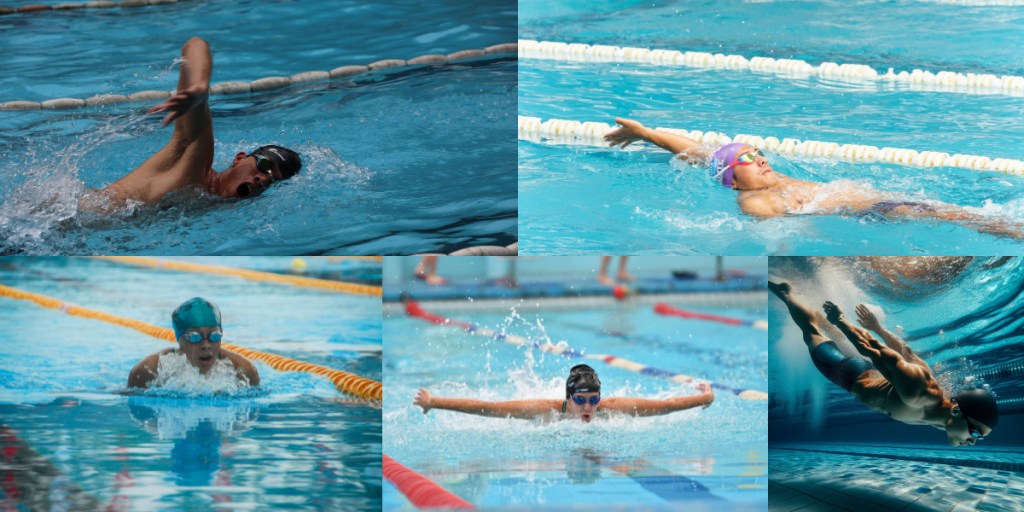
There are five swimming styles: crawl, backstroke, breaststroke, butterfly and underwater wave or Philippine swimming, the latter being not so well known at a popular level. As a curious fact, the butterfly was initially developed as a variant of the breaststroke, until 1952 when it was accepted as an official swimming modality.
At a technical level, swimming styles can be classified as alternative (crawl and backstroke) if the stroke and shake are alternated in both hemibodies, or simultaneous (breaststroke and butterfly) if the stroke and shake are performed at the same time in both hemibodies. During the stroke, an aerial phase and an aquatic phase can be observed in all swimming styles, with the exception of the breaststroke style in which there is only an aquatic phase.
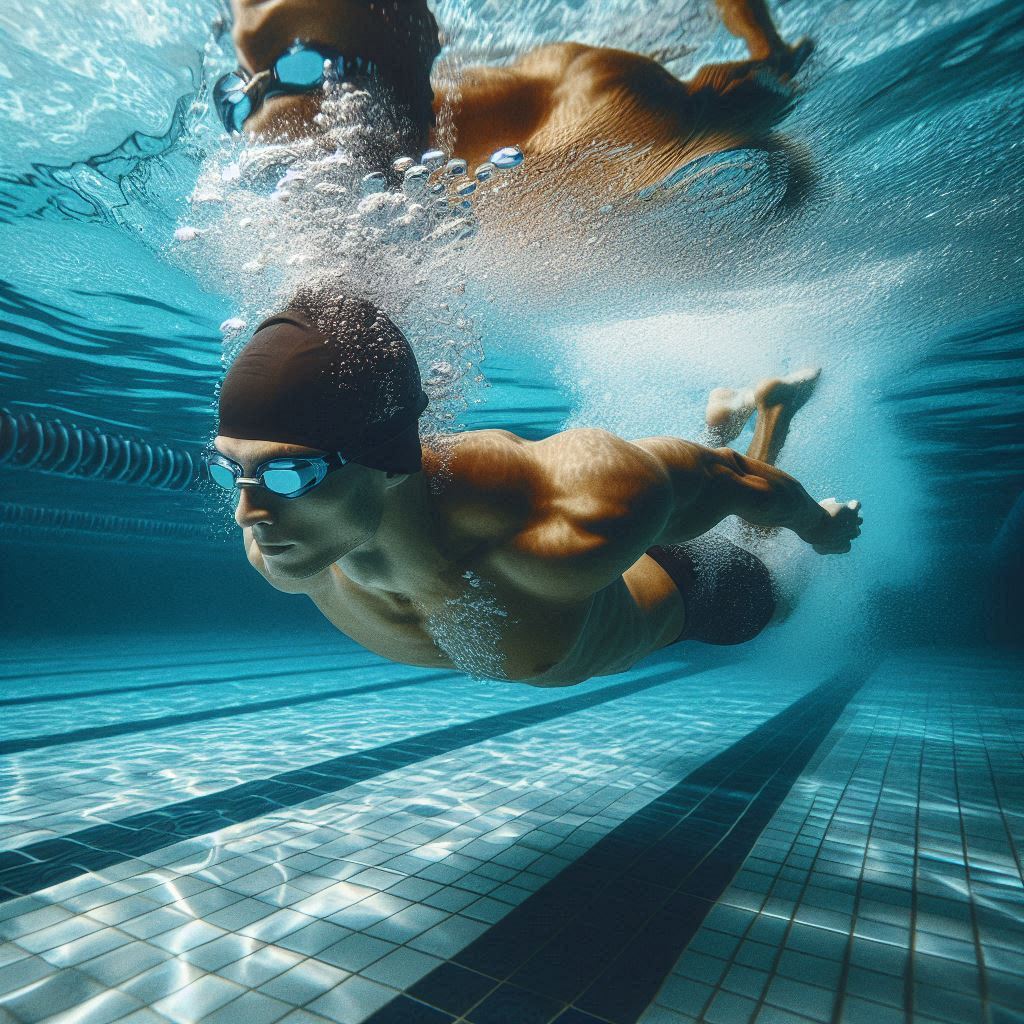
- In the crawl or freestyle, the swimmer moves through alternating movements of his feet and arms. It is propelled underwater and recovered on the surface. It is turned two or three meters from the wall.
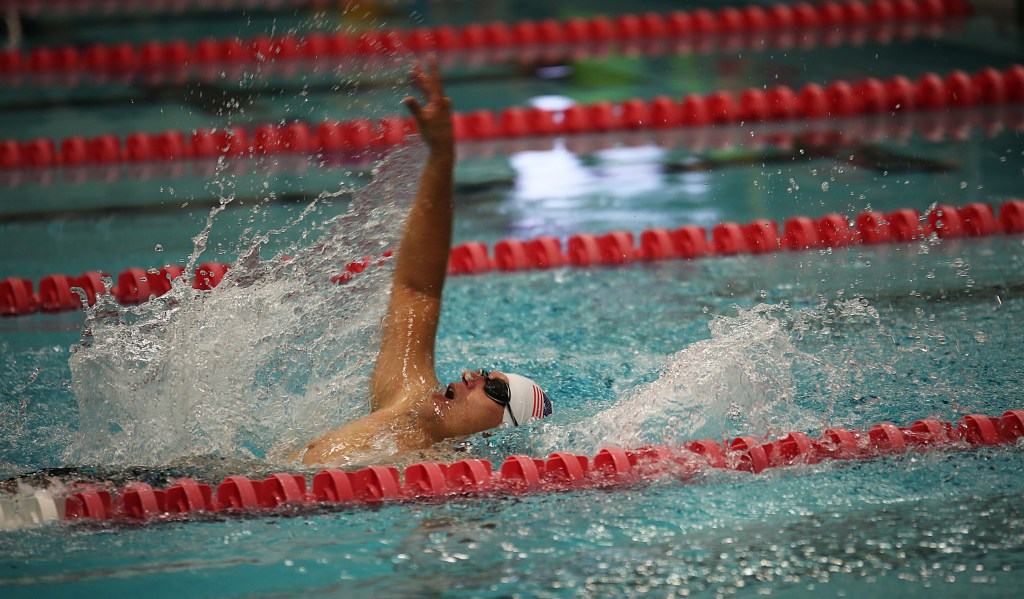
- In the backstroke style the swimmer performs rotating and alternating movements of the arms. To turn over, he sinks his head, lifts both legs out of the water and takes momentum off the wall.
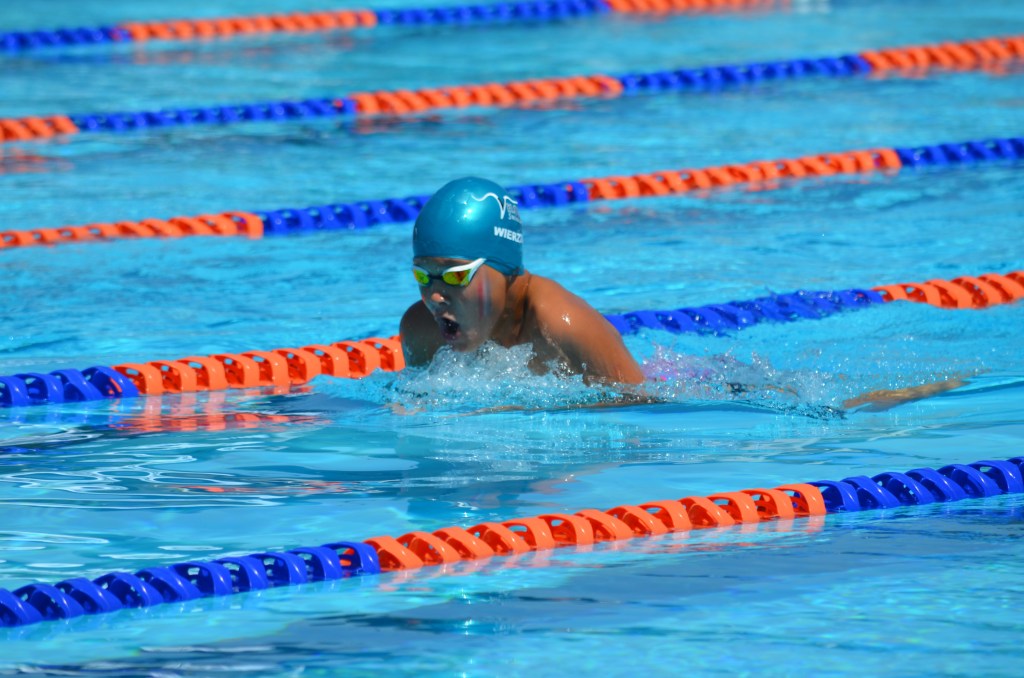
- In the breaststroke style, the swimmer opens and closes his arms and legs symmetrically and simultaneously without completely sinking his head. To turn, he touches the wall with his hands together and pushes himself off.
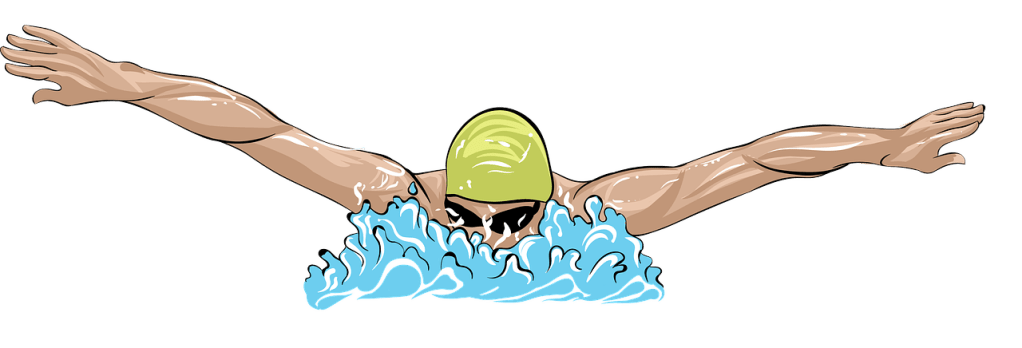
- In the butterfly style the swimmer moves his arms simultaneously and rotatingly, entering and leaving the water. To turn, he touches the wall with his hands, dives and gains momentum with his feet on the wall.


The swimming competition events are as follows:
- Crawl (freestyle): 50 m, 100 m, 200 m, 400 m, 800 m, 1500 m, 4 x 100 m, 4 x 200 m*
- Backstroke: 50, m, 100 m, 200 m
- Breastroke: 50, m, 100 m, 200 m
- Butterfly: 50, m, 100 m, 200 m
- Medley: 100 m, 200 m, 400 m, 4 x 100 m, 4 x 100 mixtos
- Open water: 5 Km, 10 Km, 25 Km, 4 x 1500 m
Las pruebas que son olímpicas se encuentran subrayadas. Todas las pruebas se disputan tanto en categoría masculina como en femenina, salvo los relevos 4 x 200 m estilo libre que sólo se desarrolla en la categoría masculina. Hasta hace poco los relevos en aguas abiertas eran 4 x 1250 m. En cuanto al orden de los estilos de nado en las pruebas de estilos es el siguiente:
The Olympic trials are underlined. All events are held in both the men’s and women’s categories, except for the 4 x 200 m freestyle relay, which only takes place in the men’s category. Until recently, open water relays were 4 x 1250 m. Regarding the order of the swimming styles in the medley trials, it is as follows:
- Individual medley trials: butterfly – backstroke – breastroke – crawl
- Relay medley trials: backstroke – breastroke – butterfly – crawl
In the mixed 4 x 100 m medley relay, two female swimmers and two male swimmers participate in each team.
All events are held in a pool with 50 meters long lanes, with the exception of the 100 m individual medley, 4 x 100 m medley relay and mixed 4 x 100 m medley relay, which are held in a 25 meter pool, in addition to open water trials.
The Olympic pool is 50 meters long and 25 meters wide. There are eight lanes of 2.5 meters and two smaller ones (0.2 meters) at the ends in order to reduce the waves. The exit post is located between 0.5 m and 0.75 m above the water surface, and is covered with non-slip material. It has a handle for the backstrokers. The arrival panel is activated with a gentle touch of your hand. It is placed 0.30 m above and 0.60 m below water. The flags indicate the turn or arrival in the backstroke trials and are placed 5 m from the wall. The color of the corks varies from the last 5 m to indicate to swimmers the proximity of the wall. In addition, they absorb the waves.
En cada prueba de competición hay un juez árbitro, 16 inspectores de virajes que tienen 2 jefes de inspectores, 2 jueces de salida, 4 jueces de estilo, 2 anotadores y 2 oficiales mayores.
In each competition trial there is a referee, 16 turn inspectors who have 2 chief inspectors, 2 starting judges, 4 style judges, 2 scorers and 2 senior officials.
Regarding the necessary and permitted equipment to compete, we find the following:
- The swimsuit. It is only allowed to wear one that is made of textile material. In the case of men, the garment may not extend above the navel or below the knees. Women’s swimsuits may not cover the neck nor they may extend above the shoulders or below the knees. Swimmers may not wear swimsuits that have zippers, hooks or other similar opening and closing systems.
- The cap. Its purpose is to reduce resistance to progress and prevent the hair from bothering you. To do this, it must adapt to the shape of the swimmer’s head, which is why it cannot be made of rigid materials. The surface must be flat even if it has seams, and cannot have any type of attachment. Nor can it be part of the swimsuit in the form of a hood.
- Glasses. They are used to see underwater and avoid splashes to control the direction of the race. They also protect the eyes from irritation due to chlorine in swimming pools or sea salt. In some cases they also protect from UVA rays. They must be independent and in no case be part of the group.
The competition in the open water swimming Olympics, also known as marathon swimming, consists of a 10-kilometer swim in seas, rivers or lakes that have safety. Swimmers swim through an aquatic circular course and their endurance is tested for up to two hours. In this swimming discipline, participants must take into account where the trial takes place and its peculiarities such as waves, water temperature, weather and the hydration they must maintain, among other factors. That is why extensive knowledge, experience and refined technique are required to be able to successfully compete in this trial.
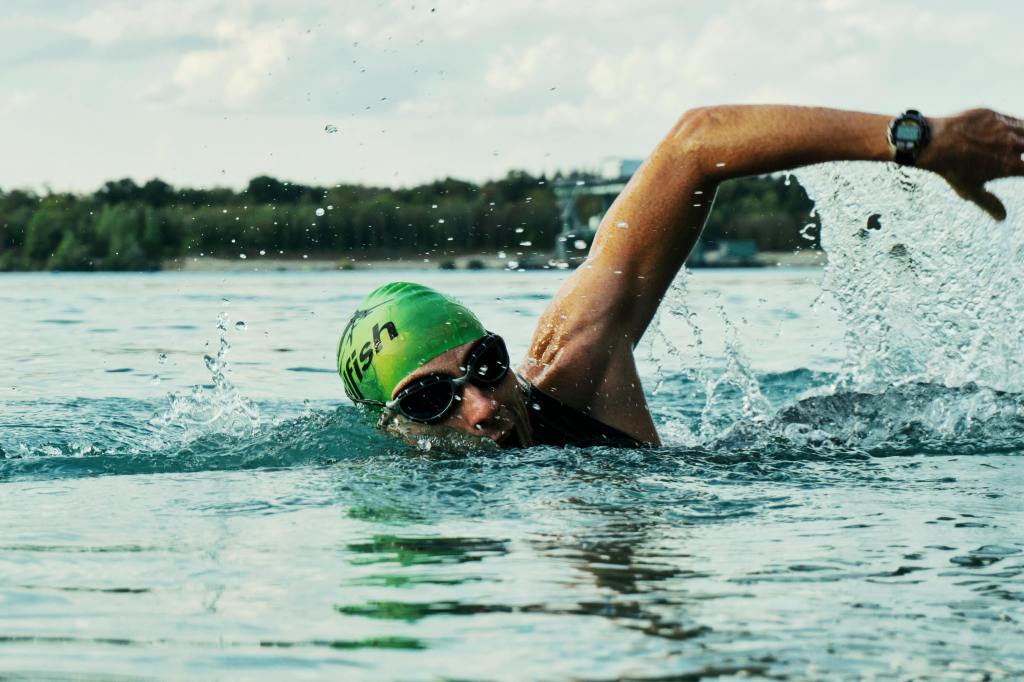
The equipment required to compete is practically the same as in pool competitions, but with its peculiarities:
- The neoprene suit. Its function is to act as a thermal insulator. It is recommended for temperate waters between 18 and 23º. It has no sleeves to allow you to swim with complete freedom in shoulder movements when rotating your arms.
- The cap. It is made of neoprene to guarantee thermal comfort during the long period of open water competitions.
- Glasses. Its lenses have a special anti-fog treatment. The sealing system is very important due to the fact that it lasts for two hours, preventing water leaks.
In the next posts we will analyze each of the swimming styles in more depth.
Bibliographic references:
- Zarzosa, F. (2023).
- World Aquatics (n.d.). https://www.worldaquatics.com/
- International Olympic Committee (n.d.). Swimming. https://olympics.com/en/paris-2024/sports/swimming
- International Olympic Committee (n.d.). Marathon swimming. https://olympics.com/en/paris-2024/sports/marathon-swimming
- Marca. (n.s.). Natación. https://especiales.marca.com/juegos-olimpicos/natacion.html
- Marca. (n.d.). Natación aguas abiertas. https://especiales.marca.com/juegos-olimpicos/natacion-aguas-abiertas.html
 ATLETA EXPLOSIVO
Leave a comment