
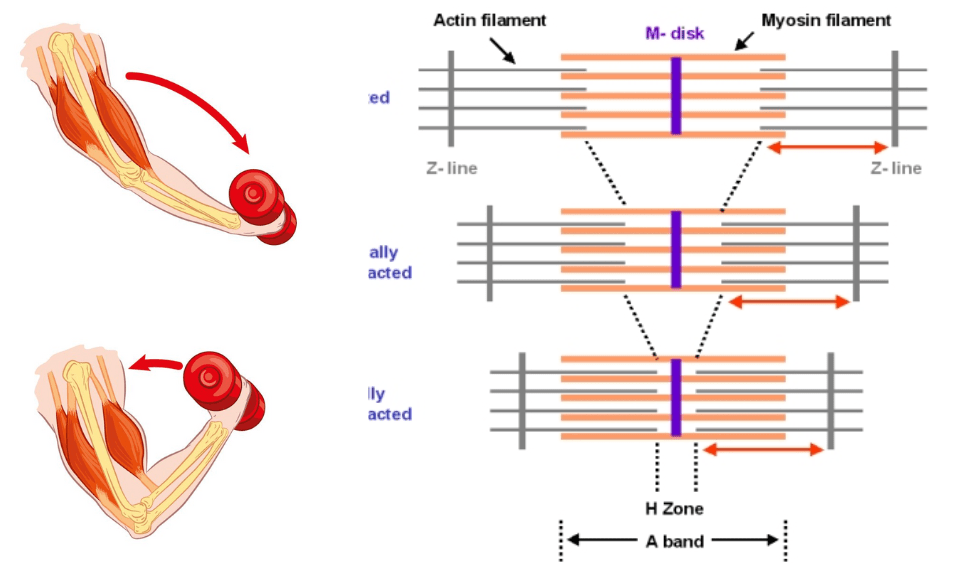
At rest, the thin and thick filaments of a sarcomere slightly overlap. During contraction, the thin and thick filaments slide past each other bringing the Z lines closer to the center of the sarcomere.
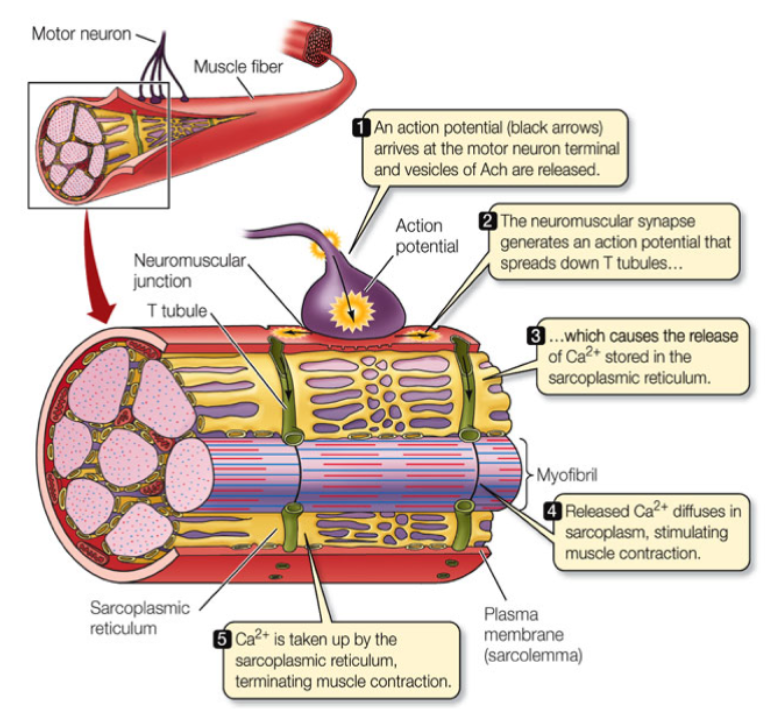
Contraction is stimulated when the muscle fiber innervating α motor neuron releases the neurotransmitter acetylcholine as a consequence of an action potential (electrical signal originating in the neuron). Thus, the action potential is transmitted along the muscle fiber, causing the following effects:
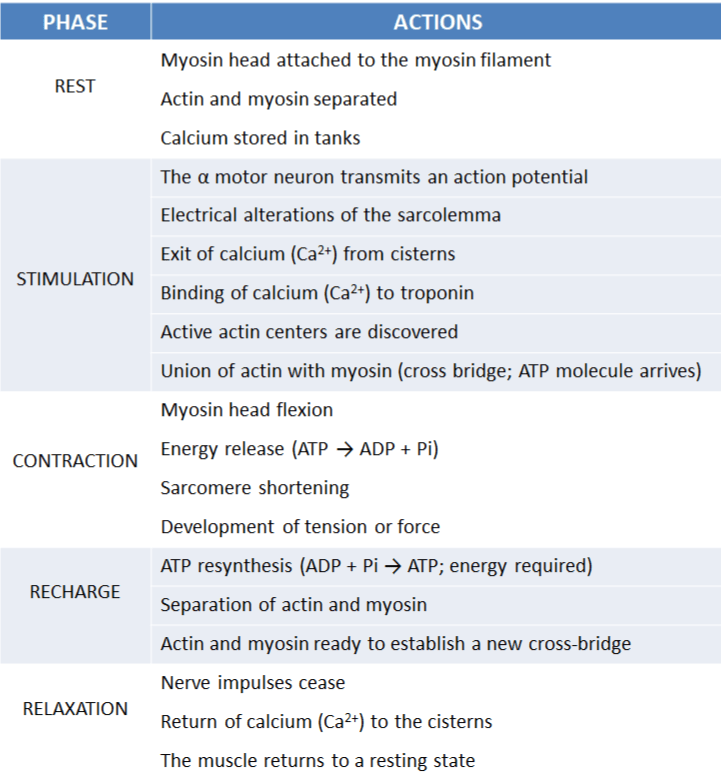
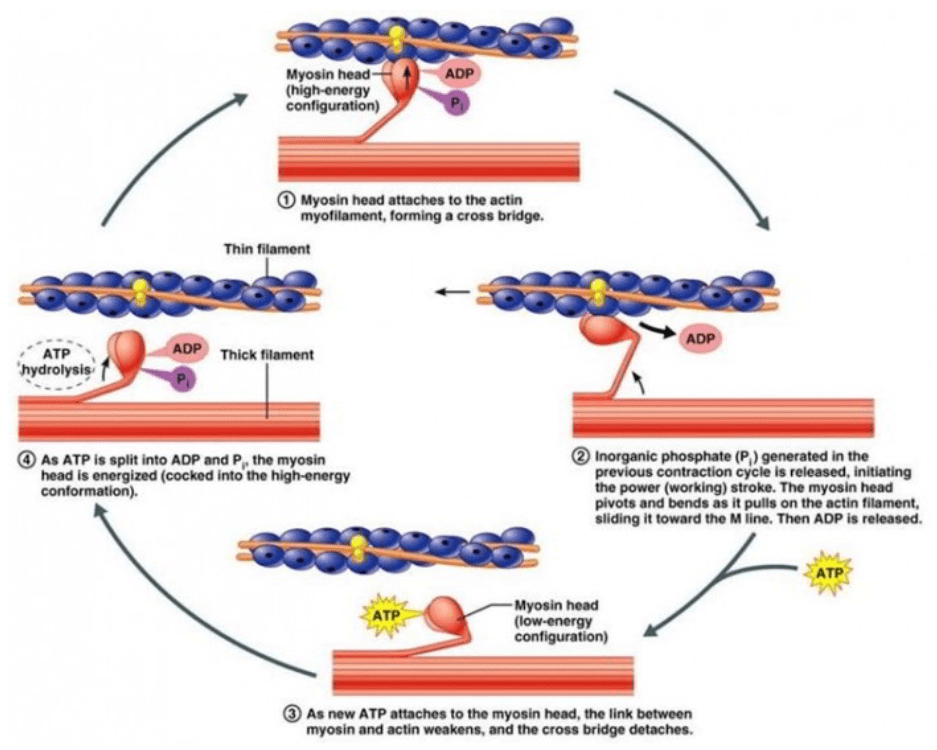
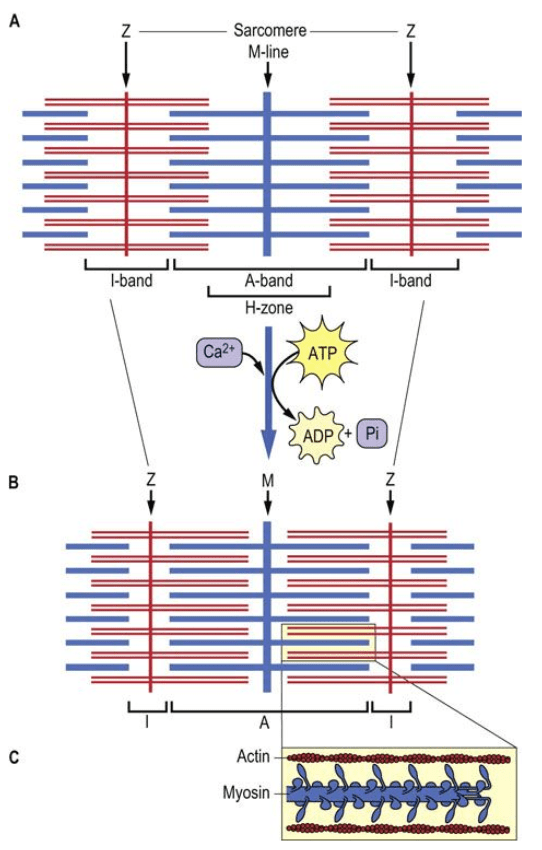
Muscle cells are dependent on ATP, the main energy molecule to meet the demands of a given activity. During exercise, the metabolic activity of skeletal muscle can be greatly increased relative to the resting state. Under these conditions, ATP replacement can be several hundred times faster than at rest, without varying the intracellular ATP concentration.
The set of chemical reactions that takes place to transfer energy from the substrates stored in the body towards the release for movements makes up energy metabolism.
Muscle tissue has ATP reserves, although they do not exceed a few seconds of consumption. This implies a continuous synthesis of ATP while it is hydrolyzed immediately (ATP cycle).
Thanks to the small concentration of ATP in the muscle tissue, muscle contractions stimulated by the entry of calcium ions into the cell can be initiated.
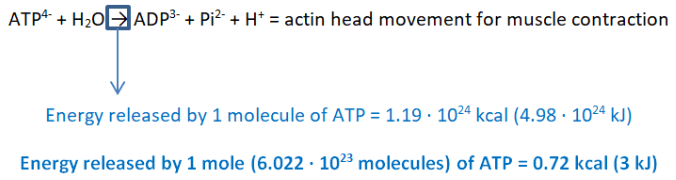
A product that helps the ATP cycle is phosphocreatine (PCr), which is naturally present in skeletal muscle.
ADP can be converted to ATP by coupling with the hydrolysis of creatine phosphate. Creatine therefore recycles the phosphate released by hydrolysis of the original ATP molecule. This helps keep energy easily mobilized without depleting ATP stores.
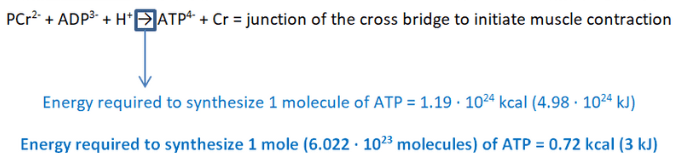
Muscle ATP is the most immediate source of energy. By itself, it allows short efforts thanks to its storage in skeletal muscles and provides about 2 kcal of energy by itself. If it is able to accelerate its resynthesis and presence in skeletal muscle with the help of phosphocreatine, it can provide up to 7 kcal that help us in the shortest and most intense efforts.
Bibliographic references:
- Marchante D. (2020). Physiology of exercise and muscle hypertrophy. Basic concepts [PDF file]. Recovered from https://universidadpowerexplosive.com/
 ATLETA EXPLOSIVO
Leave a comment